The countertop is the material decision that most directly shapes how a Franklin or Brentwood kitchen looks and functions each day. It is the surface that receives the most daily contact, carries the most visual weight at eye level, and absorbs the most scrutiny from anyone who walks into the room. When the countertop is right, the kitchen coheres. When it is not, everything else in the room draws attention to the gap.
The countertop trends shaping Williamson County kitchen remodels today are driven by a clear direction: nature-inspired materials in warm, organic tones, specified with the surface finish and edge detail that best serves both the kitchen's aesthetic and the household's daily use. Material choice is only half the story. Installation approach, finish, edge profile and how the countertop pairs with cabinetry and backsplash are equally subject to design trend, and all of it matters. Here are ten directions worth understanding for any Franklin or Brentwood kitchen remodel, several of which are on display throughout our kitchen remodel portfolio.
Types of Kitchen Countertops Compared
Before the trends, it helps to know the main types of kitchen countertops and how each one performs in daily life.
Quartzite
A hard natural stone formed from sandstone under heat and pressure, quartzite offers marble-like veining with strong resistance to heat, scratching and etching. It needs periodic sealing, and it is the leading choice for primary kitchens in Franklin and Brentwood.
Marble
Marble offers unmatched depth and veining, but it is softer and etches when acids such as lemon juice or wine sit on the surface. A honed finish disguises etching well, and regular sealing helps it resist stains.
Granite
Granite is durable, heat resistant and available in a wide range of colors and patterns. Most granites need occasional sealing, and a leathered finish adds texture while hiding fingerprints.
Quartz
Engineered quartz combines crushed quartz with resin for a consistent, nonporous surface that does not need sealing. The resin makes it less tolerant of direct heat, so trivets belong near the range.
Soapstone
Soft, dense and naturally resistant to stains and heat, soapstone develops a rich, darker patina over time. It scratches more easily than harder stones, which many homeowners embrace as part of its character.
Porcelain and Sintered Stone
Porcelain and sintered stone slabs are very hard, stain resistant and heat tolerant, and they can be fabricated thinner than natural stone. Most patterns are printed on the surface, so edges and cutouts need careful detailing.
Butcher Block and Wood
Wood countertops bring warmth to an island, baking zone or bar. They need regular oiling or a sealed finish and are best kept away from the main sink.
Concrete and Terrazzo
Concrete and terrazzo bring a custom, crafted character, and terrazzo often uses recycled aggregate. Both need sealing, and concrete can develop fine hairline cracks over time.
In Franklin and Brentwood remodels, honed quartzite and marble lead for primary kitchens, with granite, quartz and porcelain chosen where low maintenance matters most. Pairing the countertop with the right kitchen cabinet styles and backsplash is what makes the material read as part of a composed room.
1. Natural Stone as the Focal Element
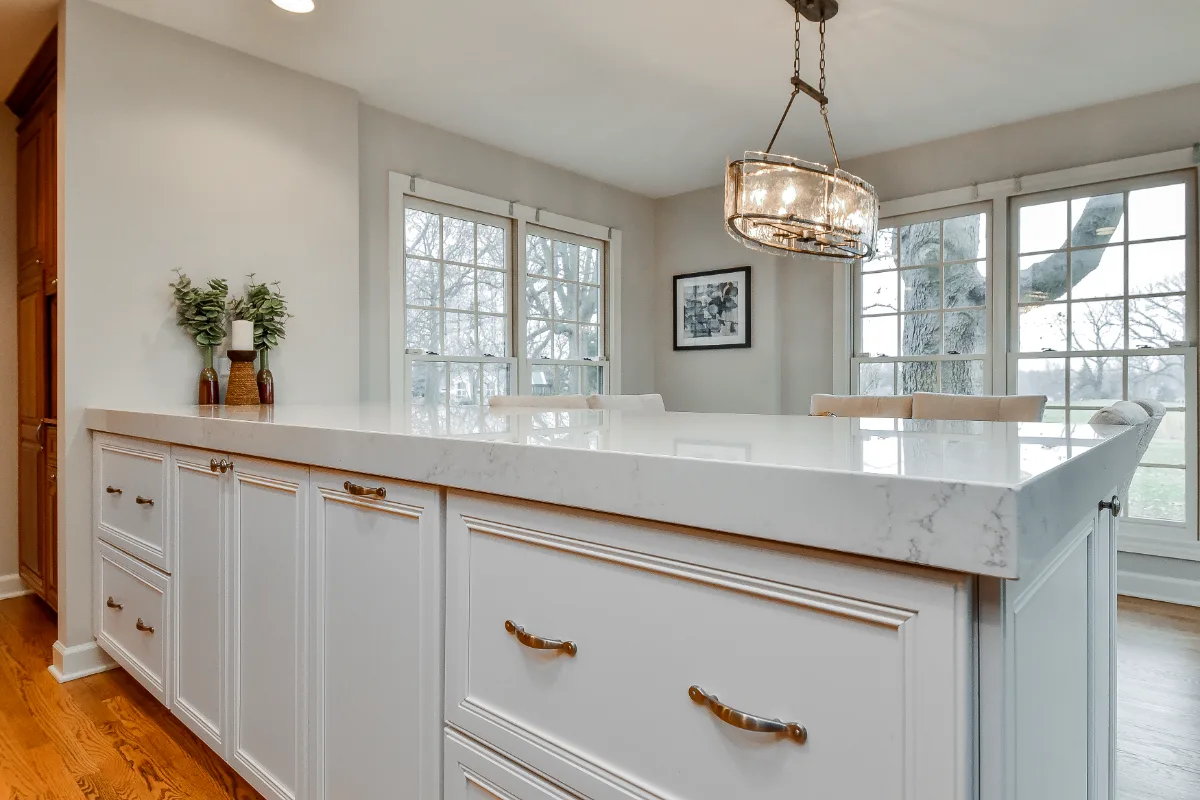
Natural stone, particularly quartzite and marble, has become the dominant countertop material in Franklin and Brentwood kitchen remodels at the upper end of the market, and the direction of that trend is toward more expressive stone rather than more restrained. The stone is being asked to do more than simply provide a work surface: it is expected to be the kitchen's primary design statement.
Taj Mahal quartzite, with its creamy warm ivory base and intricate gold and grey veining, is a favorite in Williamson County kitchens because it offers the visual drama of marble in a material that is significantly more resistant to etching and staining. Honed Calacatta marble, with its white base and characteristic grey veining, remains a classic specification for homeowners who prioritize the visual quality of the material and are prepared to maintain it properly. Both materials, specified in a honed rather than polished finish, read as warmer and more architectural than their polished equivalents.
"Honed quartzite has become our most commonly specified countertop in Franklin and Brentwood kitchens over the past several years," says Bryan Sebring, CGR. "Clients love the look of marble but they want a surface that works. Honed quartzite in the Taj Mahal or White Macaubas family gives them the warmth and the veining movement they are looking for, and when they come back two years later and see how the surface has held up, they are consistently glad they made that call."
2. Mixed Countertop Depths and Edge Profiles
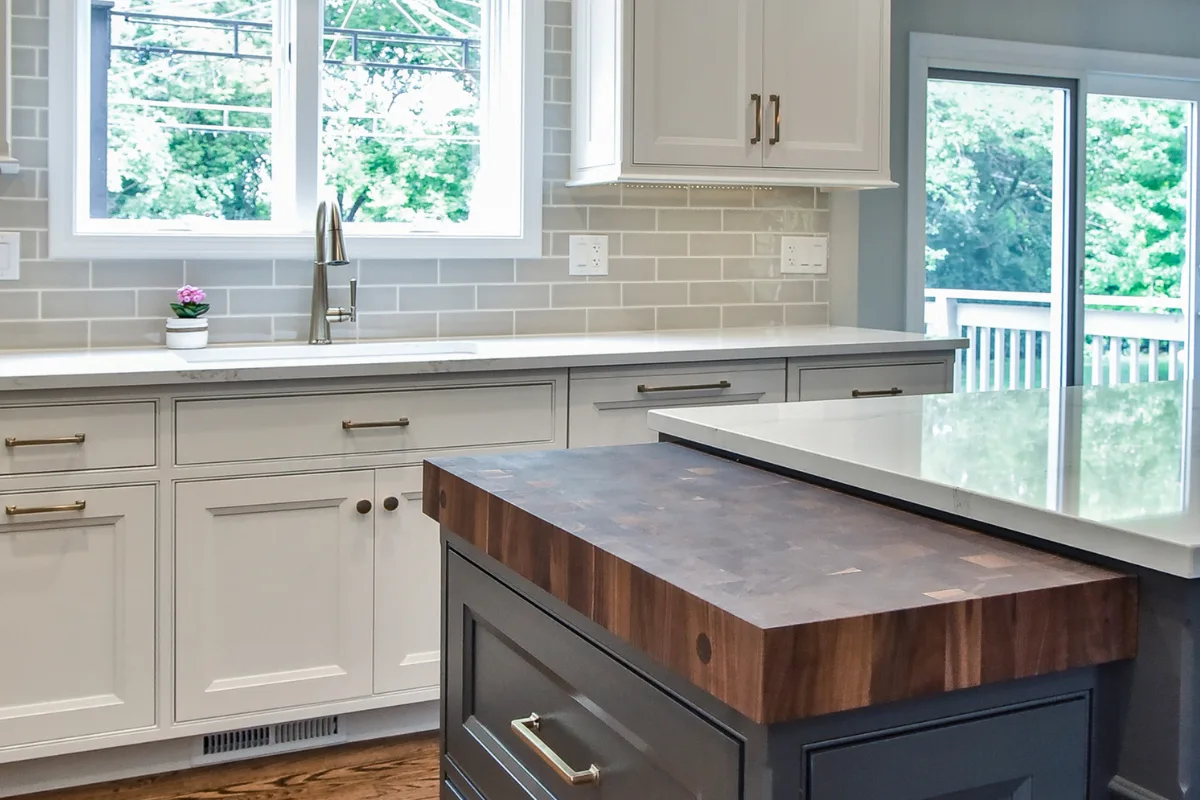
Using two or more countertop depths in the same kitchen is a quiet luxury strategy that produces a layered, collected quality that a single consistent depth cannot achieve. A favorite approach in Franklin and Brentwood kitchens is a chunky, architecturally weighted island countertop paired with a slimmer perimeter counter in the same material, which creates a deliberate visual contrast between the island as a social and functional anchor and the perimeter as a working surface. Our guide to kitchen island design trends covers this contrast strategy in more depth.
A mitered edge profile on the island counter creates the appearance of a four to five inch thick slab without the weight or cost of actual material at that thickness, which is a practical way to achieve the substantial visual quality of a chunky countertop in stone. For perimeter counters where a slimmer profile is the intent, sintered stone can be specified at significantly thinner dimensions than natural stone allows without compromising structural integrity. The contrast between the weighted island and the lighter perimeter reads as intentional and sophisticated, and produces a kitchen where the island's visual mass is clearly differentiated from the surrounding work zone.
3. Integrated Technology
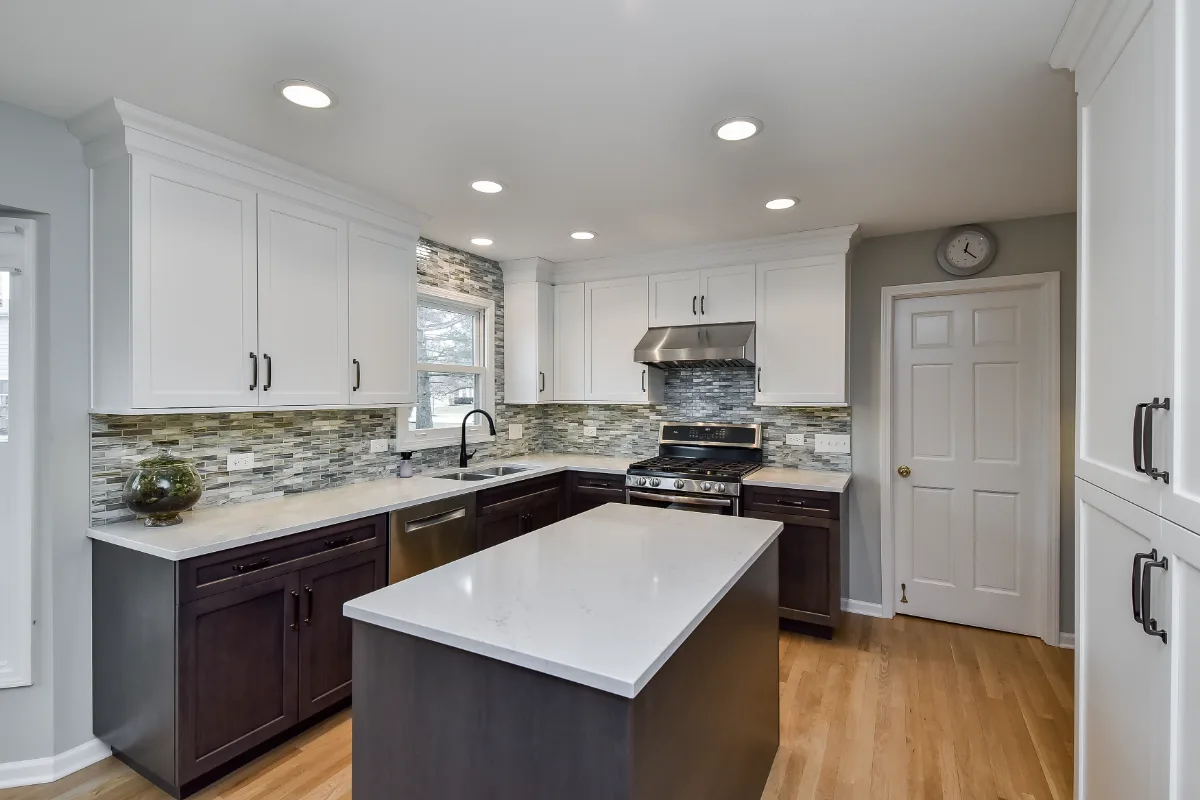
Countertop-integrated technology has moved from a showroom novelty to a specification that a growing number of Franklin and Brentwood homeowners are requesting as a standard element of a comprehensive kitchen remodel. A frequently requested integration is the flush induction cooktop, set into the stone countertop surface with no visible frame and only a slight texture change at the perimeter. This works well with most kitchen hood designs. When the cooktop is off and cool, the countertop reads as a continuous stone surface with no appliance visible at all.
Wireless charging pads inset into the countertop surface adjacent to the primary prep area or near the primary seating edge of the island serve the household's daily device management needs without requiring counter space for a separate charging solution. The integration requires a relatively modest cutout and is best specified during the design phase, when the countertop fabricator can plan the cutout position relative to the stone's veining to minimize visual disruption.
Voice-activated faucets and smart water systems that dispense at a preset temperature are countertop-adjacent specifications that similarly benefit from planning at the design stage. The trend across all of these is the same: technology that serves the kitchen without announcing itself and that requires its integration to be designed rather than retrofitted.
4. Contrasting Surface Textures
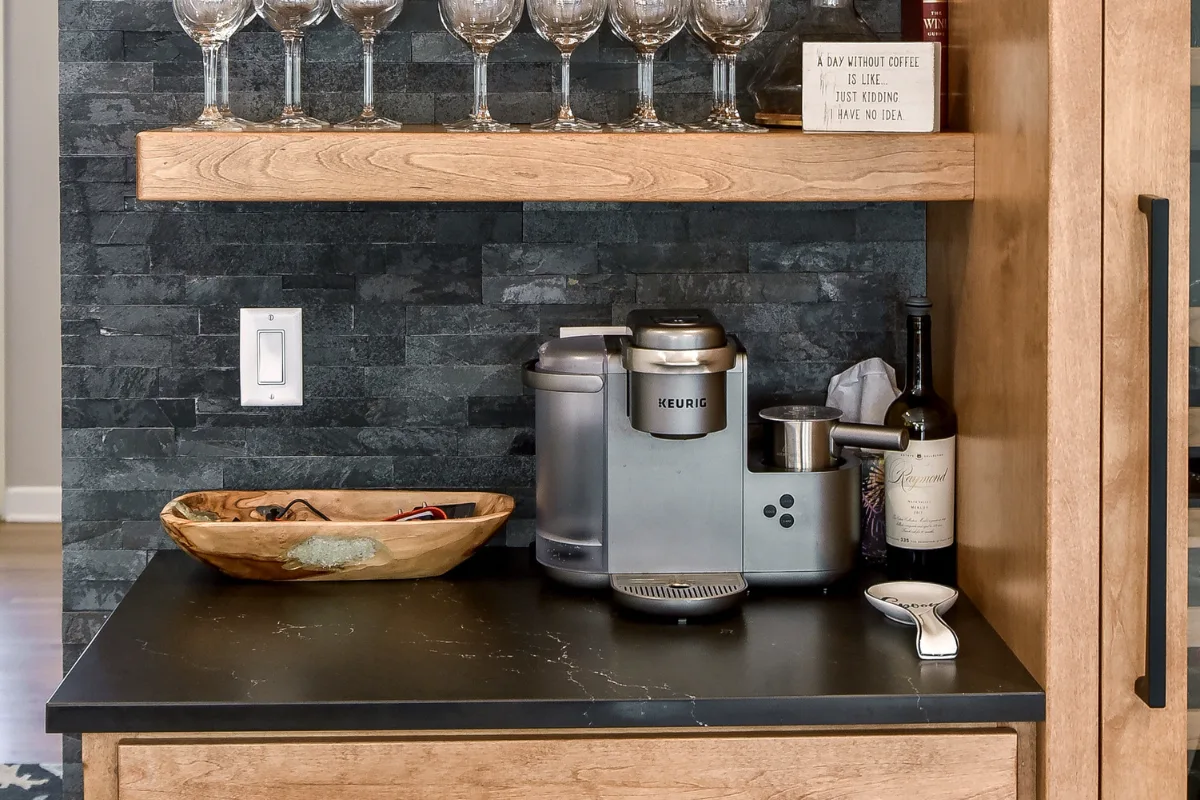
The contrast between a smooth, honed surface and a more textured one creates a physical dimension in the kitchen that a single uniform finish cannot produce. The most expressive execution of this approach pairs a honed countertop on the perimeter work surface with a leathered or brushed finish on the same stone for the island top, where the textural difference emphasizes the island as a distinct element within the kitchen, much as contrasting cabinetry design ideas do.
Leathered granite and quartzite carry a slightly rippled, pebbled texture at the surface that results from a brushing process applied after the honing stage. The texture catches light differently from a honed surface, produces a surface that is less prone to showing fingerprints and water rings, and reads as more rugged and tactile than either honed or polished alternatives. It is a finish direction that works particularly well in kitchens where the overall palette is warm and organic, which is the dominant direction in Franklin and Brentwood at present.
5. Dark and Light Contrasts
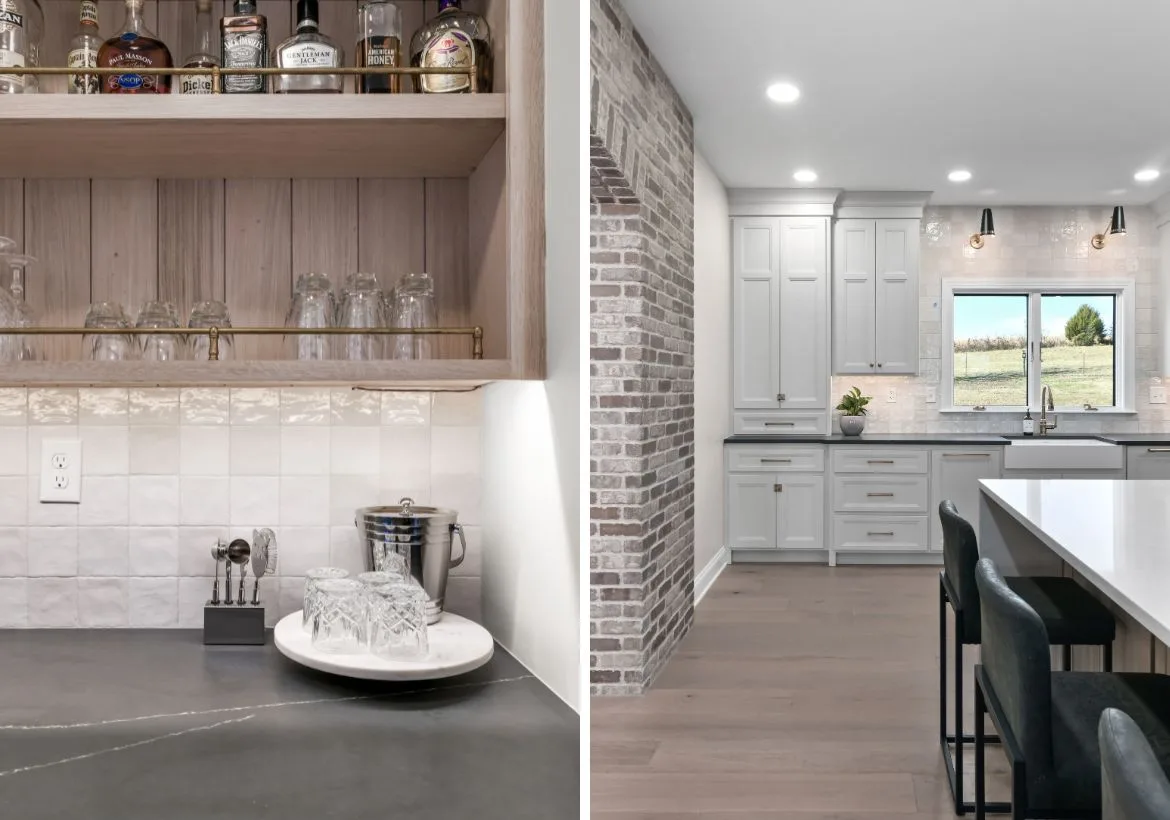
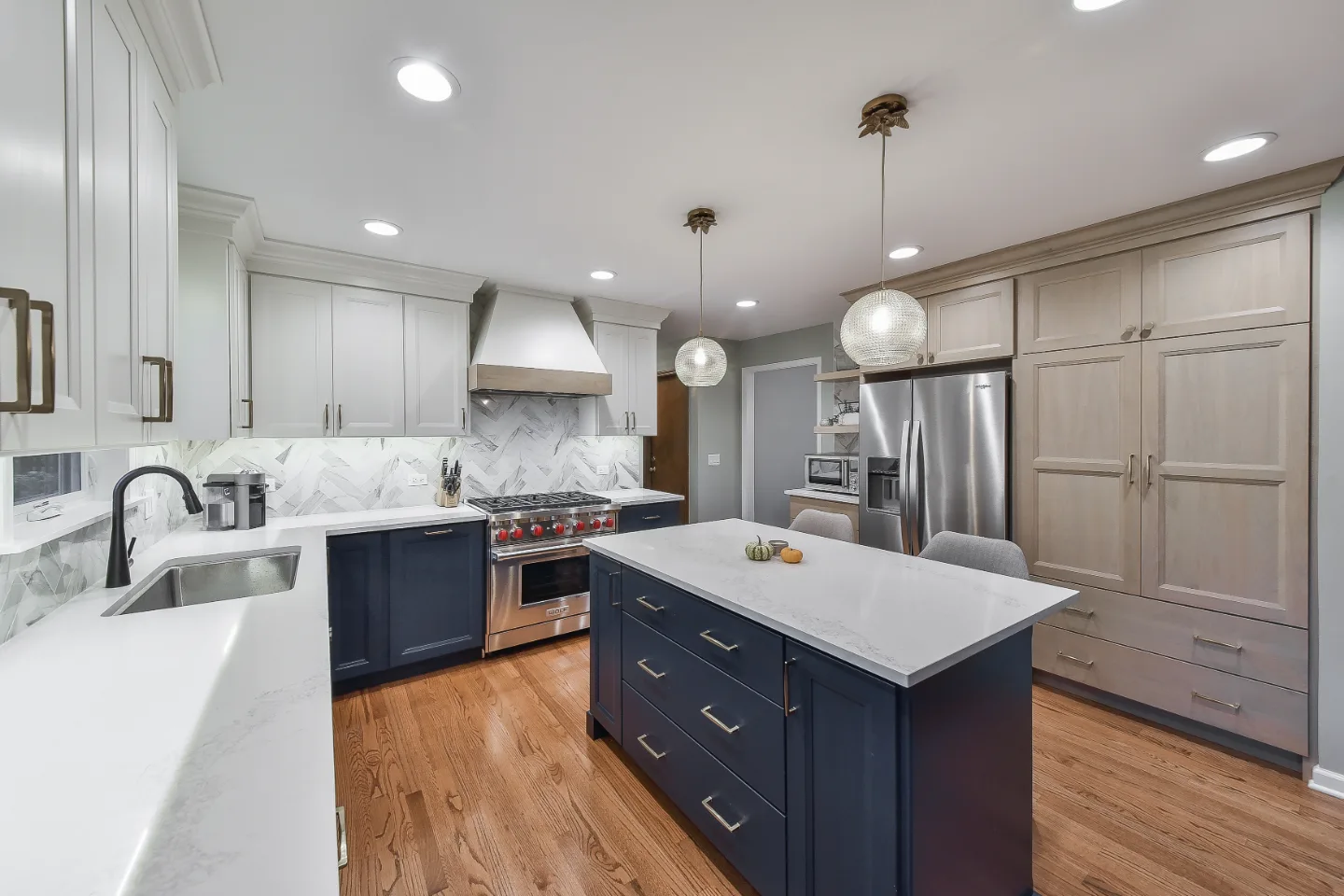
A countertop in a deep, saturated stone paired with white or pale cabinetry produces a contrast that is among the most visually confident statements available in kitchen design. The dark counter anchors the room visually and communicates weight, stability and intentional luxury. The pale cabinetry around it provides the visual relief that allows the stone's color and veining to read clearly without competition.
Marron Imperial marble in a warm, deep brown-black tone against white cabinetry creates a distinguished traditional kitchen. A dark grey quartzite or a deeply veined Marquina black marble against white shaker-style cabinetry produces a more contemporary kitchen with equal visual impact. In each case, the dark stone is selected not only for its color but for the quality of its veining and surface movement, which provides the visual interest that makes a large expanse of dark stone compelling rather than simply heavy. The countertop edge detail in a dark and light kitchen typically benefits from a simple, clean profile that does not compete with the stone's inherent visual weight.
6. Dramatic and Expressive Veining
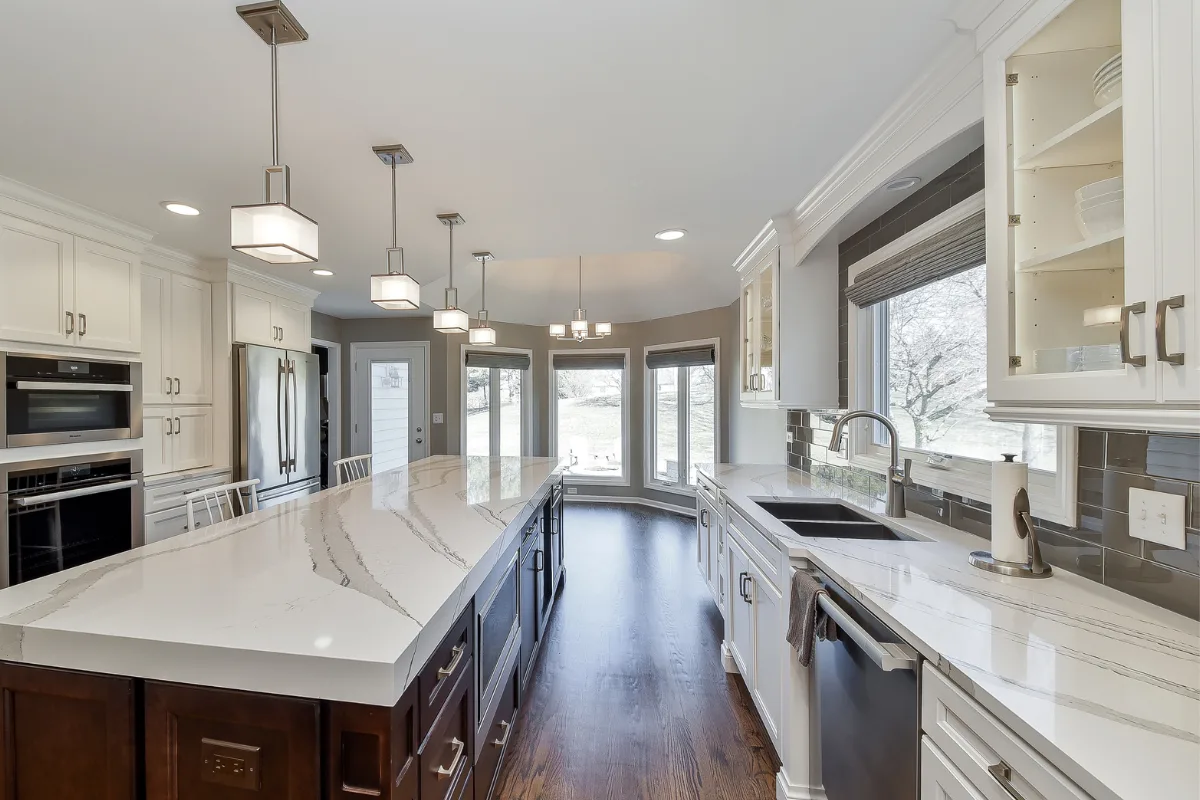
Expressive, large-scale veining in natural stone has become a consistent high-end countertop specification in Franklin and Brentwood kitchens, driven by homeowners who are selecting their countertop slabs in person at the stone yard based on the specific veining of individual slabs rather than simply selecting a material category. The stone itself, rather than the kitchen's overall design framework, is becoming the starting point for the design conversation.
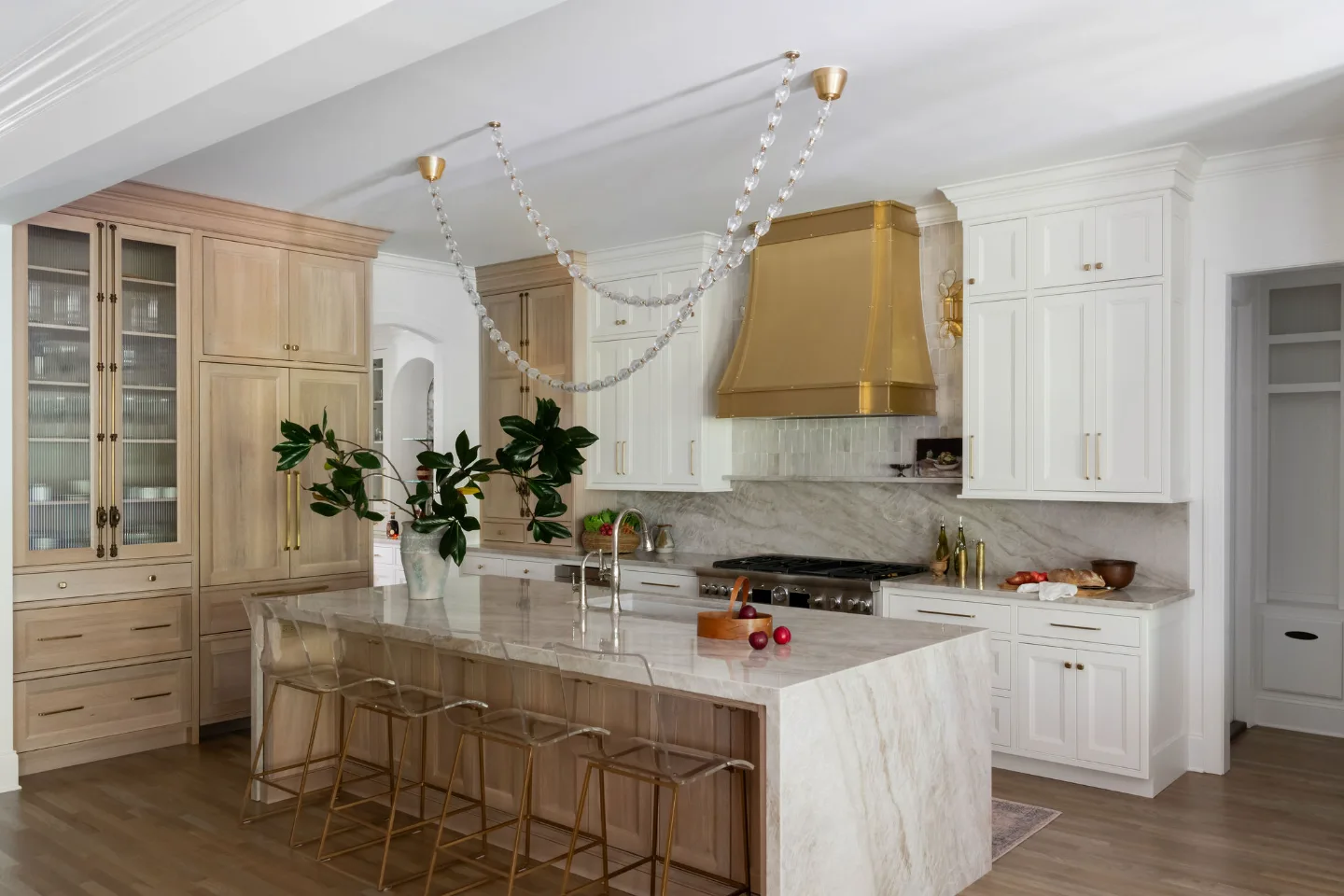
San Simone natural quartzite and the Calacatta family of marbles, particularly Calacatta Viola with its rich purple and lavender veins and Calacatta Paonazzo with its dramatic swirling patterns in grey and gold, are among the most sought-after expressive stone specifications in this market. When specified in a waterfall edge installation with matching stone on the backsplash behind the range, a single slab of dramatically veined quartzite or marble becomes the kitchen's defining design statement. The rule that follows from that choice is also clear: the rest of the kitchen must be kept comparatively simple and restrained. When the stone is the artwork, every other element in the room serves as its frame.
7. Terrazzo for Character and Longevity
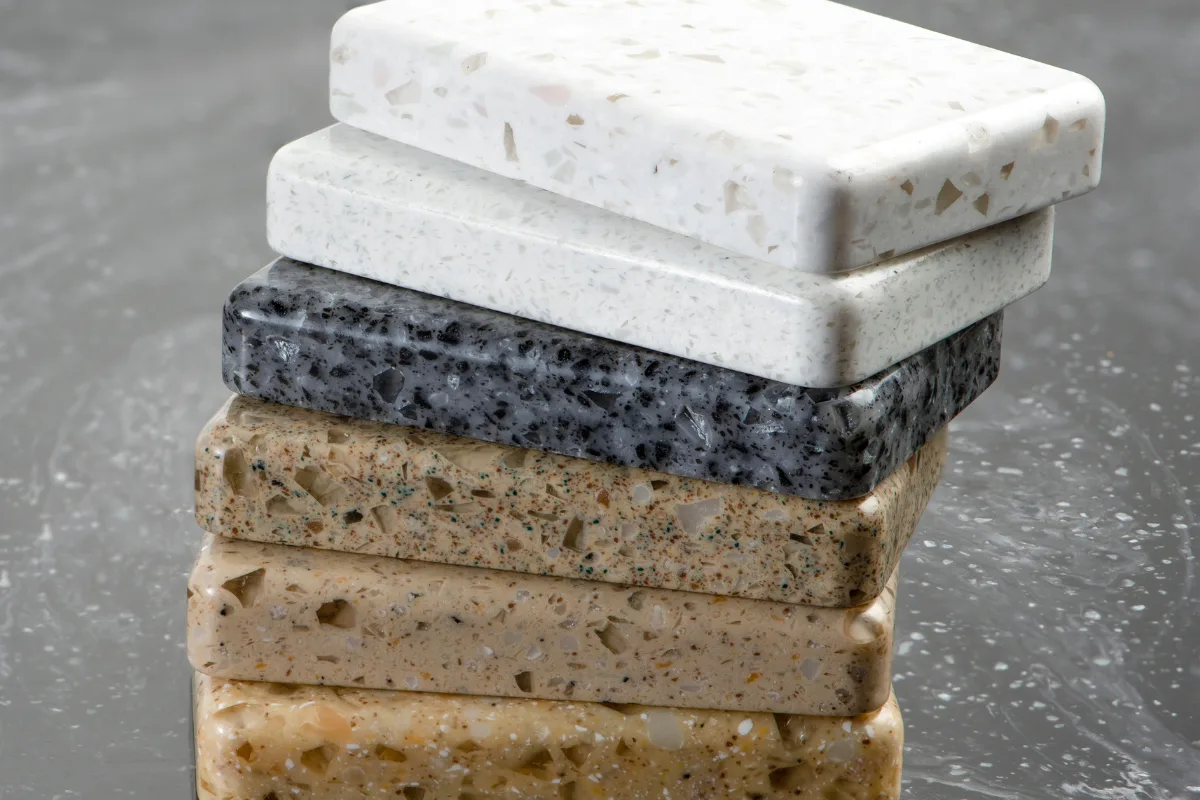
Terrazzo countertops have established themselves as a genuinely enduring specification rather than a cyclical revival because the material's qualities, design flexibility, durability and the aesthetic warmth of its aggregate composition, are permanent characteristics rather than trend-dependent ones. A well-specified terrazzo countertop in a harmonious mix of natural aggregate and binder reads as simultaneously contemporary and timeless, which is the quality that distinguishes a material worth investing in from one that will feel dated within a single design cycle.
The design flexibility of terrazzo is its most significant practical advantage. Large-scale aggregate chips in bold colors produce a countertop with strong graphic character. A finer, more homogenous mix of stone chips, glass fragments and recycled aggregate in a warm grey or cream binder produces a quieter surface with a depth and texture that no manufactured material precisely replicates. Terrazzo is also among the most sustainable countertop options available, as it uses a significant proportion of reclaimed and recycled material in its composition, which is an increasingly valued characteristic among Franklin and Brentwood homeowners who are considering the environmental impact of their remodeling choices.
8. Reclaimed and Sustainable Countertops
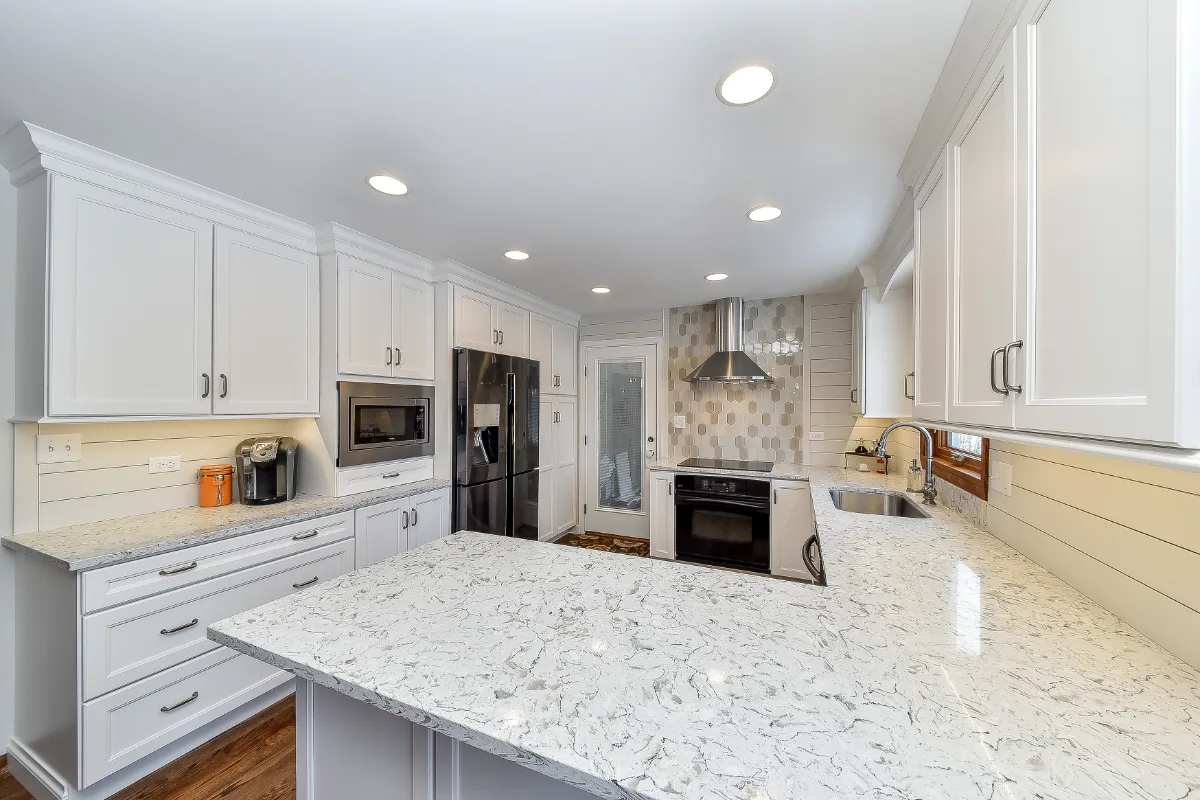
The most effective way to reduce the environmental impact of a kitchen remodel countertop specification is to avoid producing new material in the first place. Reclaimed countertops, including upcycled laboratory benches in dense stone, remade timber and terrazzo surfaces and reclaimed limestone and sandstone, are finding a growing audience among Franklin and Brentwood homeowners who want both the aesthetic character and the sustainability credential that only genuinely reclaimed material can provide.
A reclaimed limestone island countertop brings a quality that newly quarried stone cannot replicate: the patina of previous use, the character of a material that has been in the world for decades or centuries before it arrived in this kitchen, and the assurance that its installation did not require new resource extraction. As the stone continues to age in its new context, it develops additional character rather than degrading. The aesthetic case for reclaimed countertops and the sustainable case are, in this particular material category, the same case.
9. Warm Tones and Organic Character
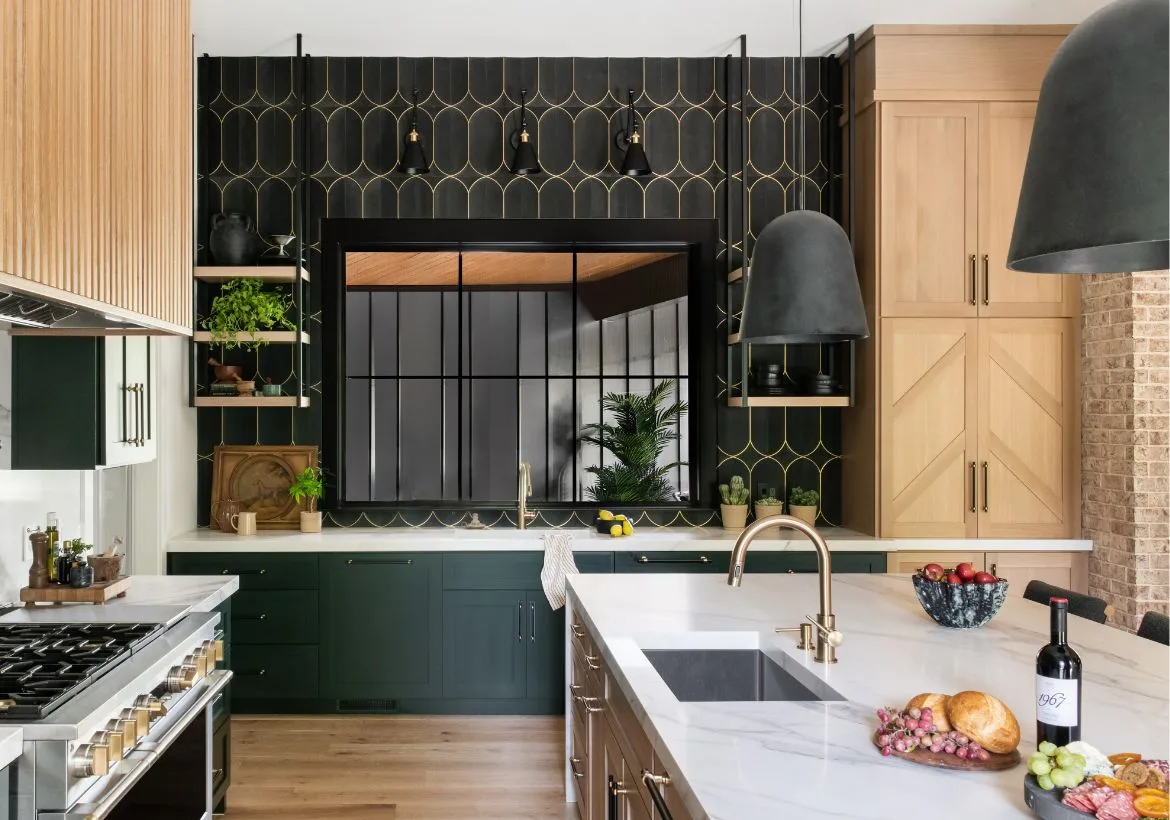
The direction in Franklin and Brentwood kitchens has moved decisively toward warmth in the countertop palette as part of a broader movement away from the cool grey and stark white specifications that defined the previous decade. Warm ivory, warm honey, warm taupe and terracotta tones in natural stone and porcelain slab countertops are replacing the cool grey and blue-grey stones that preceded them, creating kitchens that feel inviting and grounded rather than clinical and precisely styled.
This palette shift is not merely aesthetic. Warm stone tones coordinate naturally with the white oak cabinetry, unlacquered brass hardware, and warm linen and natural textile accents that define the contemporary Franklin and Brentwood interior. A warm ivory quartzite against white oak cabinetry with unlacquered brass hardware creates a material relationship that feels genuinely composed rather than assembled from independent trend-influenced decisions. The warmth runs through each material in the room, and the countertop is the foundation from which that warmth extends.
10. Jewel-Tone and Expressive Stone
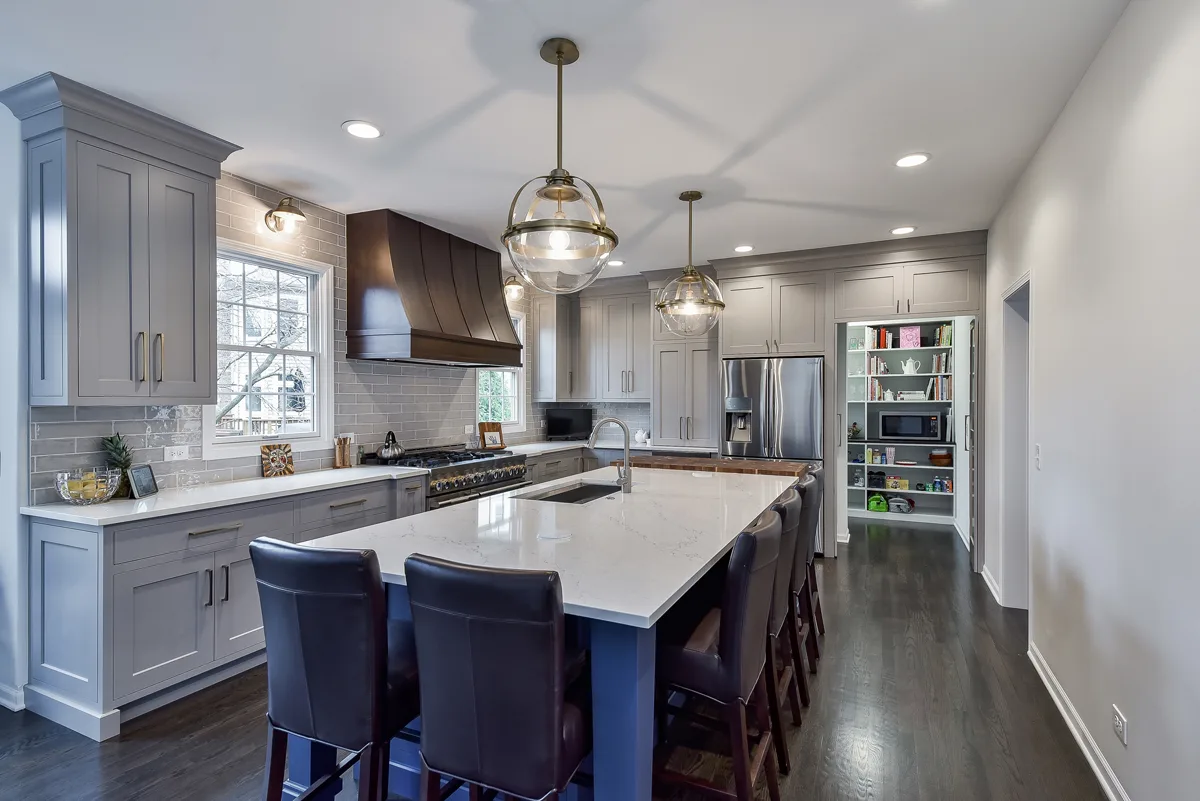
Jewel-tone stone countertops, particularly in the green family, represent a bold departure from the warm neutral direction that defines most Franklin and Brentwood kitchens, and the departure is most successful precisely because it is rare. A Verde Guatemala marble or deep green quartzite countertop brings a depth and vibrancy that no other countertop color category can provide: the visual weight of dark stone, the organic warmth of natural green and the sense that the kitchen's designer was operating from a position of genuine confidence rather than safe convention.
The practical discipline for a jewel-tone countertop specification is the same as for any dramatically veined or boldly colored stone: the surrounding kitchen must be quiet enough to allow the stone to read clearly. White or warm cream cabinetry, restrained hardware and a simple backsplash that either matches the stone or steps back entirely, as our kitchen backsplash ideas show, are the conditions that allow a bold green countertop to be beautiful rather than overwhelming. When those conditions are met, a jewel-tone stone countertop produces a kitchen that reads as genuinely distinctive, the kind of design decision that guests notice and remember.
Standard Kitchen Countertop Depth and Thickness
A standard kitchen countertop is about 25 to 25.5 inches deep. Base cabinets are 24 inches deep, and the countertop overhangs the cabinet face by roughly 1 to 1.5 inches so drips fall clear of the doors. Island countertops are often deeper to make room for seating: plan an overhang of about 15 inches at counter height or about 12 inches at bar height so knees fit comfortably. Natural stone is most often fabricated in 2 centimeter (about 3/4 inch) or 3 centimeter (about 1 1/4 inch) slabs, and a mitered edge can make either look much thicker.
Countertops typically sit at 36 inches high once installed on standard base cabinets. Our guide to standard counter height covers heights for counters, islands and bar seating, and our kitchen cabinet sizes guide covers the cabinet dimensions beneath.
The Countertop Selection Shapes Everything Else
In a Franklin or Brentwood kitchen remodel, the countertop selection is the material decision that the backsplash, hardware and cabinetry finish all respond to. It is the most visible horizontal surface in the room and the one that receives the most physical contact. Getting it right means specifying a material that works visually, works practically for the household's cooking habits and maintenance willingness, and works compositionally with the cabinetry, backsplash and lighting it will live alongside.
That selection is most successfully made during the design phase, when all of the kitchen's material decisions are being made together rather than sequentially. A countertop selected in isolation, before the cabinetry color, the backsplash and the hardware finish are confirmed, is a countertop that may or may not work in the finished room. In a design-build process, those decisions are made as a unified set, which is why the kitchens that most consistently read as designed rather than assembled are those that came through a design-build process from the beginning.
Sebring Design Build selects and specifies countertops for kitchen remodels throughout Franklin, Brentwood and Williamson County as an integrated element of the total kitchen design. If you are ready to transform your kitchen with a countertop that is genuinely designed for the space around it, contact Sebring Design Build to schedule your complimentary consultation. Learn more about our kitchen remodeling services in Franklin, TN.