The backsplash has quietly become one of the most expressive design decisions in a kitchen remodel. On a practical level, it protects the wall behind the range and countertop from splashes, grease and steam. On a design level, it does something far more significant: it gives the kitchen a focal point, a moment of visual texture, pattern or material that every other design element in the room is in conversation with.
Franklin and Brentwood homeowners are approaching the backsplash with more intention than in previous generations of kitchen design. As open shelving has replaced the wall-to-wall upper cabinets that once covered most of the wall behind the range, the backsplash has gained visibility and with it, importance. The ten trends below reflect the directions that are producing the most compelling and most enduring kitchen backsplash designs in Williamson County today.
1. Single-Slab Backsplash
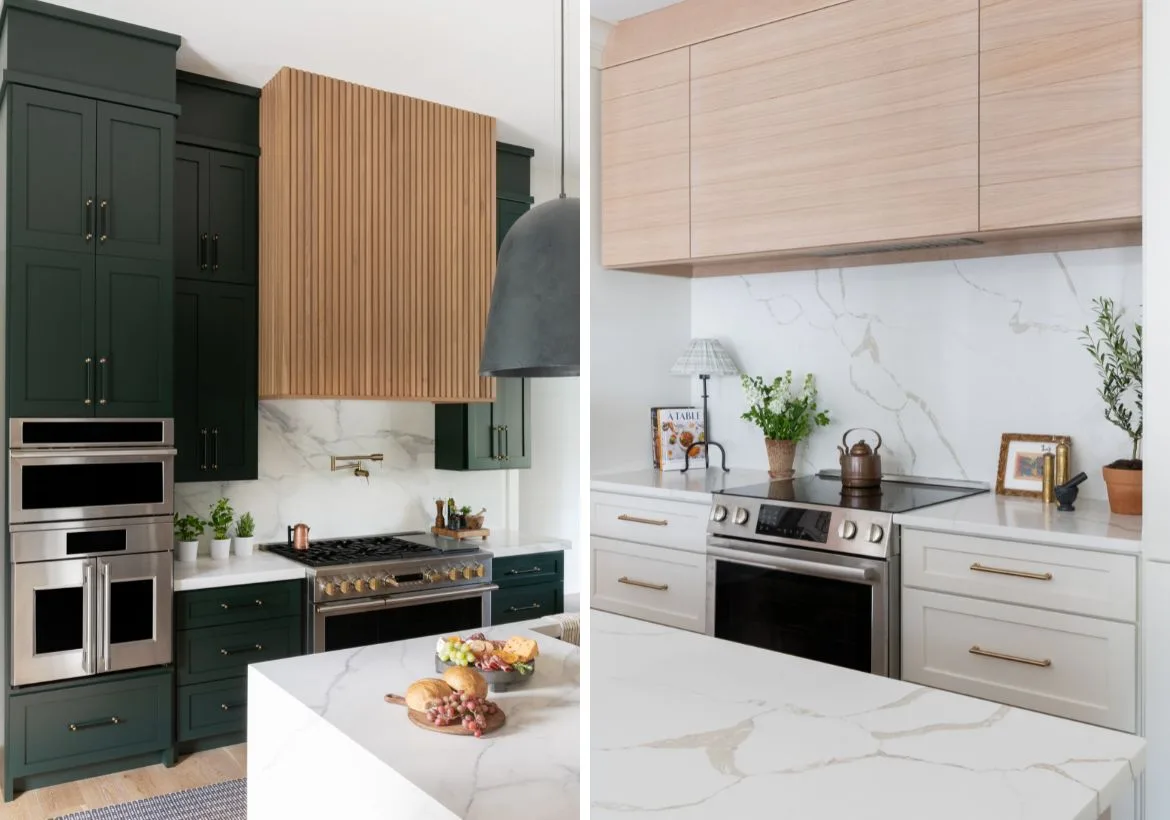
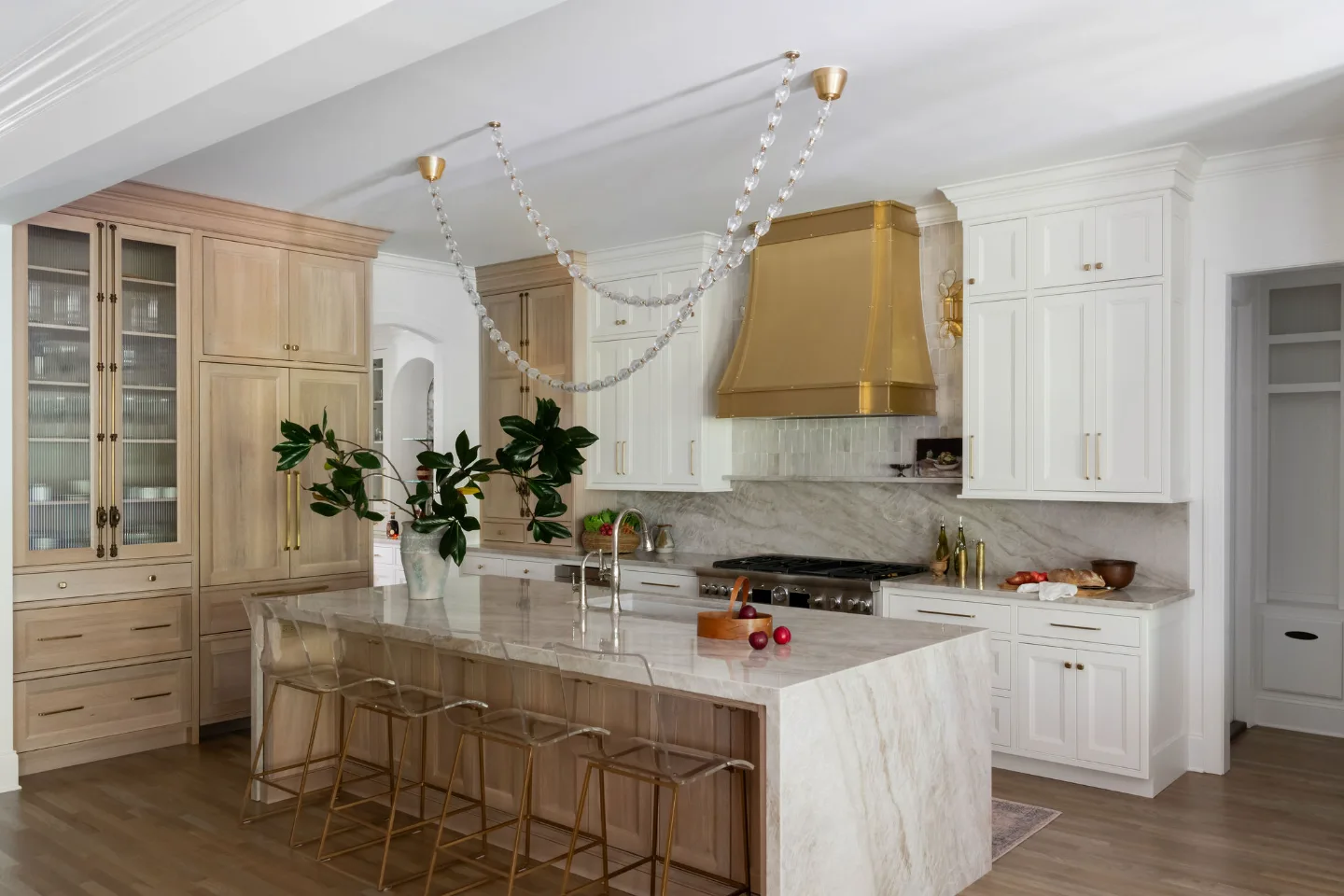
A single-slab backsplash treats the wall behind the range and countertop as a continuation of the stone surface below it rather than as a separate tile installation. The result is a seamless, grout-free expanse of material that reads as elegant, easy to clean and deliberately cohesive in a way that tile cannot replicate.
Honed Calacatta marble, honed quartzite and leathered granite are the most commonly specified materials for single-slab backsplashes in Franklin and Brentwood kitchen remodels. When the countertop and backsplash come from the same slab or the same stone family, the veining or movement in the material runs continuously from horizontal to vertical surface, creating a dramatic visual continuity that is the defining quality of the trend. The absence of grout lines also produces a kitchen that reads as cleaner and more contemporary, and one that is genuinely easier to maintain behind the range where grout lines accumulate cooking residue most quickly.
2. Restrained Color with a Bold Backsplash Moment
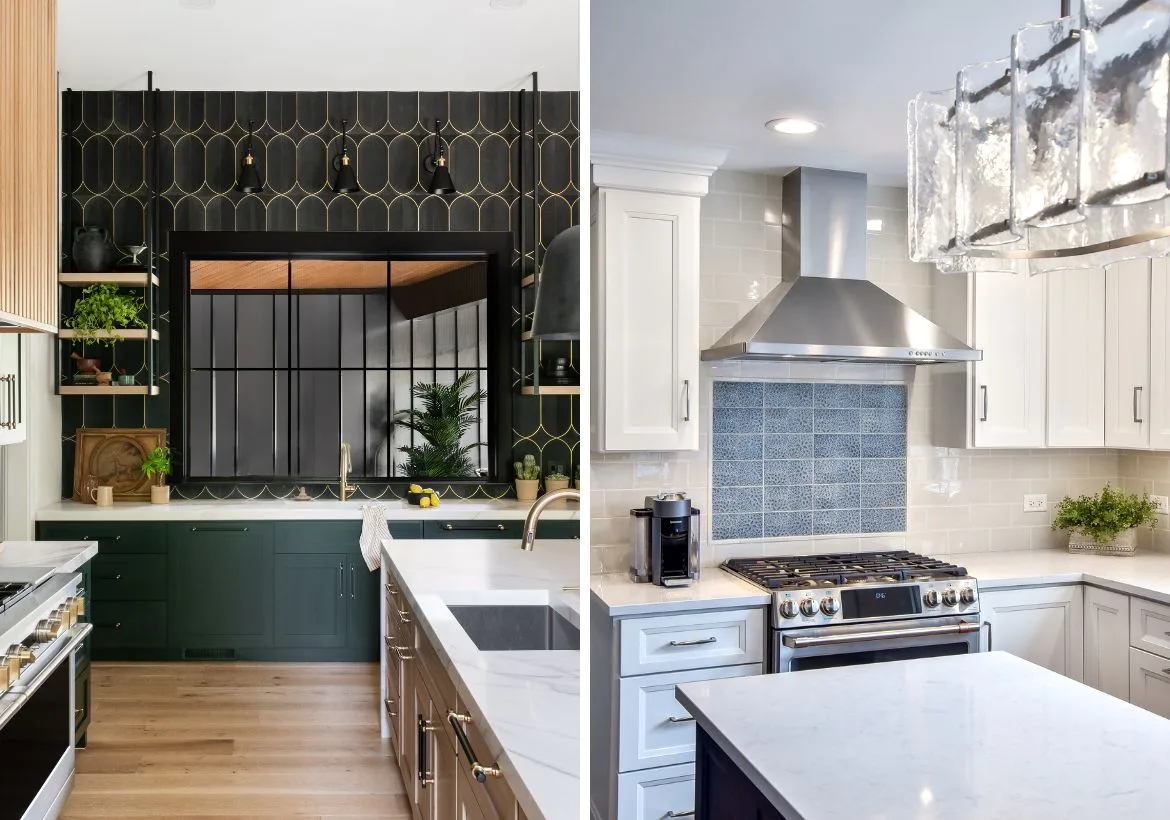
The all-white or all-neutral kitchen remains a strong design direction in Franklin and Brentwood, and the backsplash is increasingly where homeowners are choosing to introduce the room's one significant moment of color. Rather than attempting to introduce color in multiple locations, a deep sage green, ink blue or rich terracotta backsplash against pale cabinetry and a neutral countertop produces a contrast that reads as confident and considered rather than busy. Our guide to kitchen color trends covers how to choose a direction that ages well.
The discipline of confining the color to the backsplash is what makes this approach work. When the cabinetry, countertop and flooring are restrained in tone, the backsplash earns the attention it receives. Deep saturated hues in a glazed ceramic or a richly colored stone tile create a focal point that anchors the kitchen's visual weight behind the range, where the hood and backsplash together form the room's primary architectural statement. These colors age well in a kitchen because they are tied to the enduring appeal of nature and natural pigment rather than to a passing trend in interior color.
3. Mixed Materials
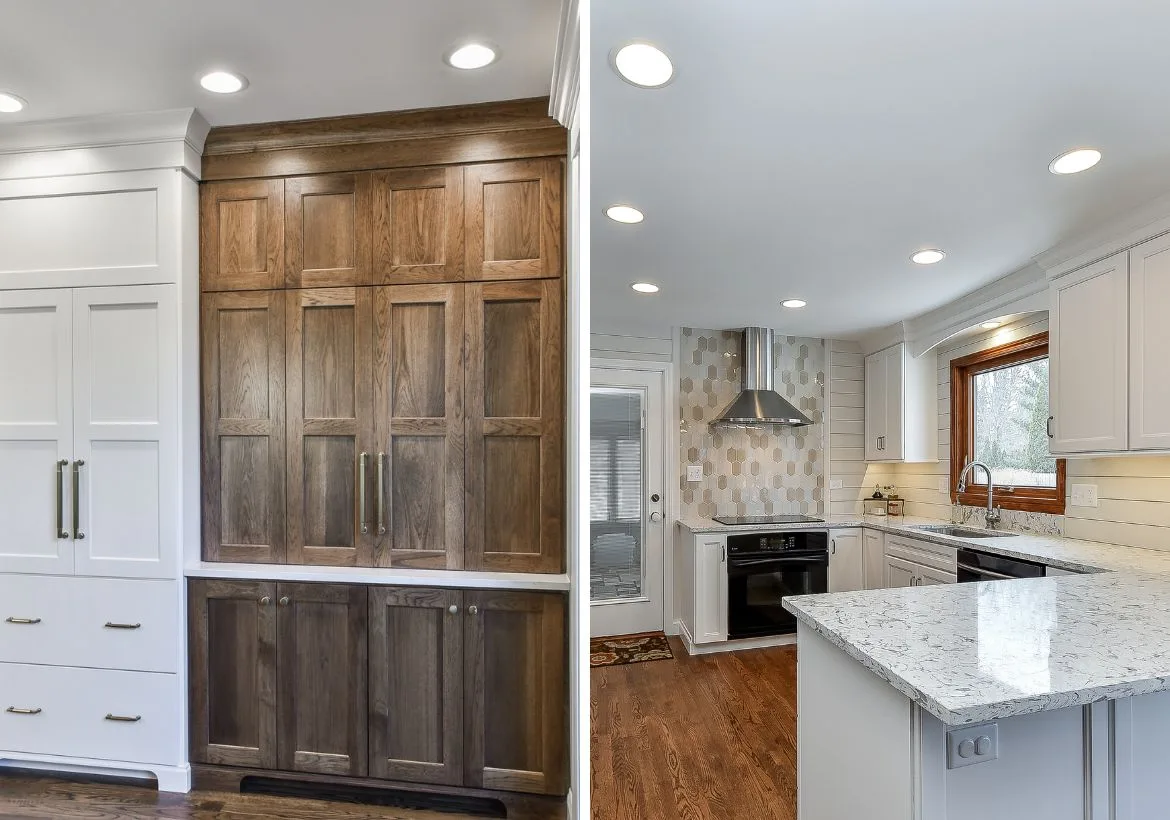
Combining materials in the backsplash zone produces depth and visual interest that a single-material installation cannot. The most successful mixed-material backsplash designs in Franklin and Brentwood kitchens share a common discipline: one material serves as the primary field, and the second material introduces a specific accent or transition rather than competing equally across the surface.
Stone tile as the primary field with a contrasting floating wood shelf integrated into the backsplash zone is one of the most consistently beautiful executions of this approach. The warmth of white oak against honed stone creates a material tension that reads as both organic and considered when choosing island lighting. A metal inlay band separating a lower tile field from an upper painted or plaster surface introduces a different kind of detail, one that is more architectural and less material-driven. In each case, the mixed-material backsplash works because the combination was designed, not assembled from independent decisions.
4. Marble and Calacatta Tile
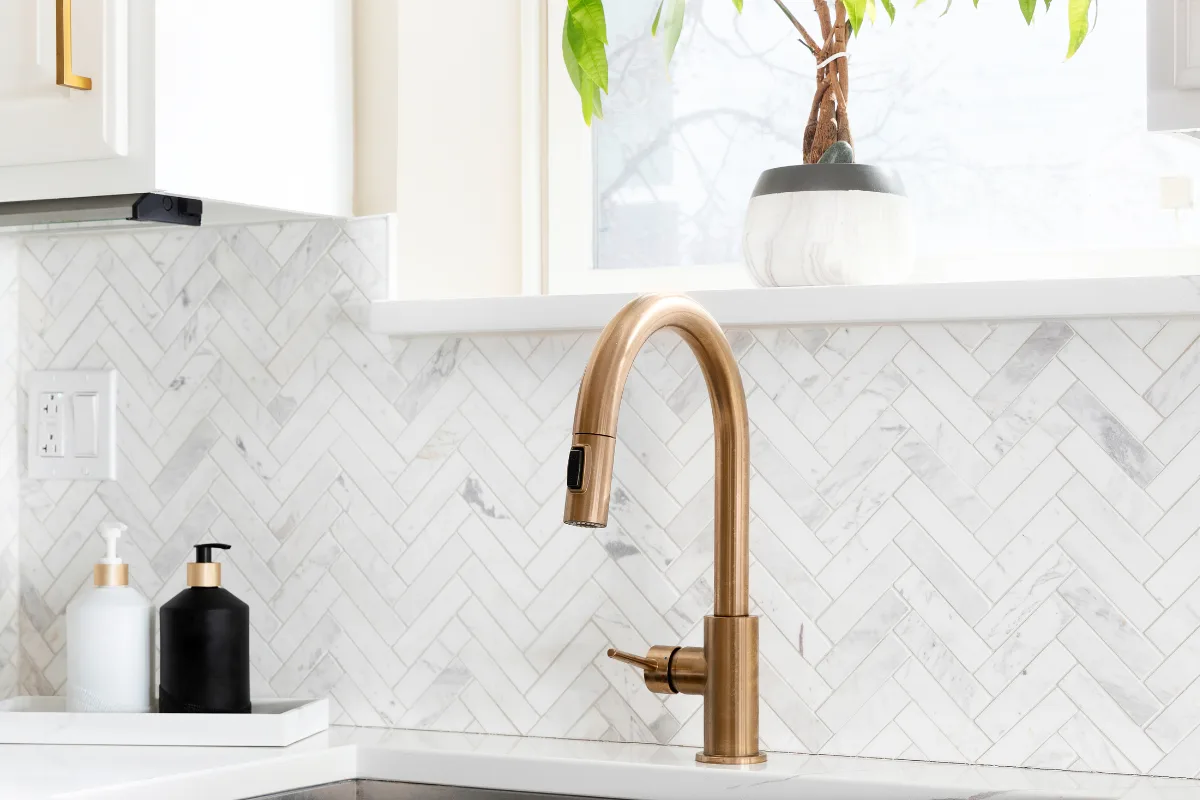
Marble has been a kitchen backsplash material for generations, and its position in Franklin and Brentwood kitchens has not weakened with the arrival of alternatives. What has changed is how it is being used. The classic subway tile in white marble with gray veining has given way to larger format tiles in Calacatta, which carries a more dramatic gold and grey vein pattern, and to stacked vertical installations that emphasize the material's natural variation more effectively than the traditional horizontal offset pattern.
Honed marble, which has a matte surface rather than a polished one, is the finish most consistently specified in Franklin and Brentwood kitchens because it absorbs light rather than reflecting it, which produces a quieter and more architectural quality than a polished surface. Honed marble also shows fingerprints and water marks less readily than polished, which is a meaningful practical consideration behind the range and adjacent to the sink. When sealed properly at installation and maintained with appropriate products, honed marble is a genuinely durable kitchen backsplash material.
5. Ceiling-Height Backsplash
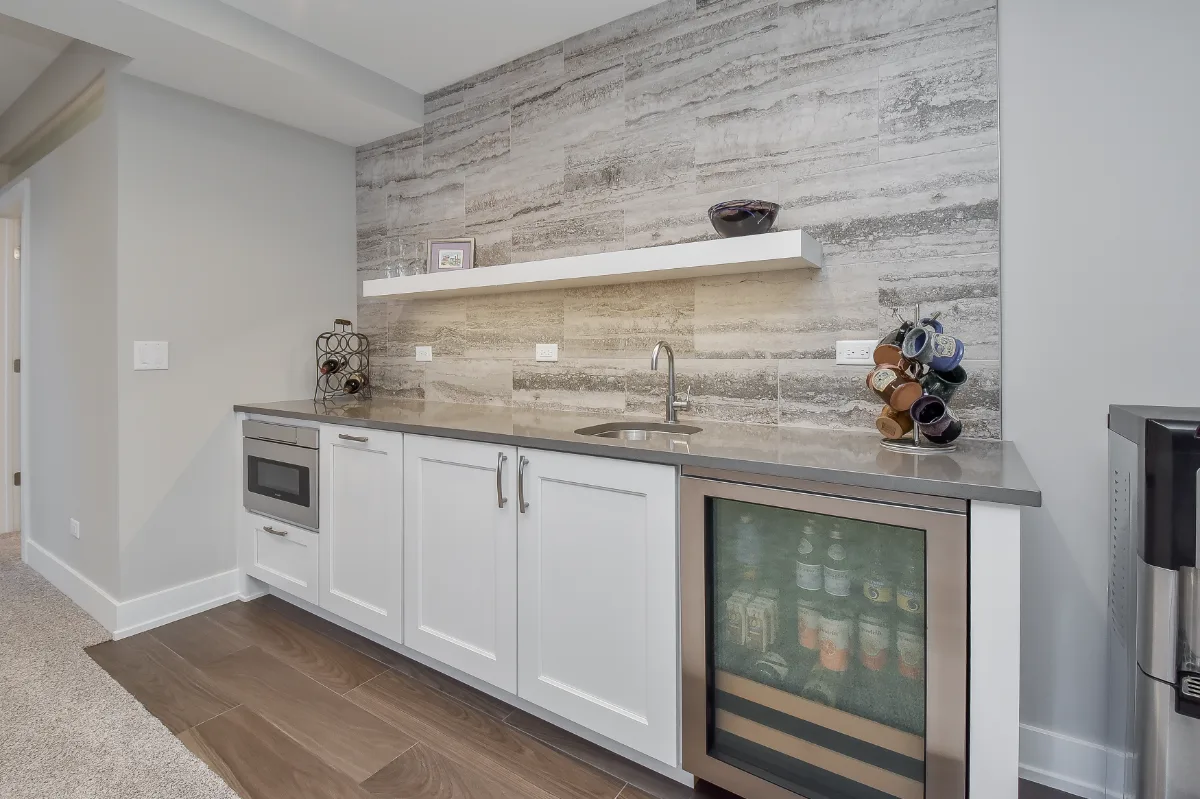
A backsplash that runs from the countertop to the ceiling transforms the wall behind the range from a functional surface into the kitchen's primary architectural statement. When paired with the elimination of upper cabinets on that wall, the effect is particularly dramatic: the full height of the wall becomes a single expressive field of material, and the range and hood become objects set within it rather than appliances mounted against a tiled strip.
"The ceiling-height backsplash is a decision that has to be made before the cabinet order goes in," says Bryan Sebring, CGR. "Once the upper cabinet layout is determined, the opportunity to take the backsplash to the ceiling on that wall is largely foreclosed. In a design-build process, we make that call early, during the design phase, so the cabinet layout and the backsplash scope are planned as one decision. When you see a ceiling-height backsplash that looks effortless, it is because someone made that decision at the right time."
In Franklin and Brentwood kitchens where the ceiling height is nine or ten feet, the full-height installation gives the room a sense of proportion and scale that a standard 18-inch backsplash strip cannot. Honed stone tile in a large format, Zellige tile in a warm earthy tone or even a painted plaster finish can all serve the ceiling-height installation depending on the material vocabulary of the rest of the kitchen.
6. Textured Tiles
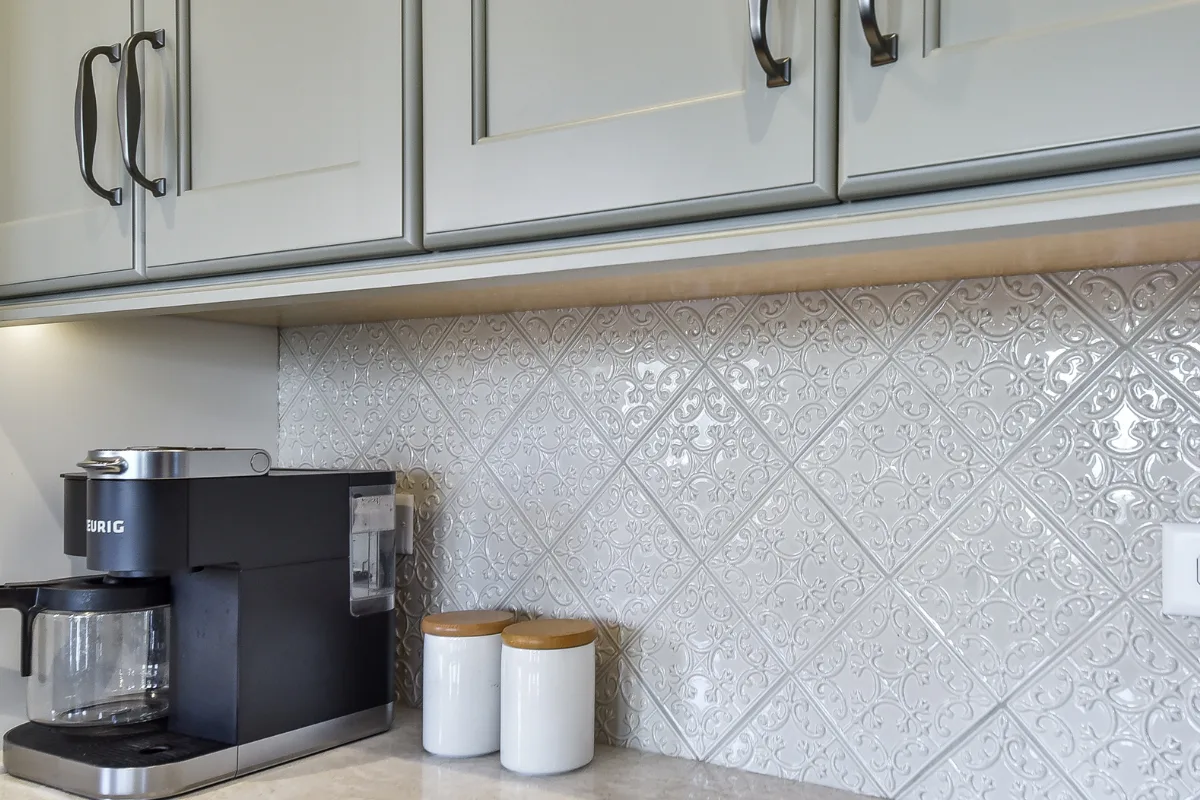
Textured tiles add a dimension to the backsplash that flat tile and slab cannot: the play of light across an irregular or dimensional surface that makes the material appear to change throughout the day as the kitchen's light shifts from morning to afternoon to evening. An artisan ceramic tile with a hand-pressed, slightly uneven surface, a handmade tile with deliberate variation in thickness, or a porcelain tile with a three-dimensional relief pattern all produce this effect at different scales and price points.
In a Franklin and Brentwood kitchen remodel where the cabinetry and countertop are beautifully specified but visually quiet, a textured backsplash tile provides the tactile interest and dimensional quality that keeps the kitchen from reading as flat and over-finished. The texture does not need to be dramatic to be effective. Even a subtle surface variation in a white or cream glazed tile produces a quality that smooth tile in the same color cannot match, because the slight dimensional difference catches light and creates shadows that make the material feel genuinely hand-produced and artisanal.
7. Graphic and Geometric Patterns
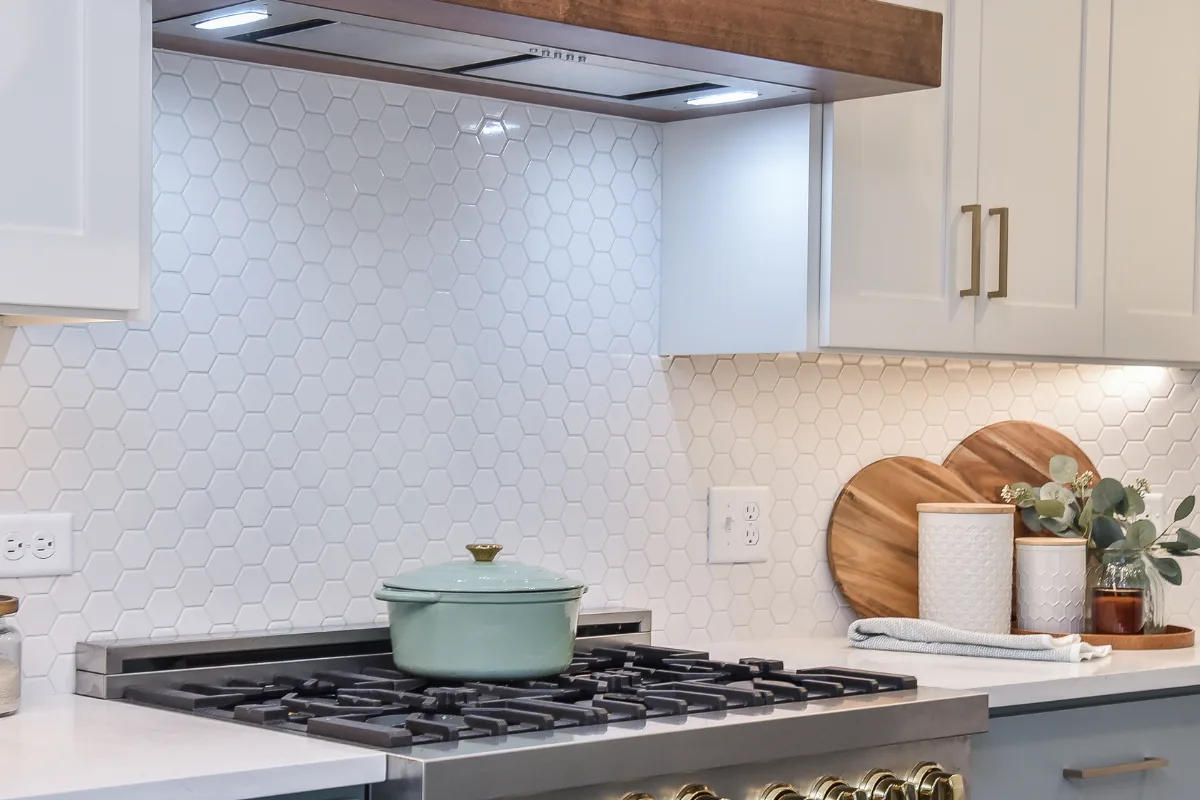
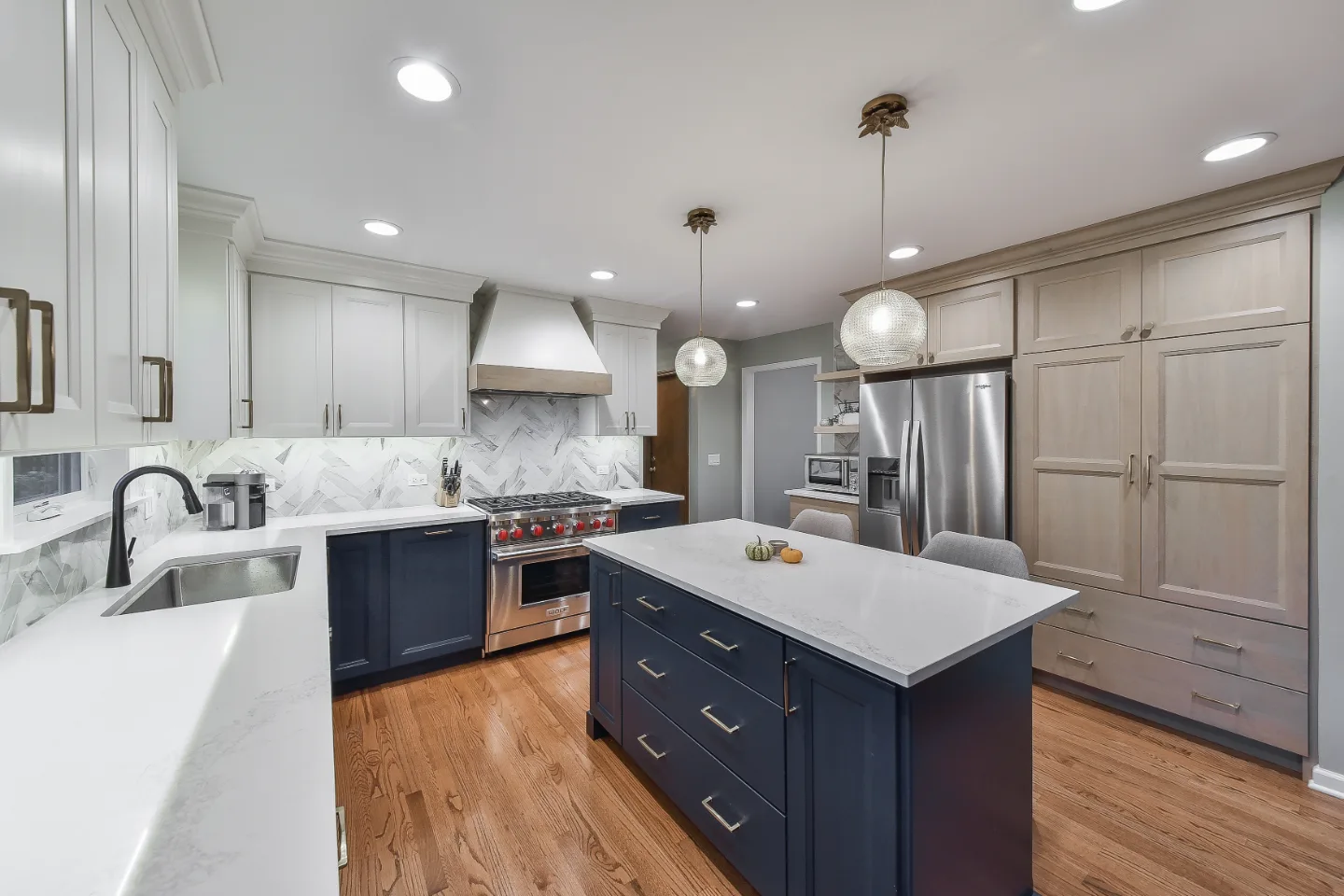
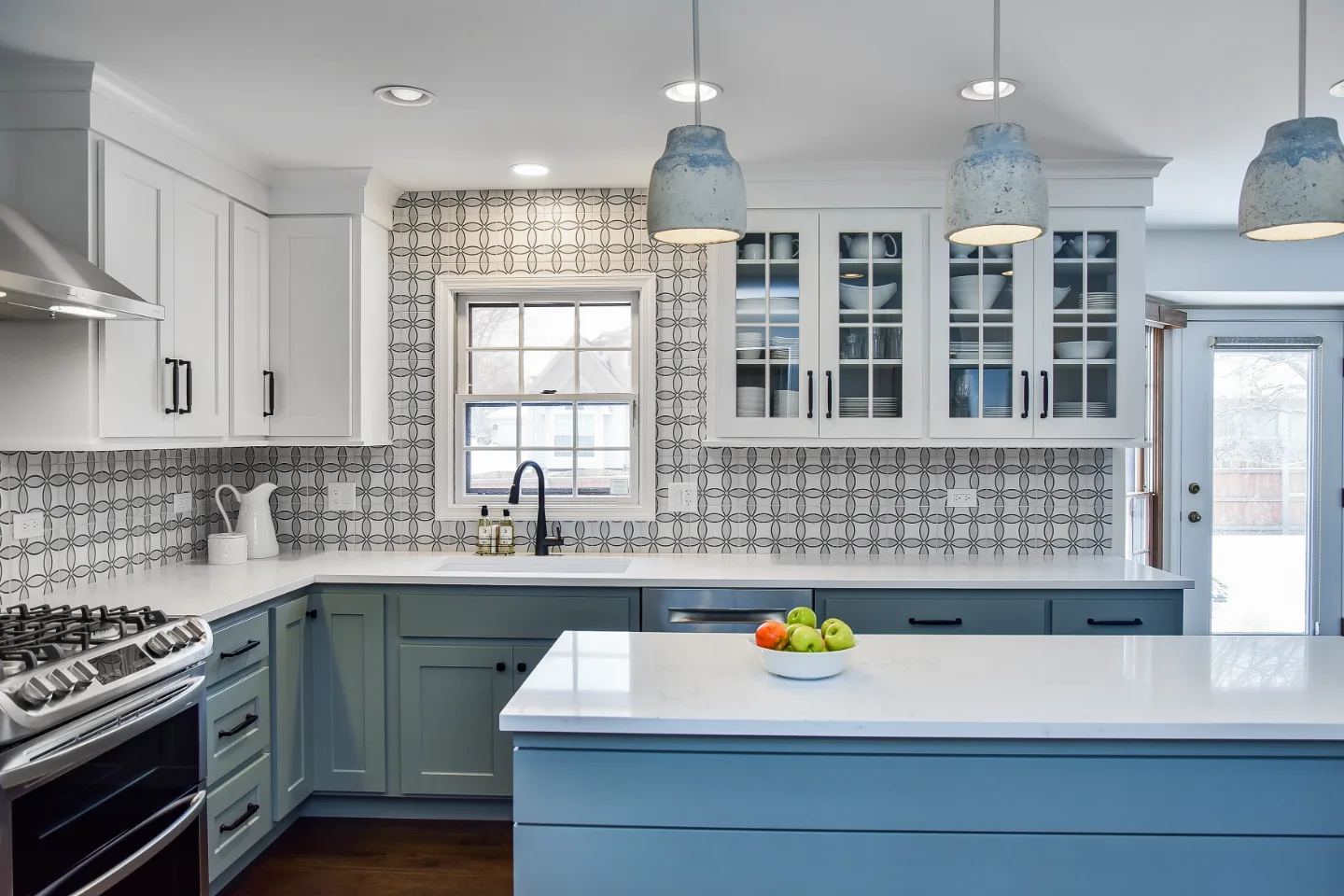
Geometric patterns in kitchen backsplash tile endure because they do something that a field of plain tile cannot: they produce visual movement and structural interest without requiring a bold color or a distinctive material beyond the kitchen hood design. A herringbone pattern in a neutral tile reads as more sophisticated than the same tile in a stacked horizontal layout. A field of hexagonals in a warm earthy glaze reads as more artisanal and collected. A running bond of large rectangular tiles in a vertical orientation draws the eye upward and makes the wall appear taller.
The most successful geometric backsplash designs in Franklin and Brentwood kitchens share a common quality: the pattern is selected for how it relates to the proportions of the backsplash zone rather than for its graphic interest in isolation. A herringbone that runs at the right scale for the tile format produces a rhythm that feels composed. The geometric pattern is a composition decision as much as a material decision.
8. Zellige Tiles
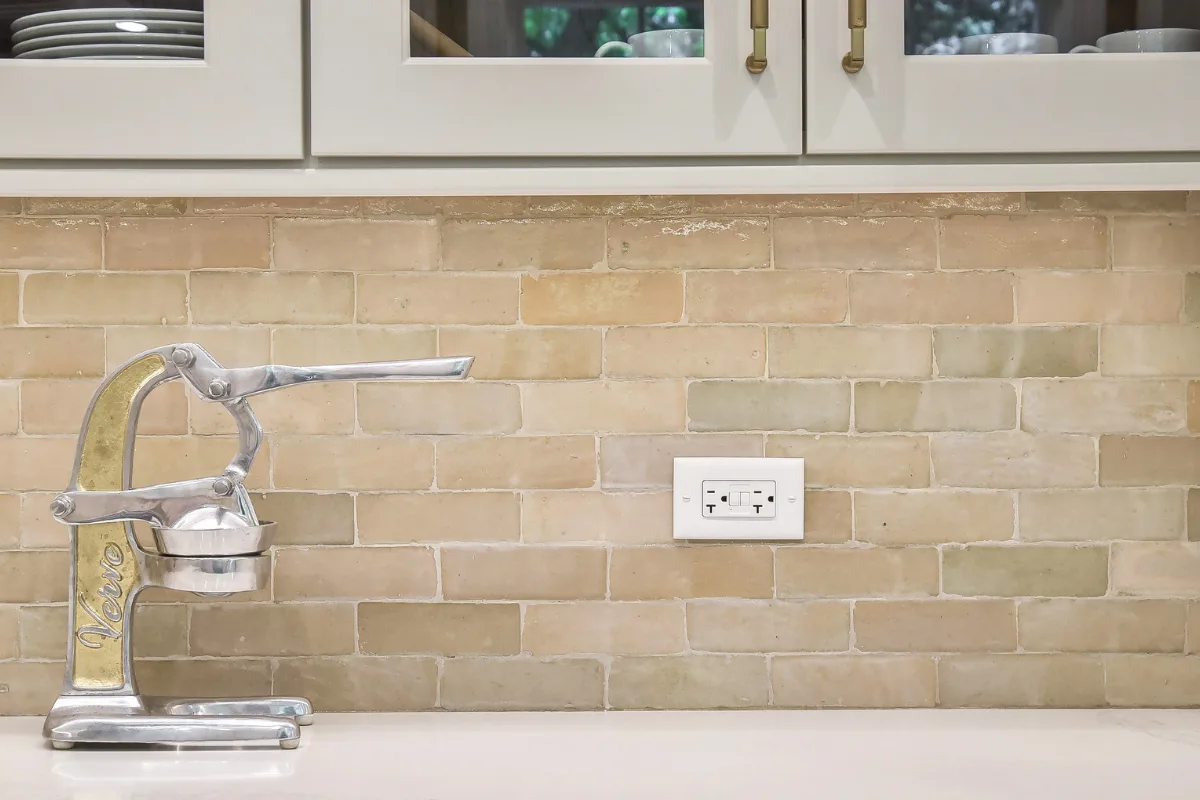
Zellige tiles are handmade Moroccan glazed terracotta tiles whose defining characteristic is that no two are identical. The variation in color, glaze depth and surface texture between individual tiles is not a manufacturing imperfection. It is the quality that makes the material uniquely valuable in a design context where manufactured consistency produces surfaces that read as flat and interchangeable.
In a Franklin or Brentwood kitchen where the material palette is otherwise precise, the Zellige backsplash introduces an element of genuine craft and organic variation that manufactured tile cannot replicate. A field of warm cream or warm ivory Zellige tiles in a standard format, laid in a simple stacked or running bond pattern, reads as visually complex and warm because each tile carries its own individual character. The variation in glaze depth means the surface catches light differently across its expanse, which produces a subtle shimmer that changes throughout the day.
The practical consideration with Zellige is installation precision. Because each tile varies in thickness and surface flatness, the mortar bed must be adjusted tile by tile to produce a reasonably plumb and flat installation. The result still has character and slight variation, which is appropriate to the material, but the installation requires a tile setter experienced with handmade tile rather than manufactured calibrated tile.
9. Stacked Rectangular Tile
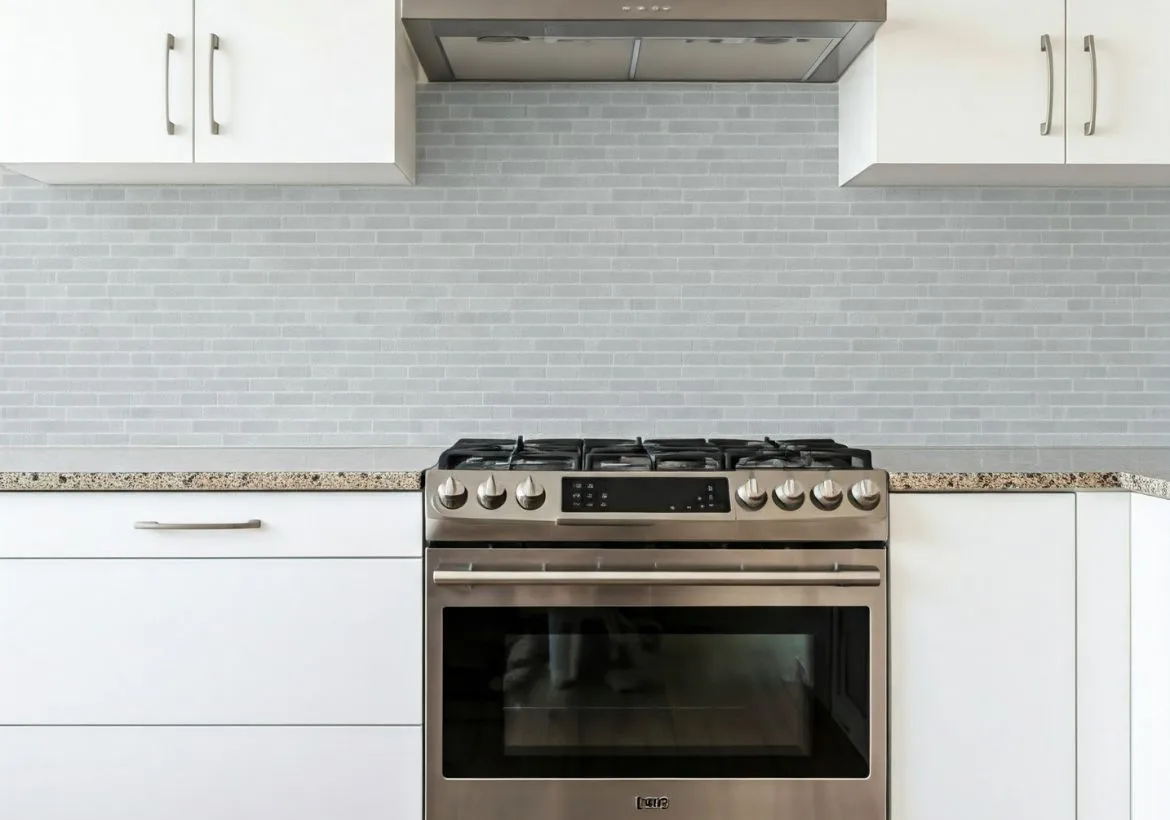
Thin rectangular tiles installed in a stacked vertical pattern, whether in a narrow format or a broader linear tile, have become a contemporary alternative to the traditional subway tile offset pattern. Where the offset or brick pattern produces a horizontal visual rhythm that emphasizes width, the stacked vertical format produces a more contemporary visual rhythm that emphasizes height and creates a stronger sense of proportion in the backsplash zone.
The appeal in Franklin and Brentwood kitchen island ideas is practical as well as aesthetic. A stacked pattern with a closely matched grout line is significantly easier to keep clean than an offset pattern with perpendicular grout intersections, because flat horizontal runs accumulate less cooking residue than the T-junctions that offset installations produce. In a kitchen where the backsplash is directly adjacent to the range, that maintenance difference is felt in daily cleaning routines for the life of the installation. Combined with a warm cream or warm white tile in a matte or satin glaze, the stacked rectangular format produces a backsplash that reads as considered and current without requiring a bold material or color commitment.
10. Satin and Semi-Gloss Finishes
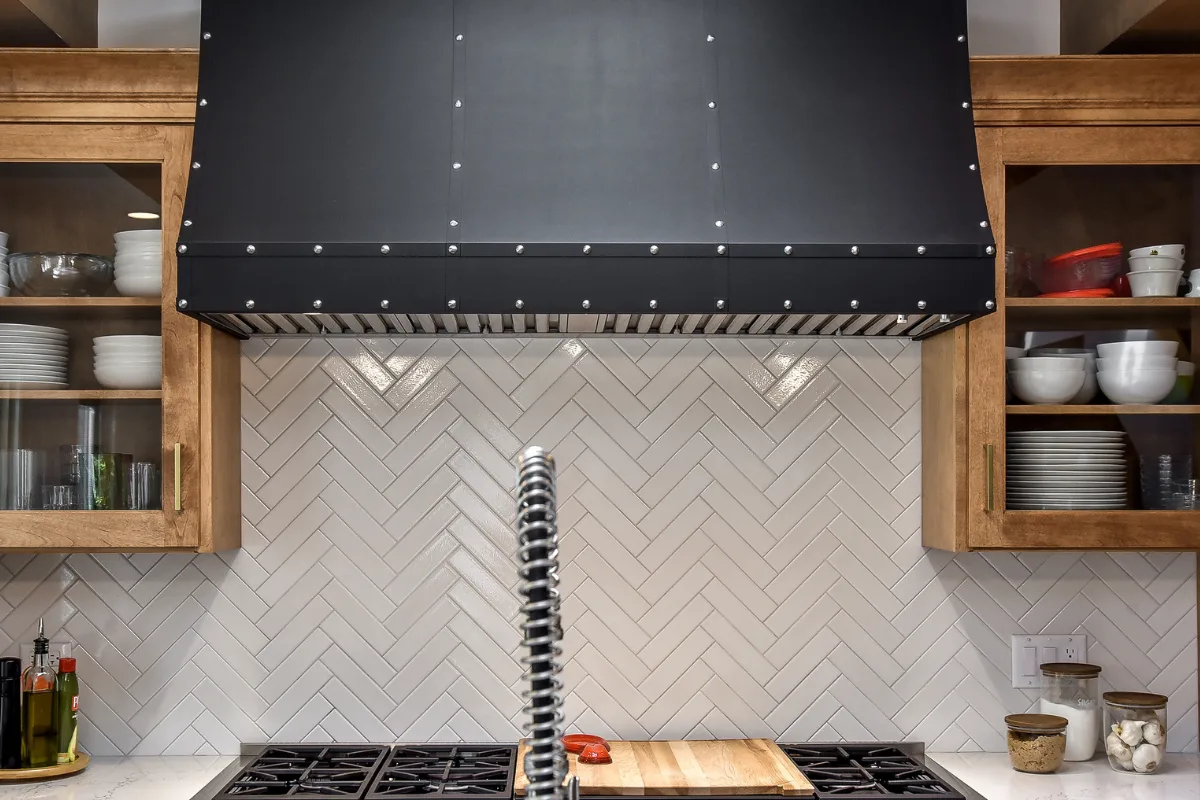
Satin and semi-gloss ceramic glazes occupy a finish category between the matte surface of honed stone and the high reflectivity of polished tile, and that middle position is exactly their advantage in a kitchen backsplash. A satin-glaze tile catches and reflects the under-cabinet task lighting in a way that brightens the countertop workspace below it, which is a genuine functional benefit in a kitchen where the backsplash is directly above the primary prep area.
In Franklin and Brentwood kitchens where the cabinetry is in a warm painted finish and the countertop is a honed stone, a satin-glaze ceramic backsplash in a warm cream or warm ivory tone creates the right contrast of finish without the visual competition that a high-gloss polished tile would introduce. The reflected light that the satin surface provides reads as warm and inviting rather than clinical or commercial. Satin and semi-gloss ceramic tiles in warm neutral tones are also among the easiest backsplash surfaces to maintain, as the glaze surface resists staining and cleans with minimal effort.
Backsplash Ideas for White Cabinets
White cabinetry gives a backsplash room to lead. For a soft, timeless kitchen, a warm white or cream Zellige tile adds texture without competing, and honed Calacatta marble brings gentle veining that reads beautifully against painted white or cream doors. For more contrast, a stacked vertical tile in sage, clay or a deep ink blue turns the backsplash into the room's one confident color moment.
Earth tones are especially at home in Williamson County kitchens: terracotta, ochre, warm taupe and mossy green glazes pair naturally with white oak, unlacquered brass and white cabinets for a kitchen that feels warm rather than stark. Whatever the direction, match the grout color to the tile for a calm surface, and carry the material to the ceiling on the range wall if you want the backsplash to feel architectural. See finished examples in our kitchen remodel portfolio or learn about our kitchen remodeling services in Franklin.
The Backsplash as a Design Decision
The backsplash deserves the same design discipline as the countertop, the cabinetry and the flooring. It is a surface that occupies some of the most visible wall space in the kitchen, it is seen from each angle of the room, and it is the element that gives the kitchen its character when everything else has been specified and installed.
In a Franklin or Brentwood kitchen remodel, the backsplash selection is a decision that should happen during the design phase alongside the countertop and cabinet material decisions, not as an afterthought selected from a tile showroom after construction has begun. The material, finish, scale and pattern of the backsplash need to be in deliberate conversation with the countertop material directly below it and the cabinetry color and door style above and around it. When those relationships are designed together rather than assembled sequentially, the result is a kitchen that reads as unified and intentional from each angle.
Sebring Design Build designs kitchen backsplash installations for Franklin, Brentwood and Williamson County homeowners as an integrated element of each kitchen remodel. If you are ready to transform your kitchen with a backsplash that is genuinely designed rather than simply selected, contact Sebring Design Build to schedule your complimentary consultation. Learn more about our kitchen remodeling services in Franklin, TN.