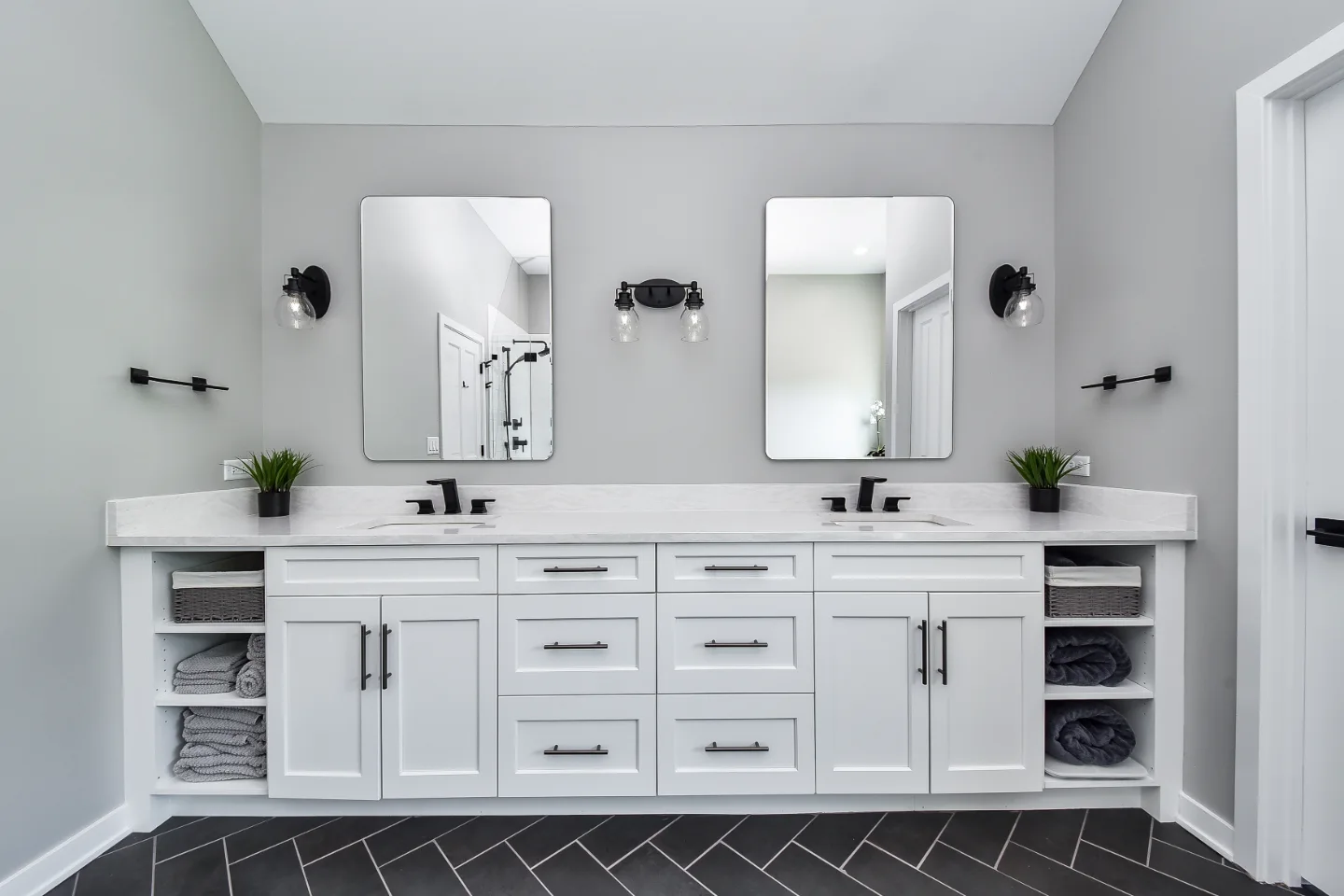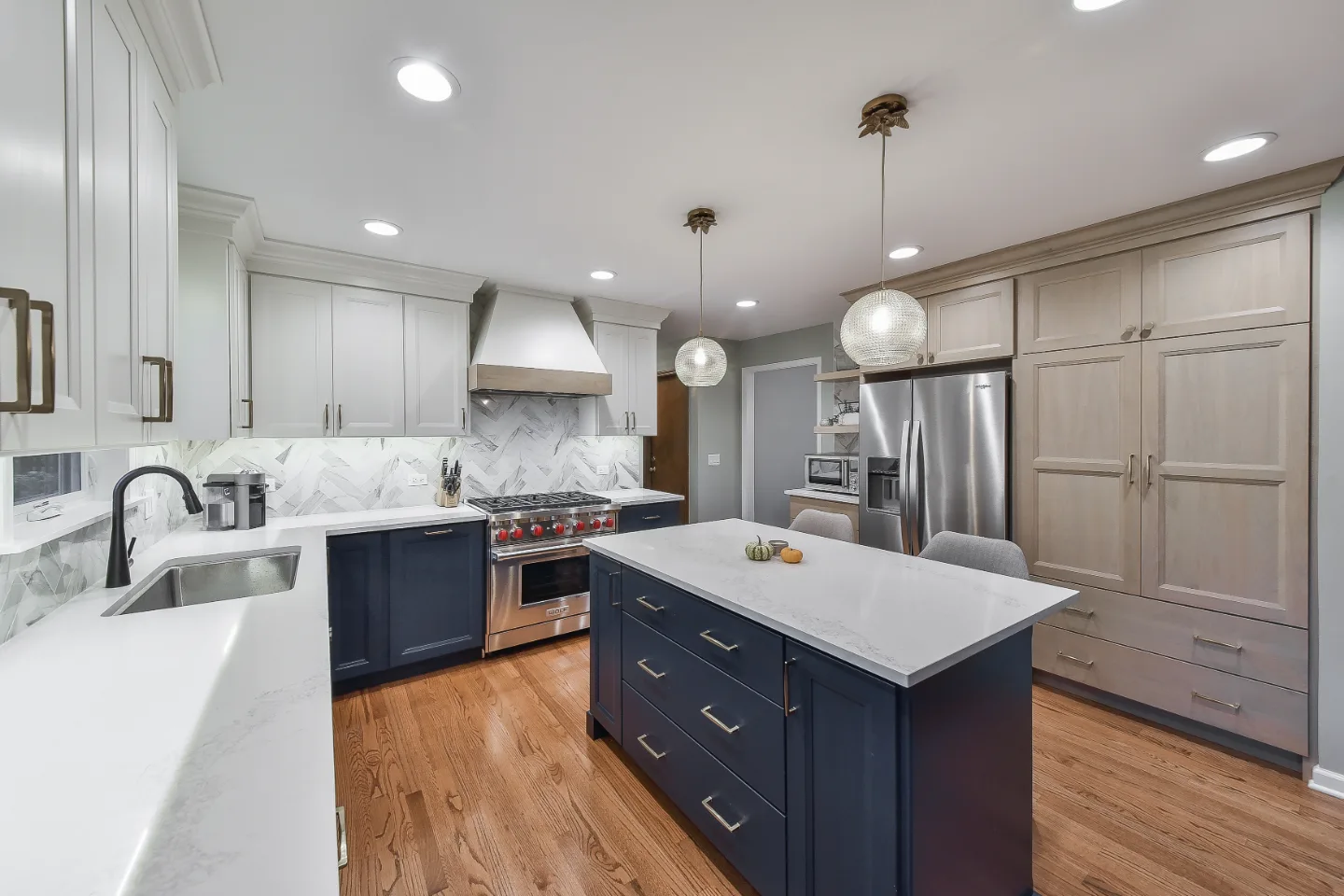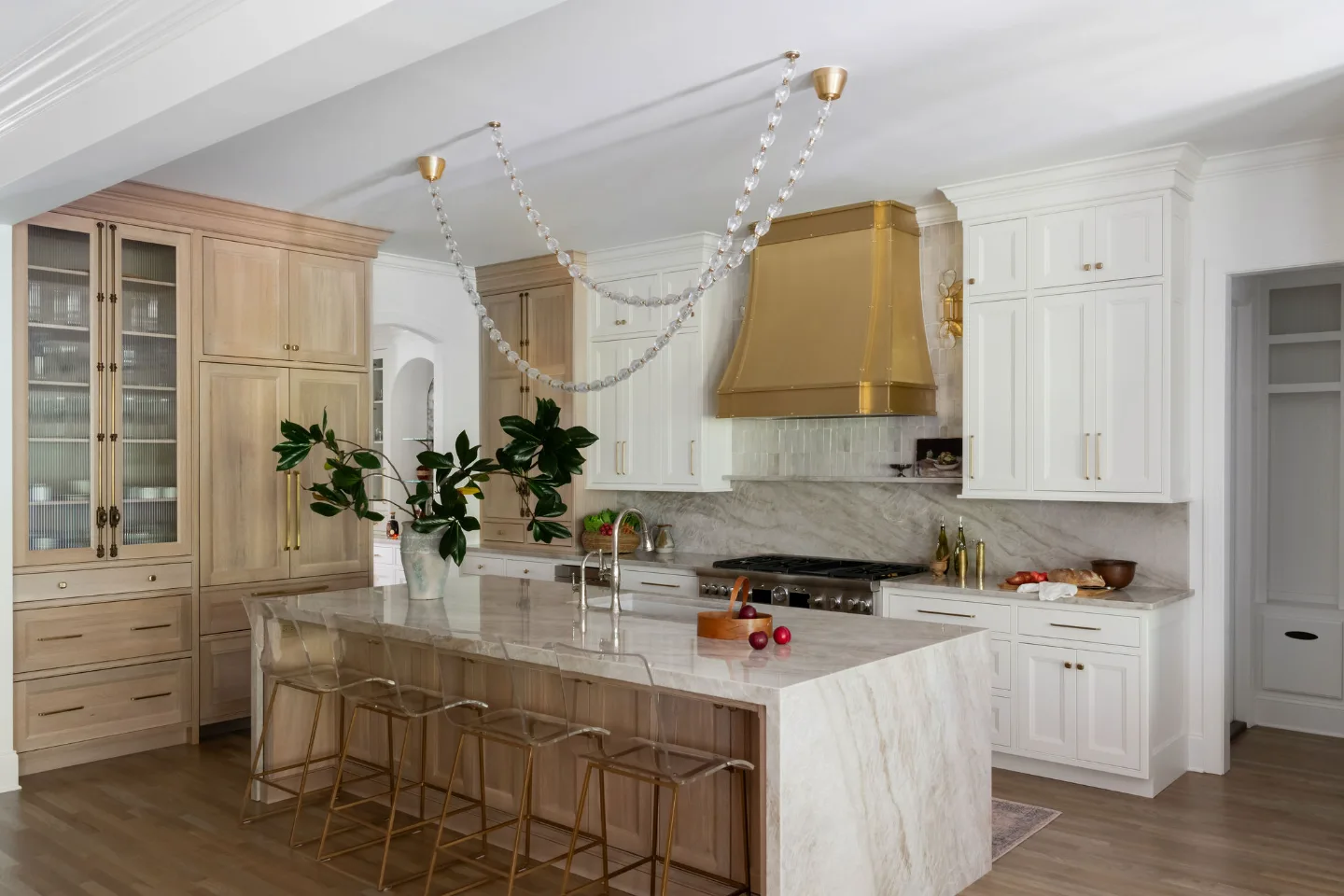
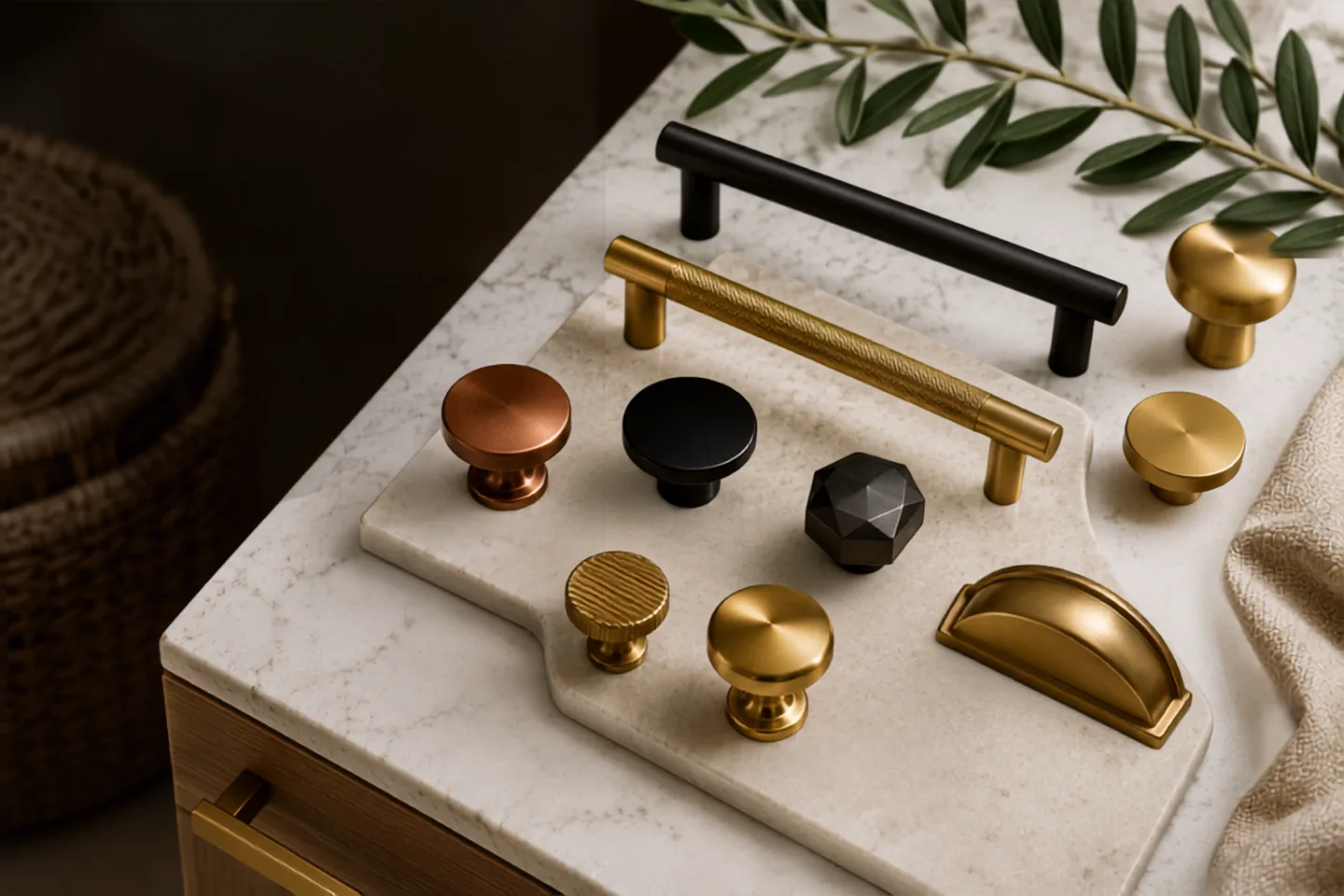
Kitchen hardware is the most consistently underestimated decision in a kitchen remodel. By the time most homeowners reach it, the appliances are set, the cabinetry is ordered, the countertops are slabbed and the backsplash is tiled. The hardware arrives last in the process and receives the least deliberate attention, despite being the element each person in the kitchen touches dozens of times each day.
That disconnect between effort spent and impact delivered is worth correcting. In a kitchen finished in painted white oak cabinetry and honed quartzite countertops, the hardware selection is one of the few remaining decisions with genuine power to elevate or undercut the entire palette. The right pull in the right finish pulls the design together. The wrong one, chosen quickly at the end of a long selection process, registers as an afterthought in a room that deserved better.
These ten kitchen hardware trends represent the directions that are defining the most considered remodels across Franklin, Brentwood and Williamson County right now, along with practical guidance for bringing each one into your own kitchen, the same level of detail visible throughout our kitchen remodel portfolio.
1. Unlacquered Brass and Warm Gold Finishes
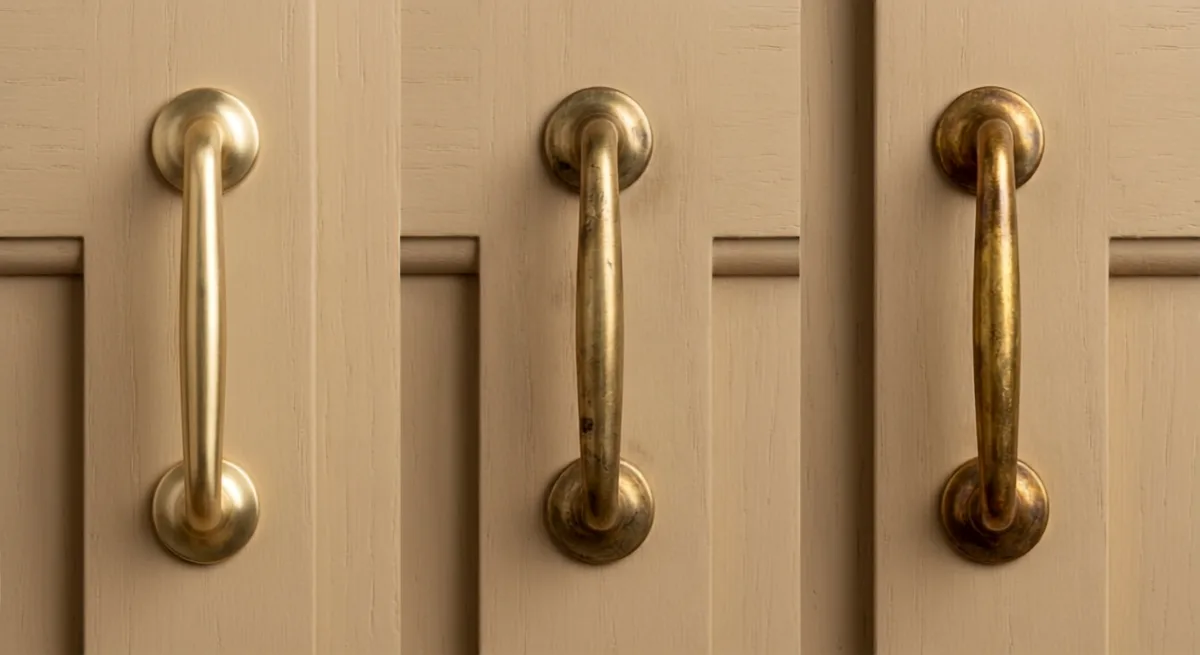
Unlacquered brass has become the defining hardware finish in the most refined Franklin and Brentwood kitchen remodels, and the reason is straightforward: it improves with time. Unlike lacquered brass, which maintains a uniform polished appearance until it chips or tarnishes unevenly, unlacquered brass develops a natural patina through daily use that reads as increasingly rich and considered rather than worn. The kitchen that chooses unlacquered brass hardware at completion looks better at year five than it did on the day the cabinetry was installed.
Gold-toned finishes more broadly are appearing in kitchens across Williamson County as a confident departure from the decade of chrome and brushed nickel that preceded them. Brushed gold in a warm tone brings formality and depth to cabinetry without requiring a dark or bold palette to support it. It works particularly well against painted white oak in a warm white finish, where the metal's warmth and the wood's warmth speak to each other without competing.
"Unlacquered brass is the first hardware finish we recommend in almost every kitchen we design," says Bryan Sebring, CGR. "It coordinates with warm wood tones, with honed stone and with almost every cabinet color we specify. And the way it ages, it becomes more beautiful rather than less, which is exactly what a permanent finish choice should do."
The pairing logic matters. Unlacquered brass hardware in a kitchen with a honed quartzite countertop and a Calacatta marble backsplash creates a warm, natural material story. The same hardware against dark cabinetry in forest green or ink blue produces a more formal, high-contrast result. Both are successful because the finish is inherently versatile across a wide range of kitchen palettes.
2. Mixing Metal Finishes with Intention
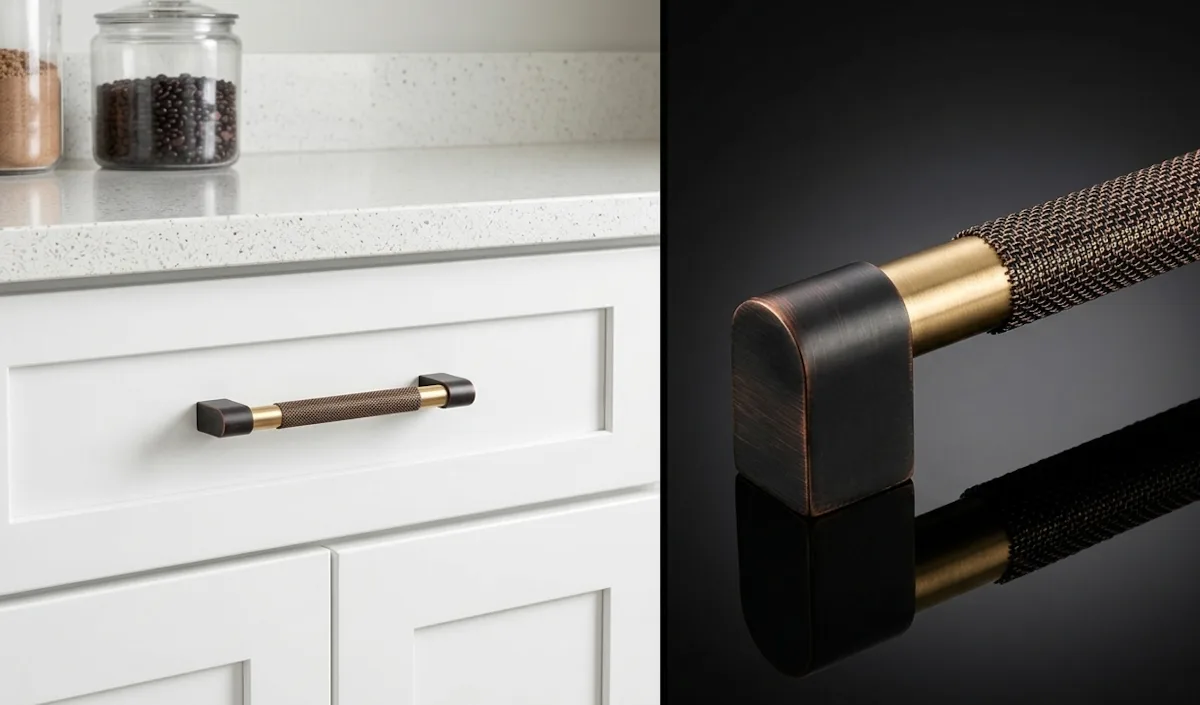
Mixing metal finishes across a kitchen has moved from an adventurous choice to a mainstream one in Williamson County remodels. A kitchen that uses a single finish throughout can read as flat or overly coordinated, while two complementary metals in deliberate relationship add visual depth and a clear sense of design intention.
The most reliable approach is to anchor the design in one dominant finish, typically the cabinet hardware, which carries the most visual weight in the room, and introduce one complementary finish in the faucet, light fixtures or appliance handles. Unlacquered brass cabinet hardware with a polished nickel faucet creates a warm-cool tension that reads as composed rather than conflicted, while brushed bronze hardware with a warm brass faucet produces a richer tone-on-tone variation.
What separates intentional mixing from accidental mixing is repetition and temperature. Each finish should appear in at least two places, so brass on the hardware also shows up in the faucet, the pendants or the range knobs, and the combination reads as a palette rather than a collection of separate choices. Finishes should also share a compatible color temperature: warm metals such as brass, bronze, copper and aged gold work together naturally, as do cool metals such as chrome, polished nickel and brushed stainless. The combination that most often fails is a warm metal and a stark cool metal at equal visual weight with nothing to bridge them.
3. Stone Hardware
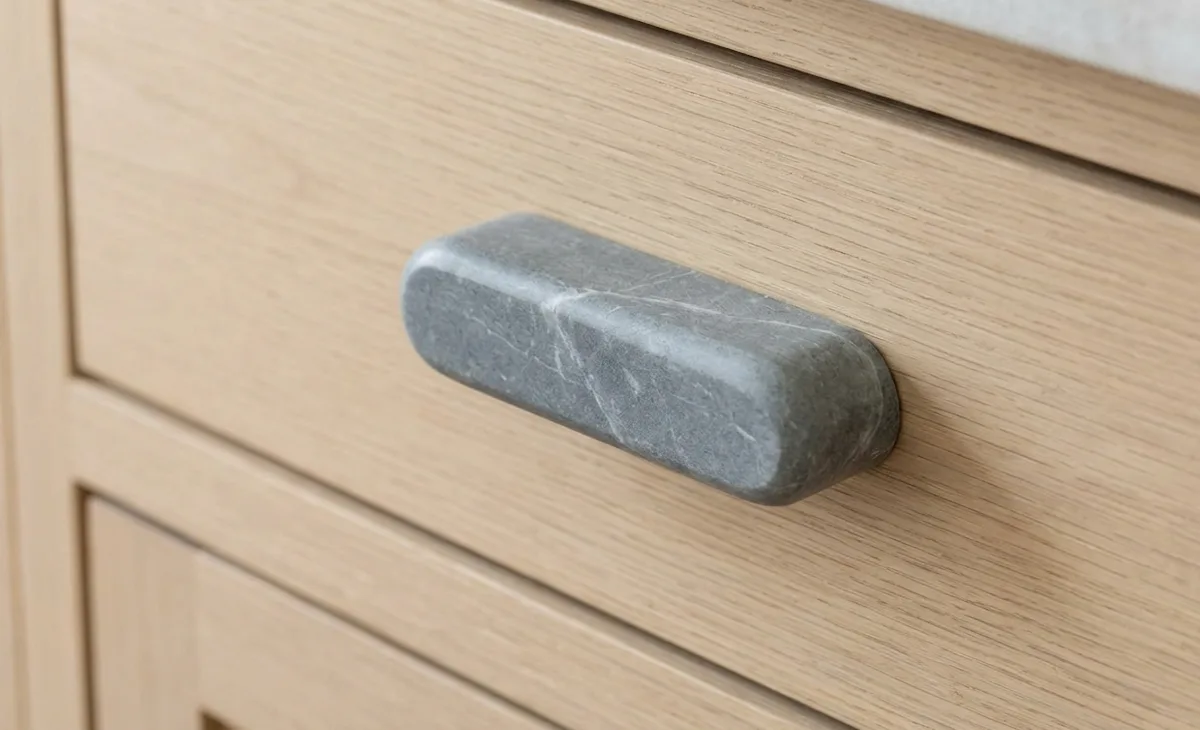
Stone hardware, handles and knobs crafted from marble, soapstone or quartzite, represents one of the more distinctive directions in current kitchen design and one that aligns naturally with the material palette of the most considered Williamson County remodels. In a kitchen that has already invested in a honed quartzite countertop or a Calacatta marble backsplash, stone hardware extends that natural material story to the cabinetry level in a way that no metal finish can replicate.
The appeal of stone hardware is both visual and tactile. The cool, smooth weight of a marble or soapstone pull in the hand is a different experience from metal hardware, and in a kitchen designed to feel grounded and natural, that tactile quality is a meaningful contribution to the room's overall character. Stone hardware can be sourced in materials that echo the countertop exactly, creating a sense of material continuity across the kitchen, or in complementary tones that provide a subtle visual contrast.
Durability is the practical question most homeowners ask about stone hardware, and natural stone, properly finished, is genuinely durable in this application. Soapstone in particular is dense, non-porous and highly resistant to chipping at edges, which makes it well suited for the daily contact of kitchen use. The mounting hardware is typically brass or stainless, which provides the structural connection to the cabinet.
4. Architectural Bar Pulls
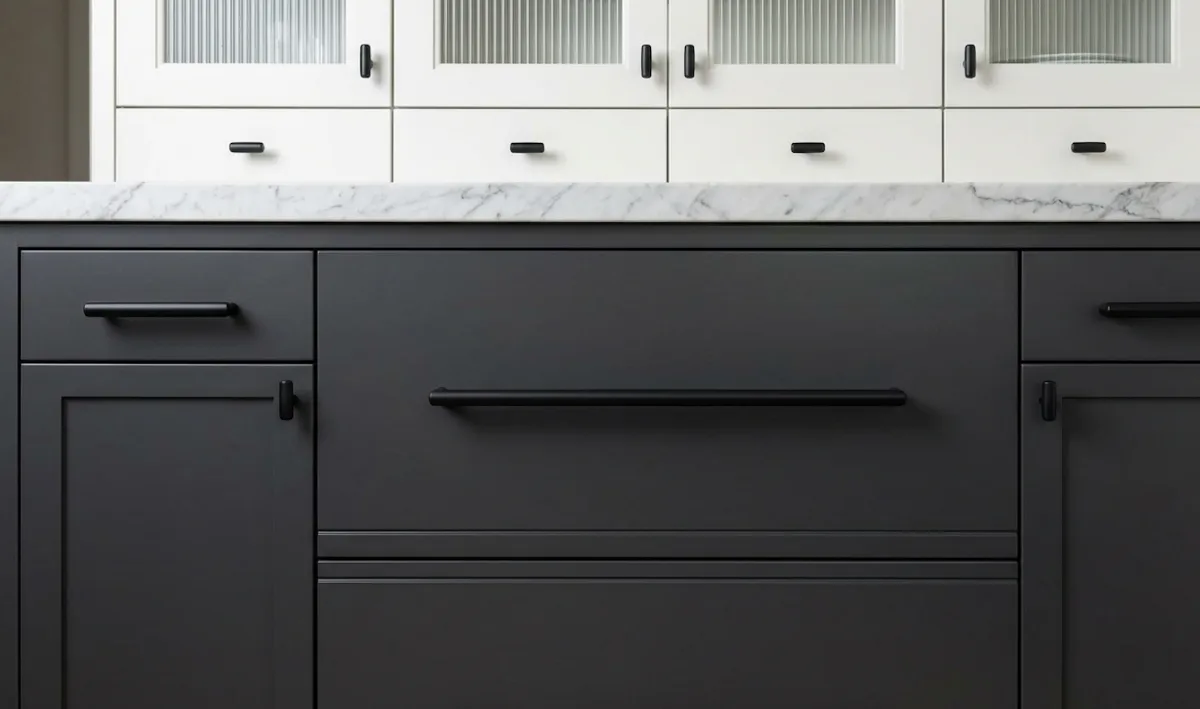
Long architectural bar pulls, ranging from twelve to eighteen inches or longer, have become a defining hardware detail in contemporary Williamson County kitchens. Their appeal is both functional and formal: a longer pull provides a more comfortable grip across a wide drawer front or tall door panel, and the extended line of the hardware reads as a deliberate architectural gesture rather than a decorative accessory.
At their best, long bar pulls give cabinetry a quality of intentionality that shorter pulls cannot. A single eighteen-inch pull centered on a wide drawer bank signals that the hardware was chosen in reference to the drawer, not from a selection of standard options. That calibration between hardware scale and cabinet scale is one of the clearest markers of a kitchen designed with thoroughness rather than efficiency.
Finish choices for long pulls follow the same logic as shorter hardware. Unlacquered brass develops its characteristic patina across a larger surface area, which makes the aging process more visible and more beautiful over time. Brushed nickel maintains a consistent appearance with minimal maintenance. Matte black creates strong visual contrast against lighter cabinetry and provides a grounding effect when the kitchen palette is otherwise warm and soft.
5. Exposed Bolt-Style Hardware for Architectural Edge
Exposed bolt-style hardware, pulls and knobs built around a visible fastener silhouette rather than a smooth continuous form, has become a recognizable direction across the wider kitchen hardware industry, and it is worth understanding even in a kitchen built on quieter, more restrained material choices. The look reads as deliberate and structural: clean lines, a clear mechanical logic and proportions substantial enough to register from across the room.
In its most common form nationally, this hardware appears in matte black or brushed nickel, which keeps the industrial reference point clean and contemporary rather than dated. The finish that translates most successfully into a Franklin or Brentwood kitchen built on unlacquered brass, natural stone and white oak is an aged or antique brass version of the same silhouette, warm rather than stark, which allows the architectural form to read as intentional rather than borrowed from a different design language entirely.
Used sparingly, this style of hardware can add a note of structural honesty to a kitchen that is otherwise built on softer, more organic materials, particularly on a single functional element like a pantry door or a beverage station, rather than throughout the full cabinetry run. Used throughout an entire kitchen, it reads as a stronger design statement and works best with clean lines and minimal ornamentation elsewhere to support it.
6. Leather Pulls
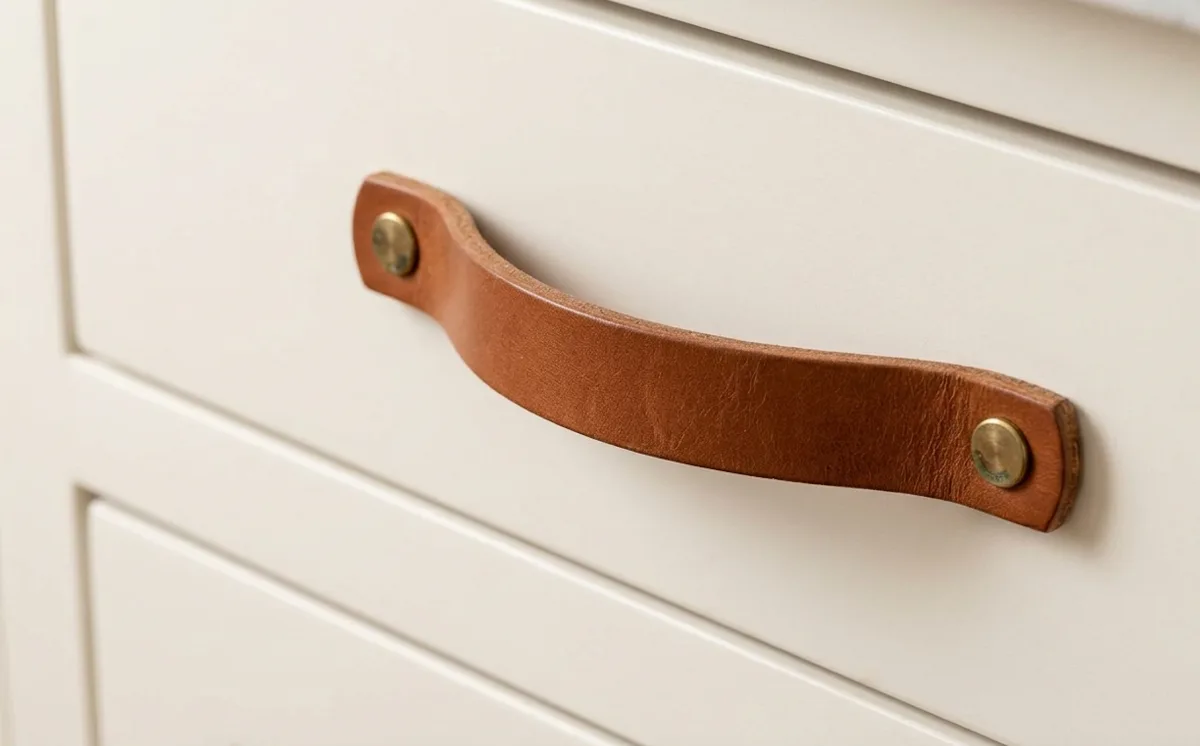
Leather pulls occupy a distinct position in kitchen hardware design because they introduce a material that appears almost nowhere else in a kitchen while contributing warmth, texture and a quality of craft that metal hardware cannot provide. In a kitchen designed around natural materials, white oak cabinetry, honed stone countertops and honest metals, a leather pull is a logical and beautiful extension of that material sensibility.
The most refined versions are made from full-grain or vegetable-tanned leather in warm natural tones, cognac, saddle or aged natural, mounted with brass rivets or ring hardware at either end. The leather develops its own patina through daily handling, which, like unlacquered brass, produces a finish that reads as more beautiful at year five than at installation. That quality of aging with grace rather than showing wear is one of the distinguishing characteristics of genuinely luxury hardware.
Leather pulls work best in kitchens where the overall palette already has warmth and where other natural materials are present. They require occasional conditioning with a leather treatment product to maintain their suppleness and prevent drying over time. For homeowners who are comfortable with that level of material care, leather pulls are one of the most distinctive hardware choices available, and they work especially well on a pantry door, as our kitchen pantry ideas guide shows.
7. Warm Greige and Matte Pewter Finishes
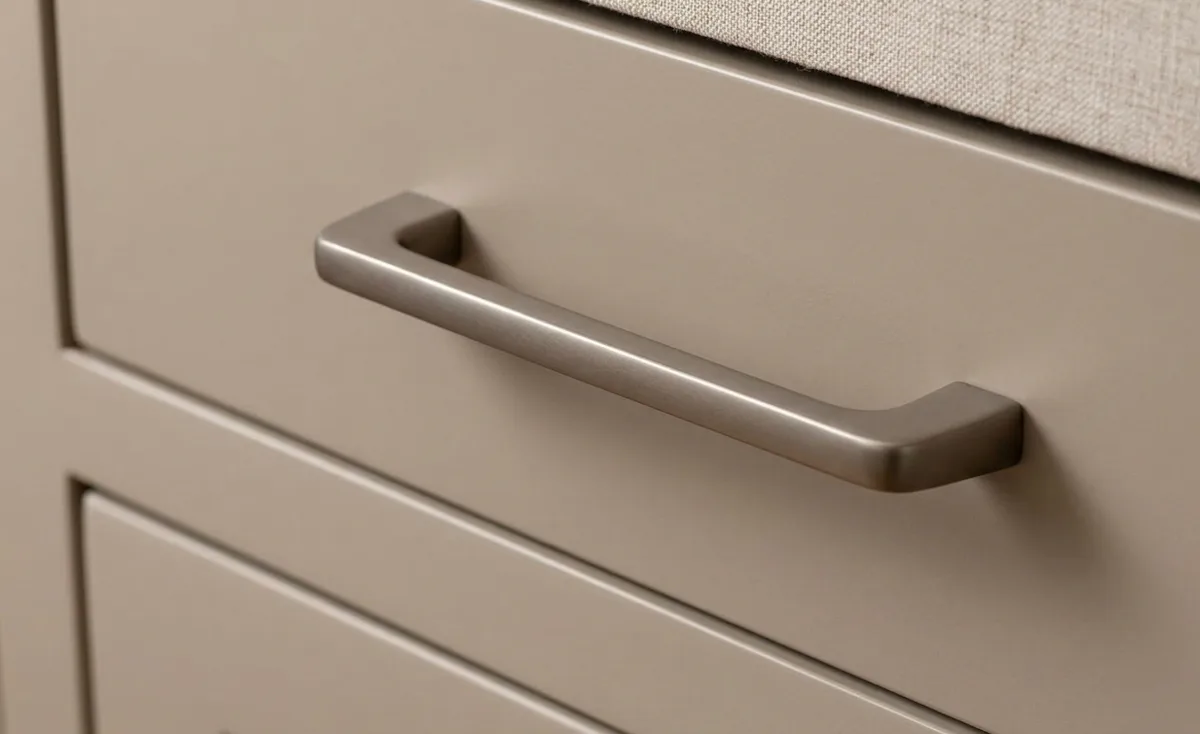
Warm greige and matte pewter hardware finishes have emerged as a genuine alternative to the binary choice between brass and matte black that defined kitchen hardware for much of the recent decade. These finishes sit in the tonal range between silver and brown, with a warmth that matte black does not provide and a neutrality that brass does not, which gives them a particular versatility across different kitchen color ideas and palettes.
In practice, warm greige hardware reads as a confident neutral. It does not read as black or silver from across the room, which means it does not create the high-contrast effect that either of those finishes produces. Instead, it integrates quietly into the cabinetry palette while adding a quality of material depth that bare wood or painted surfaces alone cannot provide. Against warm greige or taupe cabinetry, pewter hardware is nearly invisible as a separate element and reads instead as part of a tonal composition.
The most practical application for these finishes is in kitchens where the homeowner wants to introduce color in the hardware without the visual commitment of brass or the contrast of black. They also provide a useful option in two-tone kitchens where neither brass nor black hardware reads well with both cabinet colors simultaneously.
8. Traditional Profiles and Artisan Knobs
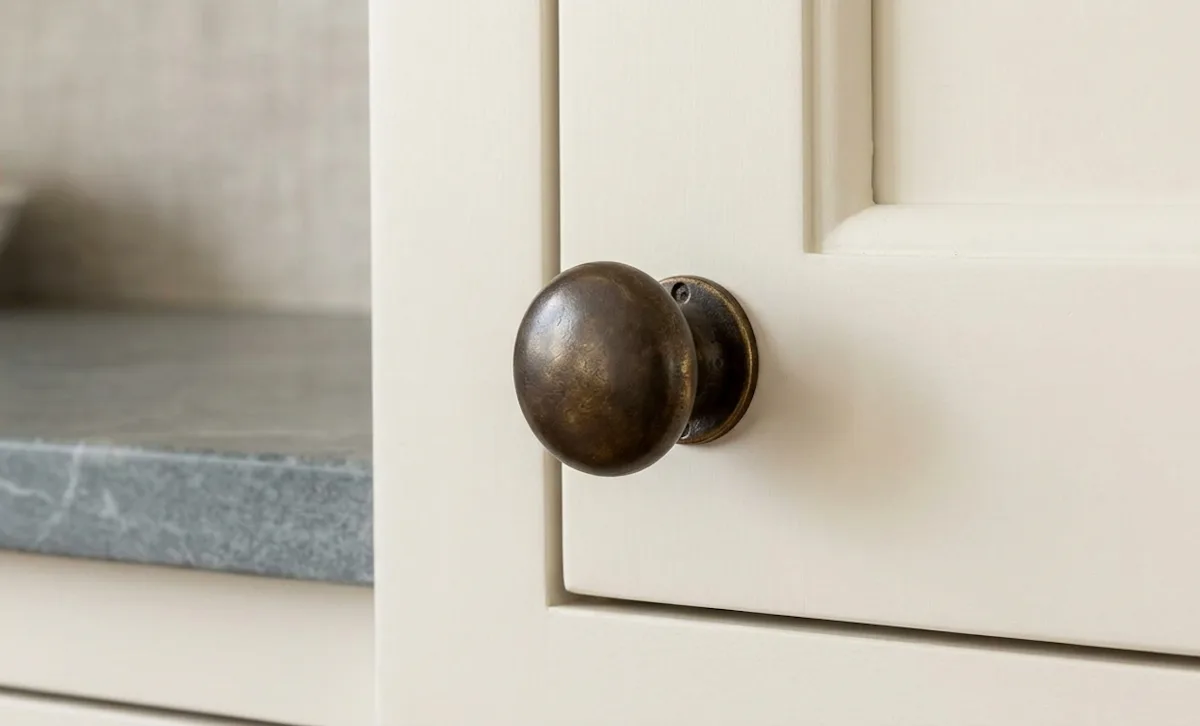
Traditional hardware profiles, characterized by their rounded forms, visible craftsmanship and reference to historical precedents in furniture and cabinetry hardware, have found a renewed audience in Williamson County kitchens that are designed with a classic or transitional vocabulary. The best current traditional hardware is produced with the same material quality and precision as contemporary hardware, but its form language draws from a different design tradition.
The finishes most associated with traditional hardware profiles are antique brass, aged bronze, oil-rubbed bronze and pewter. These are finishes that intentionally suggest age and use rather than newness, which gives them an authenticity that highly polished contemporary finishes sometimes lack. In a kitchen with painted inset Shaker cabinetry, traditional knobs in an aged bronze finish produce a combination that feels settled and historically grounded rather than newly installed.
Traditional hardware profiles also tend to work well with the natural material palettes that dominate the most refined Franklin and Brentwood kitchens, because those material palettes, honed stone, white oak, warm linen, are themselves drawn from natural and historical precedents. The hardware and the materials share a common sensibility that makes the combination feel composed rather than assembled, a principle that carries through to kitchen layout planning as well.
9. Glass Knobs and Pulls
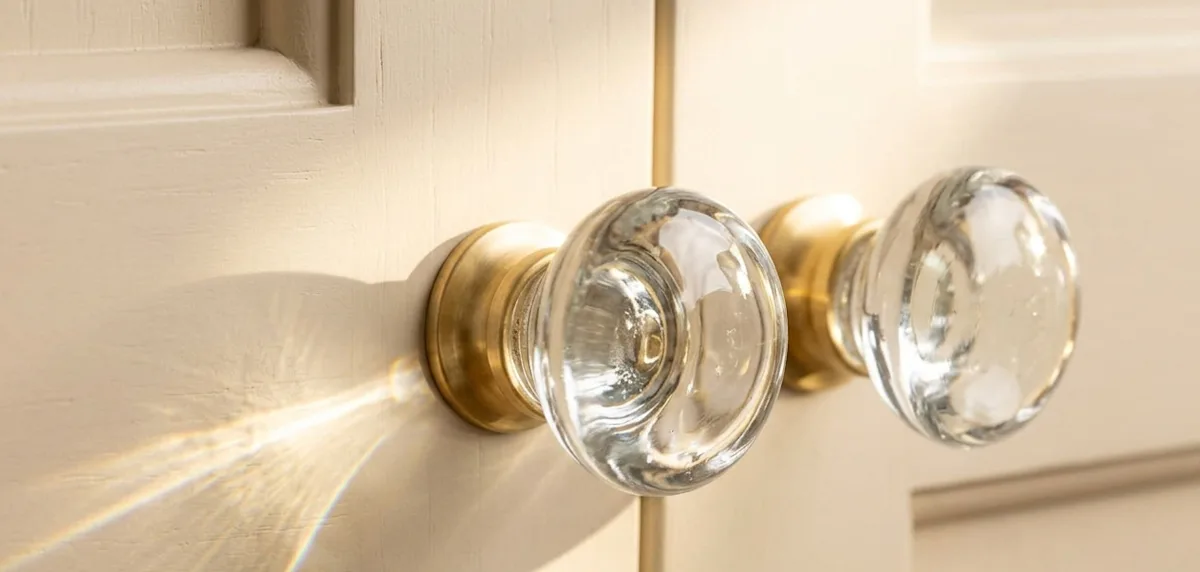
Glass knobs and pulls have cycled through kitchen design several times over the past century, and their current reappearance is distinguishable from previous iterations by the caliber of the glass being used and the context in which it is being applied. The best current glass hardware is produced from hand-blown or cast glass with a clarity, weight and light-catching quality that mass-produced pressed glass cannot match.
In a kitchen designed in warm whites and natural materials, glass knobs introduce a quality of quiet sparkle that metal hardware does not. They catch light from different angles as the day progresses, creating a subtle visual animation that keeps the cabinetry surface from reading as static. This effect is most beautiful in kitchens with generous natural light and warm artificial lighting, where the glass responds to both light sources differently.
Glass hardware pairs most naturally with painted cabinetry in white or off-white, where the hardware's transparency allows the cabinet color to read through it rather than creating an opaque decorative element. Against warm white painted oak, it reads as elegant and considered.
10. Oversized Pulls That Command Attention
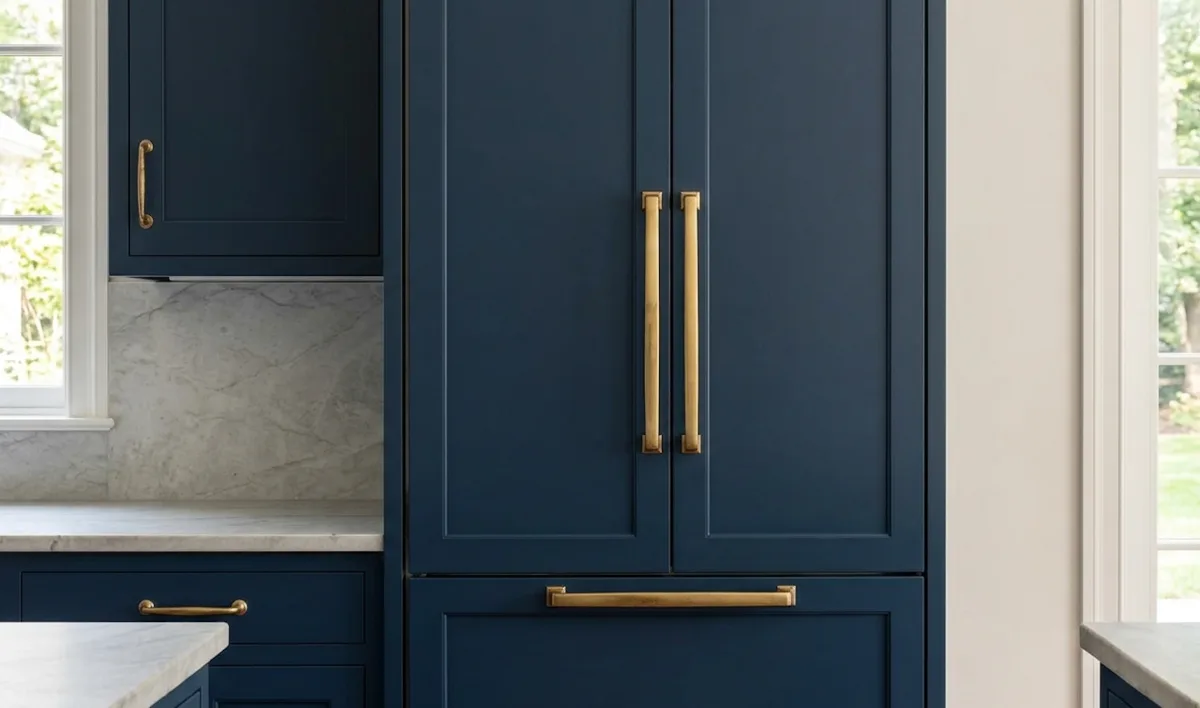
Oversized bar pulls, in the range of eighteen to twenty-four inches or longer, function as architectural elements in the kitchen as much as functional hardware. Their appeal in Franklin and Brentwood kitchens, many of which feature generous ceiling heights and correspondingly large cabinet panels, is that they respond to the scale of the cabinetry rather than defaulting to a standard hardware proportion that was designed for a different context.
The design principle that makes oversized pulls work is proportion: the hardware should be scaled to the cabinet panel it serves rather than to a generic standard. A tall refrigerator panel with an eighteen-inch pull is in proportion. The same panel with a four-inch knob is not. That mismatch between hardware scale and cabinet scale is one of the most common sources of the slightly incomplete quality that some otherwise well-designed kitchens have at completion.
Oversized pulls are most successful in kitchens with a contemporary or transitional design vocabulary where clean lines and restrained detail are already the established language. In a kitchen with clean Shaker-profile cabinetry and a minimal backsplash, a long bar pull reads as a confident and appropriate architectural gesture.
Knobs vs. Pulls: Placement and Sizing Guide
A simple, classic approach is knobs on doors and pulls on drawers, which suits traditional and transitional kitchens. Pulls throughout, on both doors and drawers, reads cleaner and more modern and is easier to grab. Many Franklin and Brentwood kitchens mix the two deliberately, using knobs on upper doors, pulls on drawers and longer appliance pulls on panel-ready refrigerators.
Placement follows a few dependable conventions. On cabinet doors, set the knob or pull about two to three inches from the corner opposite the hinge, near the top of base doors and near the bottom of upper doors. On drawers, center the hardware on the drawer front and consider two pulls on drawers wider than roughly 30 inches. A widely used rule of thumb sizes drawer pulls to about one-third of the drawer width, with common hole spacings of 3 inches, 96 millimeters and 128 millimeters for standard pulls. Our cabinet sizes guide covers standard drawer and door dimensions.
How to Choose the Right Hardware for Your Kitchen
The most reliable approach to hardware selection is to treat it as a material decision rather than a decorative one. The question is not which hardware looks most appealing in isolation but which finish and form work best in specific relationship to the cabinetry color, the countertop material, the lighting quality and the overall design vocabulary of the kitchen.
Finish selection should follow from the kitchen's existing material commitments, the same palette logic covered in our guide to kitchen color trends. A kitchen in warm white oak and honed quartzite is naturally suited to unlacquered brass or warm bronze. A kitchen in painted cabinetry with a cool grey stone countertop may read better in polished nickel or brushed stainless. Testing the actual hardware sample against the actual cabinet door and countertop in the actual kitchen light, not in a showroom, is the most important step in narrowing the selection.
Scale selection should follow from the cabinet dimensions. A widely used rule of thumb sizes drawer pulls to about one-third of the drawer width, which reads as intentional and proportional. Hardware that is significantly smaller than the surface it serves reads as insufficient. In a kitchen with tall uppers and full-height pantry panels, the hardware scale should be calibrated to those larger surfaces, which typically means longer and heavier pulls than a standard selection would suggest.
It is time that you love each detail of your kitchen, including the ones you touch each day. If you are planning a kitchen remodel in Franklin or Brentwood, contact Sebring Design Build to schedule your complimentary consultation. Hardware selection is part of each kitchen design we complete, not an afterthought addressed at the end of the process.