Bathroom design has moved well beyond function. What was once purely a practical room is now one of the most personal spaces in a home, expected to feel beautiful, calm and genuinely restorative. Among all the decisions that shape a bathroom remodel in Franklin or Brentwood, few have a greater impact on the finished experience than lighting.
Lighting determines how a space feels at six in the morning and at ten at night. It shapes how finishes read, how large a room feels and whether a bath in the evening actually helps you unwind. Lighting rewards being treated as a design discipline in its own right, rather than an afterthought added after everything else is decided.
At Sebring Design Build, lighting is part of the design conversation from the beginning. A well-considered lighting plan is what allows beautiful tile, custom cabinetry and natural stone to read as intended. These ten bathroom lighting ideas reflect the design thinking behind many refined bathrooms across Williamson County, many of them visible throughout our bathroom remodel portfolio.
1. Layered Lighting That Supports Real Life
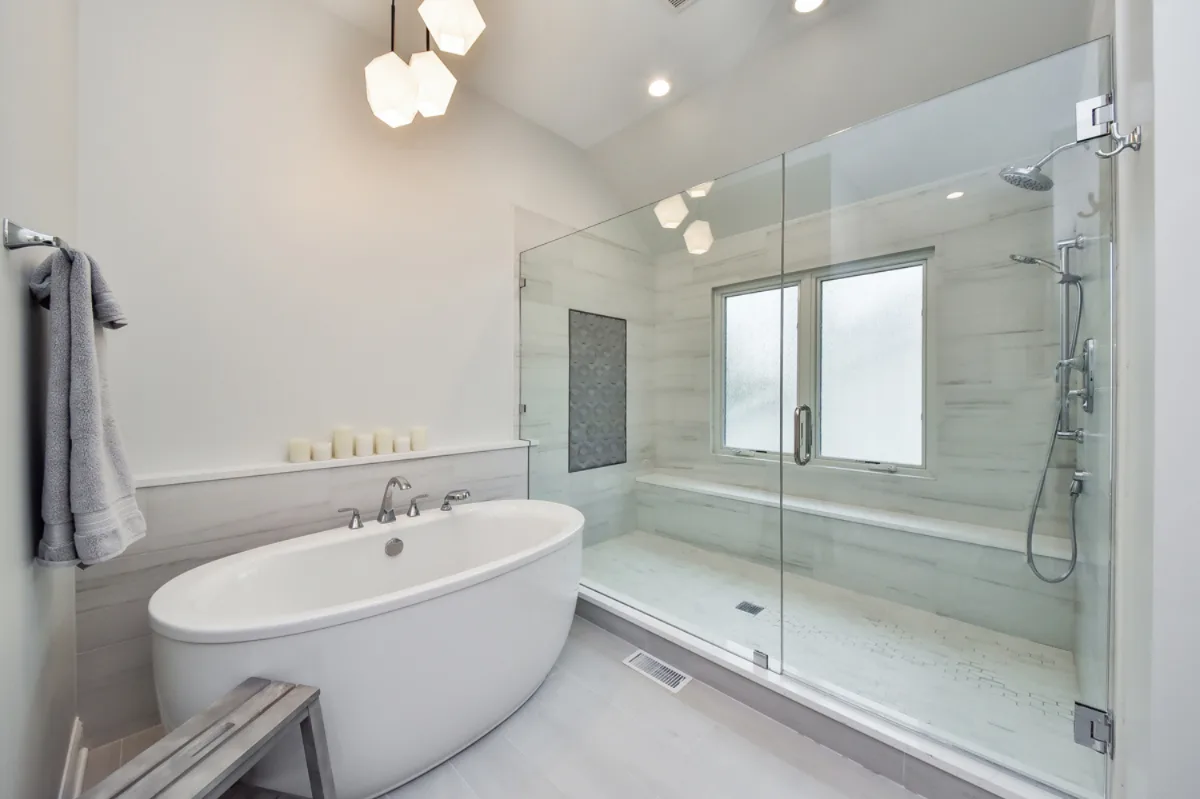
The most foundational bathroom lighting idea is also the most misunderstood: layering. A single ceiling fixture does one thing, and it rarely does it well. A layered lighting plan addresses each activity that takes place in the bathroom and each mood the space is expected to support.
Ambient lighting provides the overall illumination that makes the room usable. Task lighting serves specific functional needs, particularly at the mirror where accuracy matters for grooming and applying makeup. Accent lighting highlights architectural details, the texture of a stone wall, the depth of a built-in niche, the grain of a custom vanity. Each layer does something distinct, and together they produce a bathroom that reads as fully composed rather than simply lit.
The difference between a bathroom with one overhead fixture and one with a properly layered plan is significant enough to feel immediately. Recessed ceiling lights on dimmers establish the baseline. Wall sconces at mirror height remove the facial shadows that overhead lighting tends to create. LED strips beneath a floating vanity add warmth and depth at the floor level. These three sources working together transform the experience of the room entirely.
"Lighting is the first thing we talk about in any bathroom design conversation," says Bryan Sebring, CGR. "Get the layers right and each material you chose looks better. Get them wrong and even the most beautiful tile reads flat."
2. Backlit Mirrors That Soften Harsh Shadows
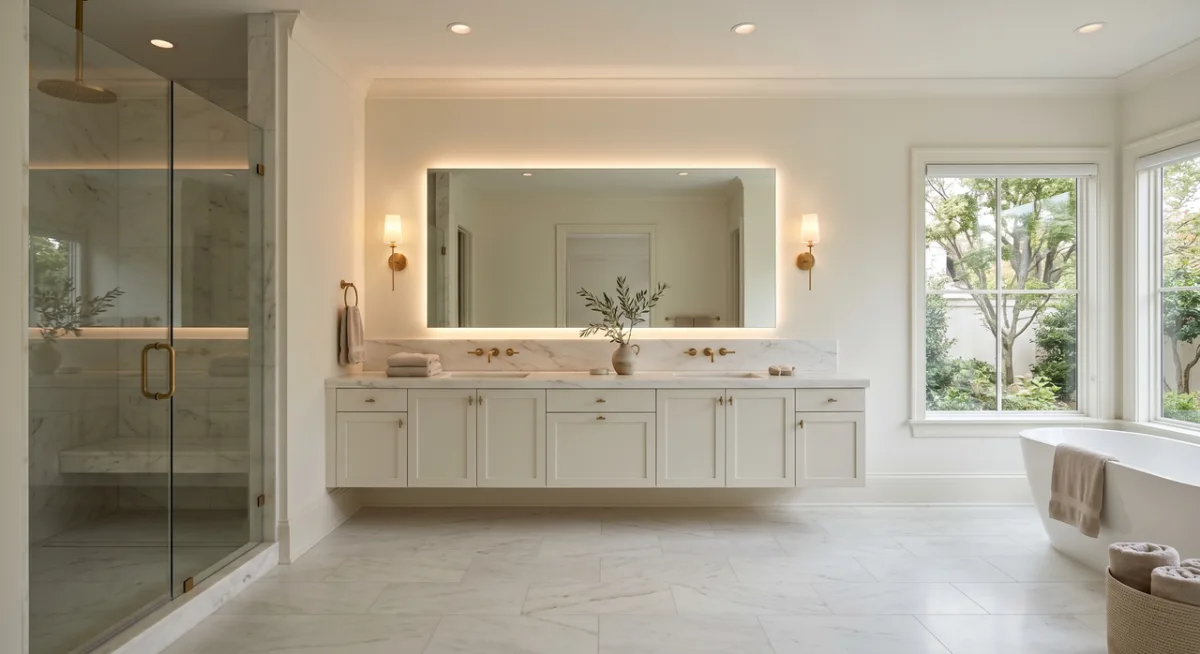
Among the bathroom lighting ideas we return to often in Williamson County remodels, the backlit mirror occupies a unique position. It serves as both a functional lighting source and a design element, and it does both exceptionally well.
The practical advantage is the quality of light it produces. Traditional overhead fixtures cast downward light that creates shadows precisely where you do not want them, below the eyes and along the jaw. A backlit mirror addresses this by distributing light evenly from the perimeter of the glass, which produces a consistently flattering result for any task requiring accuracy.
The visual effect is equally compelling. A soft halo of warm light around a well-proportioned mirror adds depth and a sense of calm that no ceiling fixture achieves. In a primary bath designed around a stone countertop and custom cabinetry, a backlit mirror elevates the entire vanity wall into something worth looking at.
Many backlit mirrors now include adjustable color temperature and dimming capability, which allows the same fixture to support bright morning preparation and soft evening relaxation without any visible changes to the hardware.
3. Smart Lighting That Adapts to Your Routine
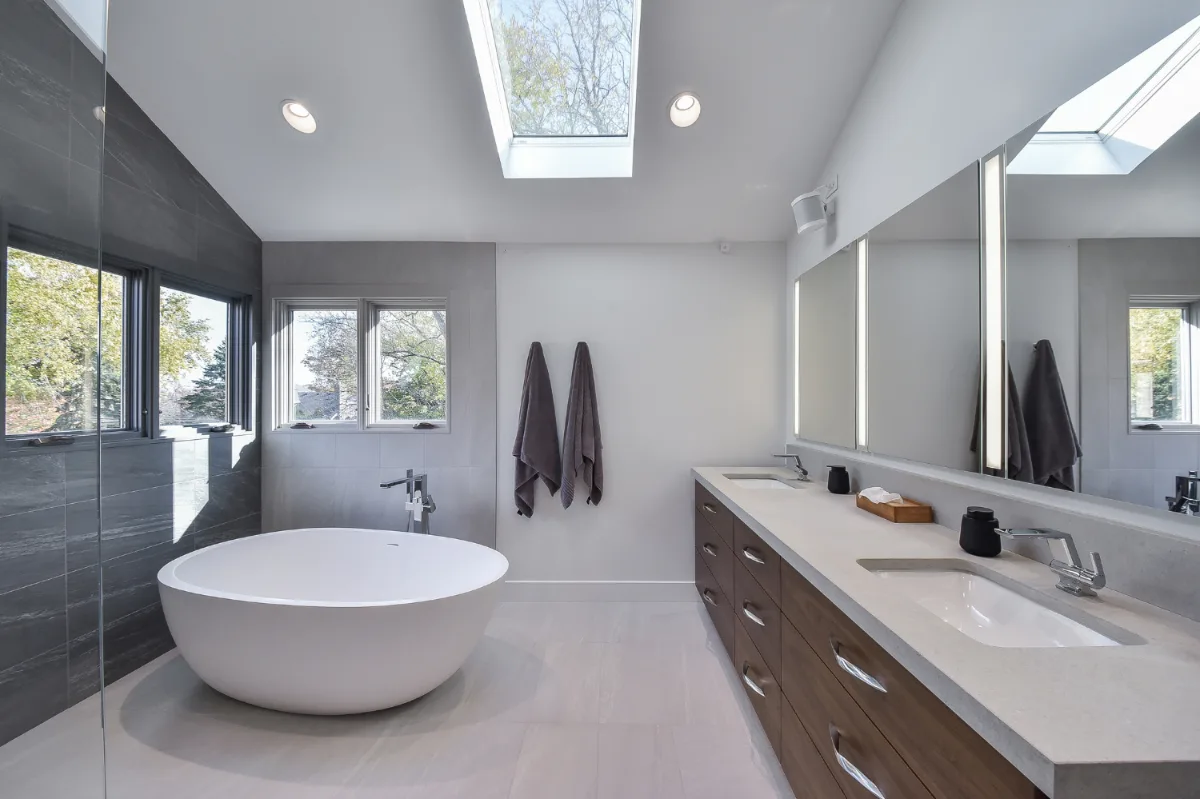
Smart lighting is a practical design choice in primary bathrooms across Franklin and Brentwood. The ability to adjust brightness and color temperature from a single panel or through a programmed schedule changes how a bathroom functions throughout the day, and it does so without any visible disruption to the design.
In the morning, a bathroom can gradually brighten to help ease into the day, with cooler, higher-brightness light that supports the clarity needed for grooming and getting dressed. Through the afternoon it holds that functional brightness. In the evening it shifts automatically to warmer, lower light that signals the body to slow down, which is particularly meaningful in a bathroom designed around a soaking tub or a spa-style shower.
Motion-activated low-level lighting is one of the most practical smart features in a bathroom. Rather than switching on full overhead light in the middle of the night, a soft path light activates at floor level and provides enough visibility without disrupting sleep patterns. It is one of those details that seems minor in planning and proves genuinely valuable in daily life.
4. Warm Lighting for a Relaxing, Spa-Like Feel
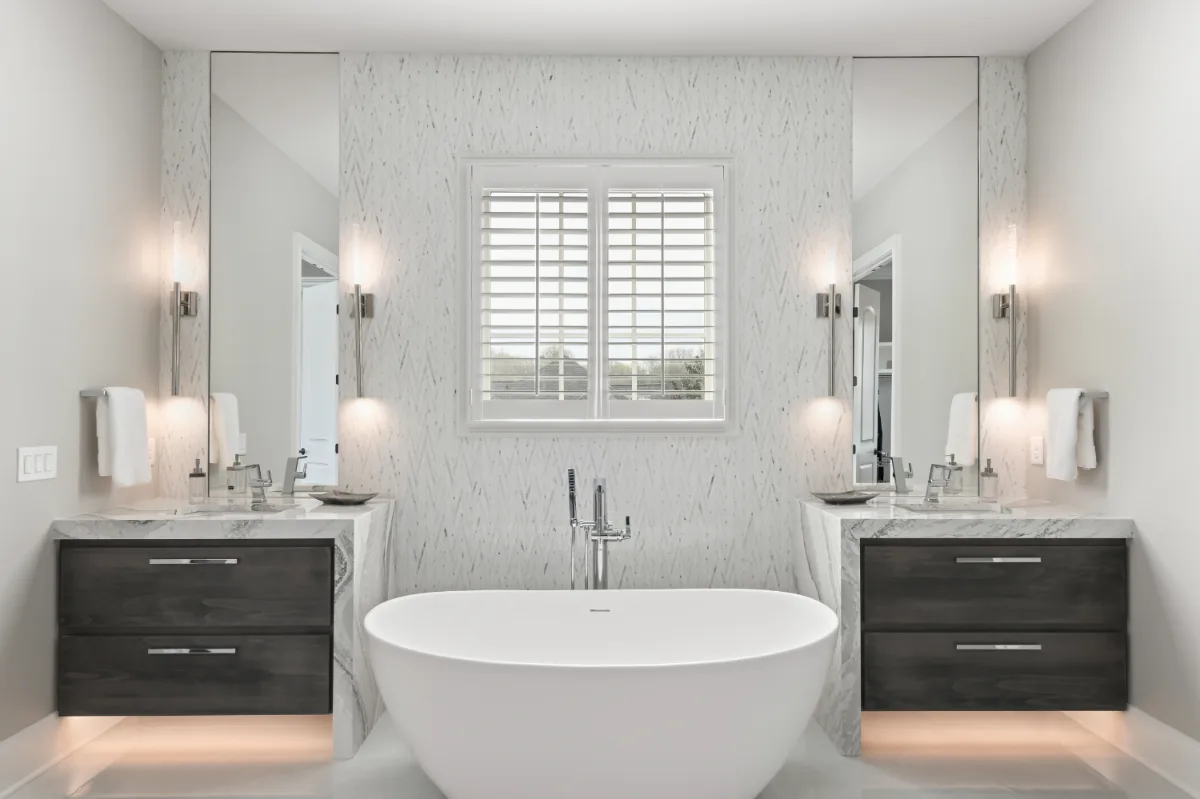
Warm lighting is one of the most important considerations in a Franklin or Brentwood remodel designed for genuine rest. Cool overhead light has its place in task-intensive environments. In a space designed to help the body unwind at the end of the day, it works against the experience you are trying to create.
Warm-toned light in the range of 2700 to 3000 Kelvin reads as natural and flattering in the way that late afternoon sun does. Paired with natural stone, honed marble or warm wood accents, it produces the quality of atmosphere that a well-designed spa achieves: settled, unhurried, private. A bathroom that feels this way at ten in the evening becomes something a homeowner genuinely looks forward to returning to.
The implementation can be subtle. Switching overhead fixtures to warm-toned LED bulbs and adding dimmer controls to existing circuits often produces a noticeable shift for a relatively modest investment. When planning a full bathroom remodel, designing specifically toward warm light from the start, through fixture selection, bulb specification and the overall material palette chosen to complement it, produces a cohesive result that cannot be retrofitted after the fact.
5. Statement Fixtures That Add Personality
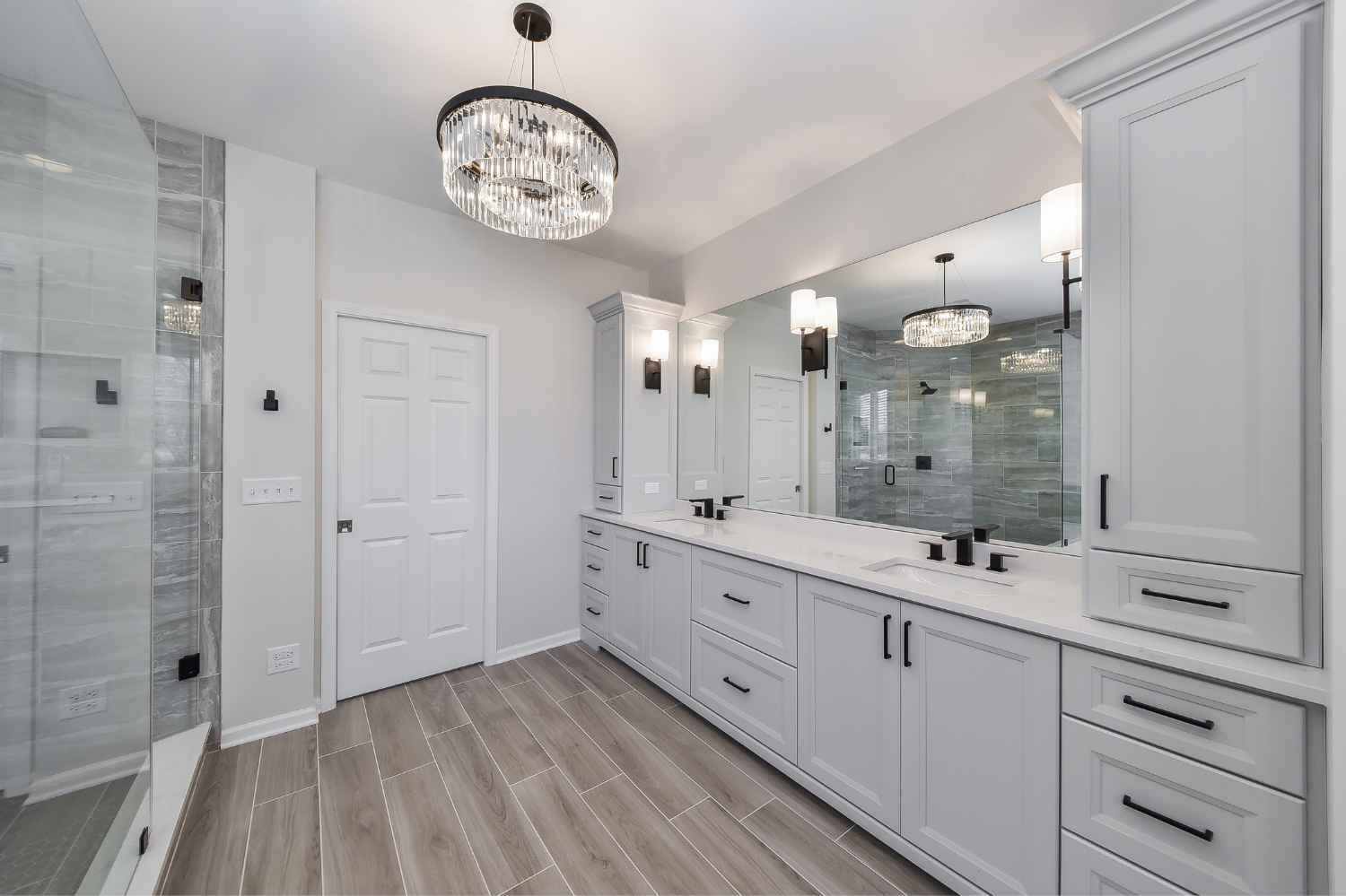
Lighting as part of bathroom design trends, rather than purely a functional element, is a hallmark of a thoughtfully considered bathroom. A well-chosen fixture introduces character, scale and material in a way that no other single element in the room does.
Above a freestanding soaking tub, a sculptural pendant or small chandelier in unlacquered brass or aged bronze creates a focal point that anchors the entire space, provided the ceiling is high enough for code: any hanging fixture within 3 feet horizontally of the tub rim generally must sit more than 8 feet above it. The fixture does not need to be elaborate to be effective. Its presence above the tub establishes the tub as the room's destination and makes the ceiling feel intentional rather than simply overhead.
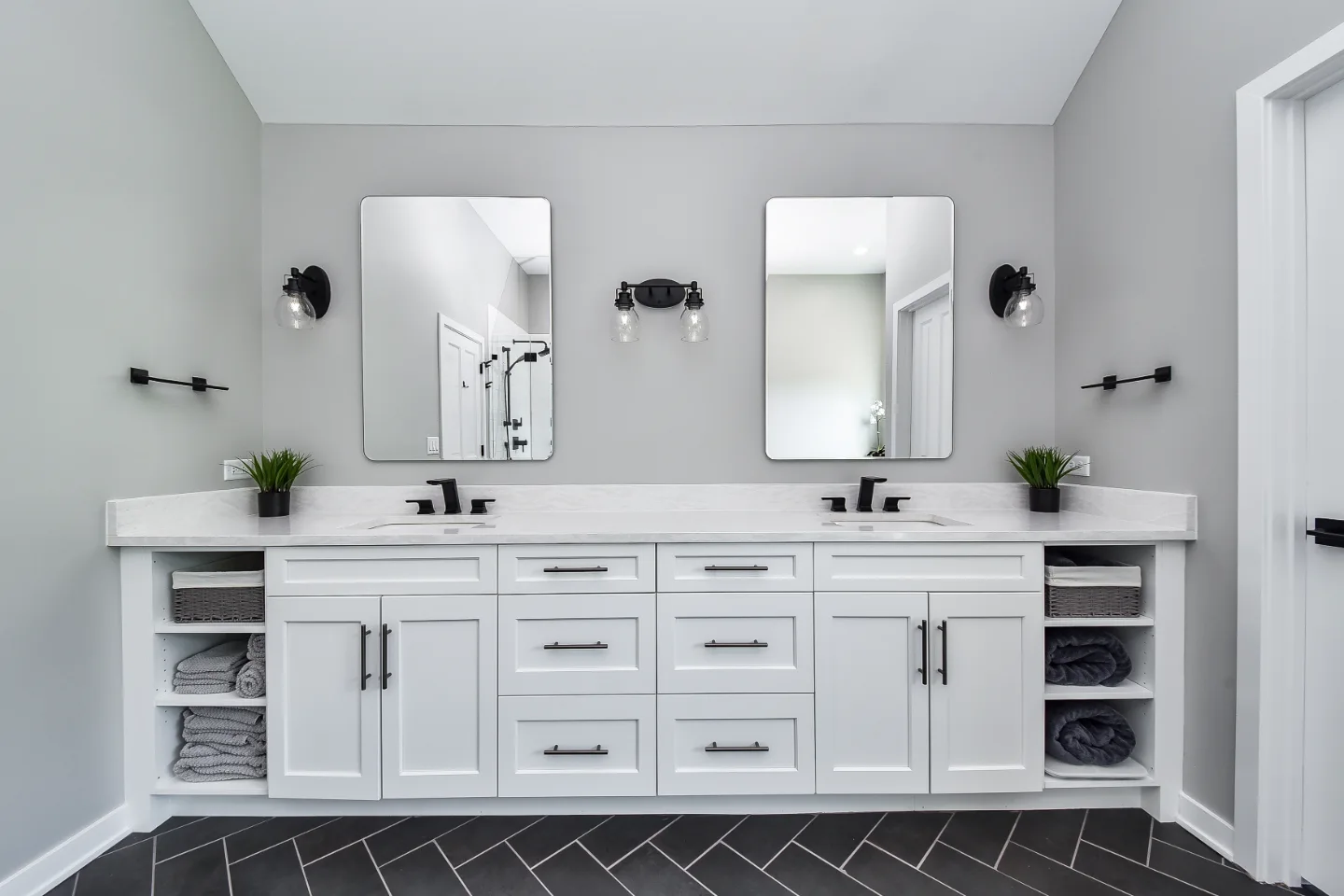
At the vanity, a pair of well-proportioned sconces in polished nickel or blackened steel contributes more to the character of the room than a standard bar light ever could. The selection of a fixture that fits the material family of the rest of the room, rather than simply filling the functional requirement, is the design decision that separates a bathroom that feels curated from one that feels assembled.
Scale matters. In a generously sized primary bath, a statement fixture with physical presence earns its position. In a tighter space, a simpler, more refined fixture reads with the same intention without crowding the room.
6. LED Strip Lighting for Depth and Dimension
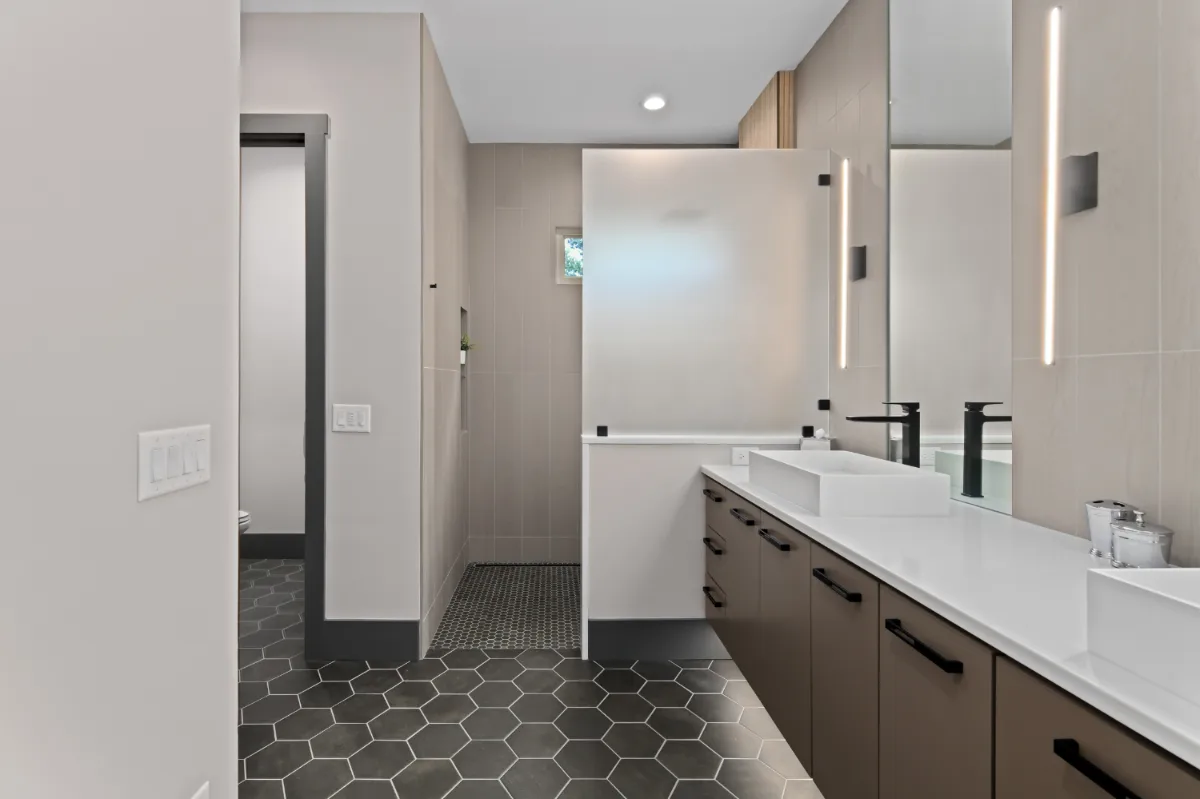
LED strip lighting earns its place in a well-designed bathroom not by drawing attention to itself but by adding a quality of light that changes how the whole room feels. Its value is in what it does to the space around it rather than in the fixture itself.
Installed beneath a floating vanity, a warm LED strip at floor level creates a subtle glow that makes the vanity appear to float more convincingly and fills the lower zone of the room with gentle warmth. Inside a recessed niche in the shower or beside the mirror, it introduces depth and highlights the texture of the surrounding material, whether that is honed marble, fluted tile or smooth plaster.
At a low level along the baseboard or beneath a toe-kick, LED strips provide enough gentle illumination to navigate the bathroom in the night without activating overhead light. This is a practical detail that disappears entirely during the day and proves genuinely valuable in use.
The flexibility of LED strip systems makes them well suited to custom applications. They can be cut to fit almost any run length, are available in a range of color temperatures, and integrate cleanly into millwork, tile niches and floating cabinetry without requiring surface-mounted hardware.
7. Waterproof Lighting in Showers and Wet Areas
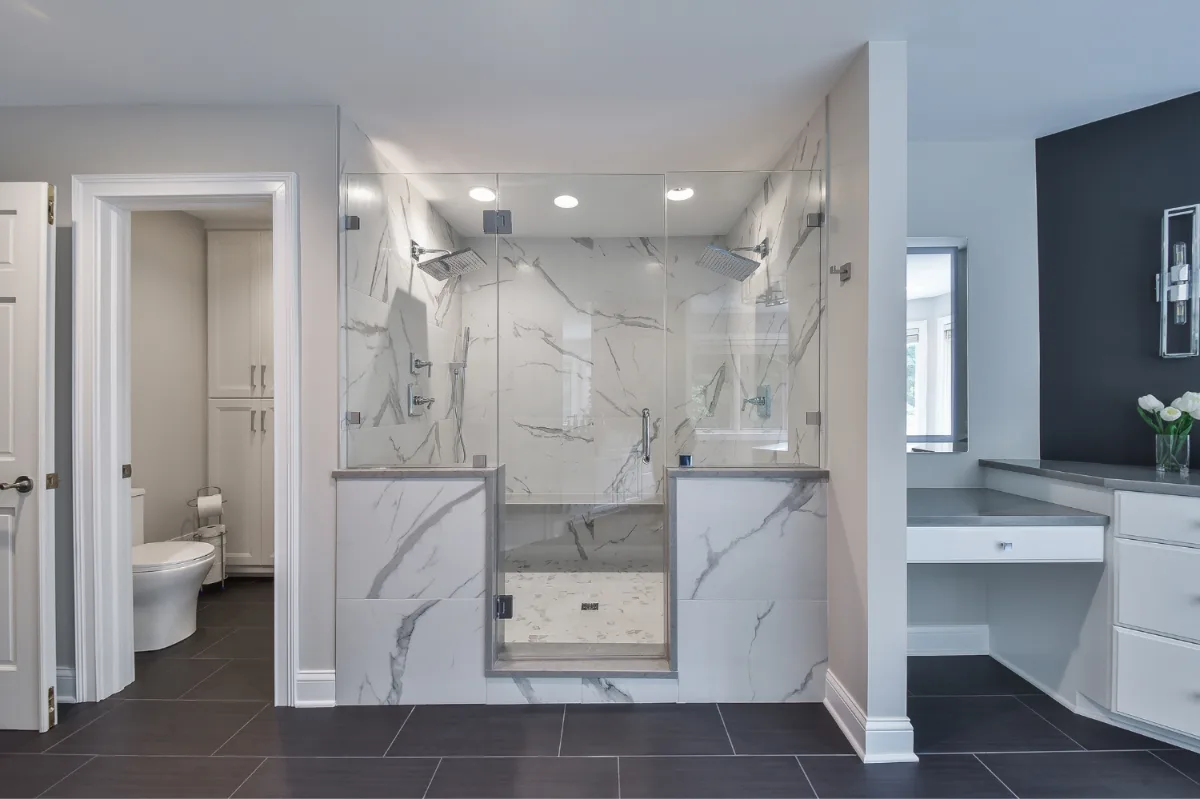
A shower that is lit with the same intention as the rest of the bathroom reads as designed in a way that most showers do not. Most remodels treat shower lighting as a code compliance exercise, placing a single waterproof fixture where required and moving on. The difference in the finished experience between a shower designed around its lighting and one that is simply compliant is significant.
A recessed waterproof fixture centered over the shower provides clean general illumination. An LED strip inside the shower niche, placed behind the shelf line, casts warm light across whatever is stored there and highlights the texture and depth of the surrounding tile. In a shower with a bench, a low waterproof light directed at the bench wall adds a layer of warmth and sculpts the space in a way that overhead light alone cannot.
These fixtures are rated specifically for wet environments and when specified correctly are safe, durable and maintenance-free for the life of the remodel. The planning decision, which fixtures go where and how they relate to each other, needs to happen during the design phase. Shower lighting cannot be thoughtfully added after tile is set.
8. Color Temperature Control for Mood and Flexibility
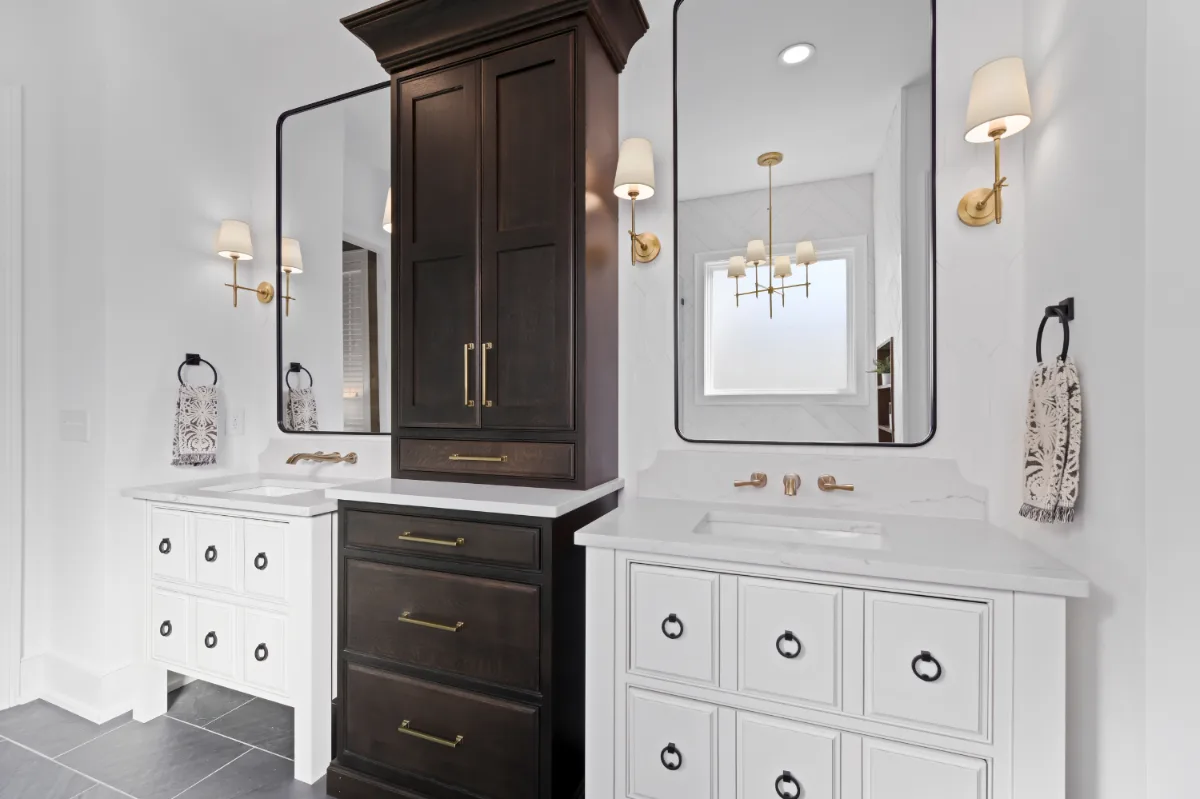
The ability to shift color temperature within a bathroom, from a cooler, crisper light in the morning to a warmer, more amber tone in the evening, is one of the most practical advances in residential lighting available to homeowners remodeling today. It is not an extravagance. It is a design decision that allows a single space to serve genuinely different purposes at different hours.
Cool light in the range of 4000 Kelvin reads as crisp and clear, which supports accuracy in grooming and provides the kind of brightness that makes getting ready feel efficient. Warm light at 2700 Kelvin produces the amber quality associated with candlelight and natural evening warmth, which supports relaxation and makes the finishes in spa-inspired bathrooms feel richer and more inviting.
Many LED fixtures and bulb systems now include adjustable color temperature as a standard feature, accessible through a simple control panel or a smart home integration. In a primary bath where the lighting plan is already layered, adding color temperature control to the system is a modest addition in the context of a full remodel and adds a flexibility that the homeowner will notice each day.
9. Energy-Efficient Lighting That Performs Long-Term
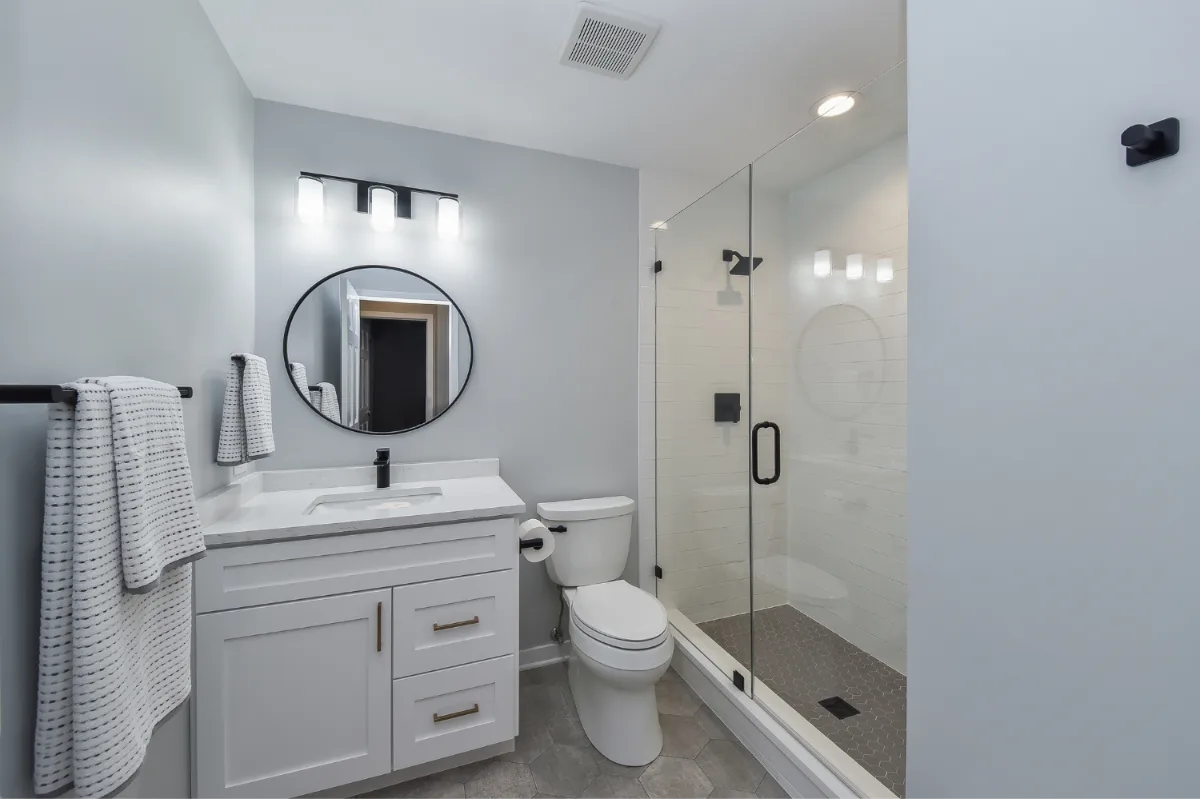
LED lighting has become the standard for residential bathrooms not because of its energy credentials alone but because it performs beautifully across the full range of design. It produces less heat than incandescent alternatives, lasts significantly longer and is available in a range of color temperatures, fixture styles and brightness levels that cover each requirement a bathroom lighting plan demands.
In a bathroom used multiple times daily, the operating longevity of LED fixtures matters practically as well as economically. A bulb that lasts 25,000 hours rather than 1,000 hours in a recessed ceiling fixture that requires a ladder to access is a meaningful difference in daily life.
The aesthetic range of LED fixtures has expanded considerably. Slim recessed trims, refined wall sconces with warm-toned bulbs, backlit mirrors with integrated LED systems and understated strip lights all perform on the same technology while reading in any design language, from a primary bath designed around Calacatta marble and unlacquered brass to a secondary bath with clean, minimal lines and polished chrome.
10. Minimalist Lighting for a Clean, Modern Look
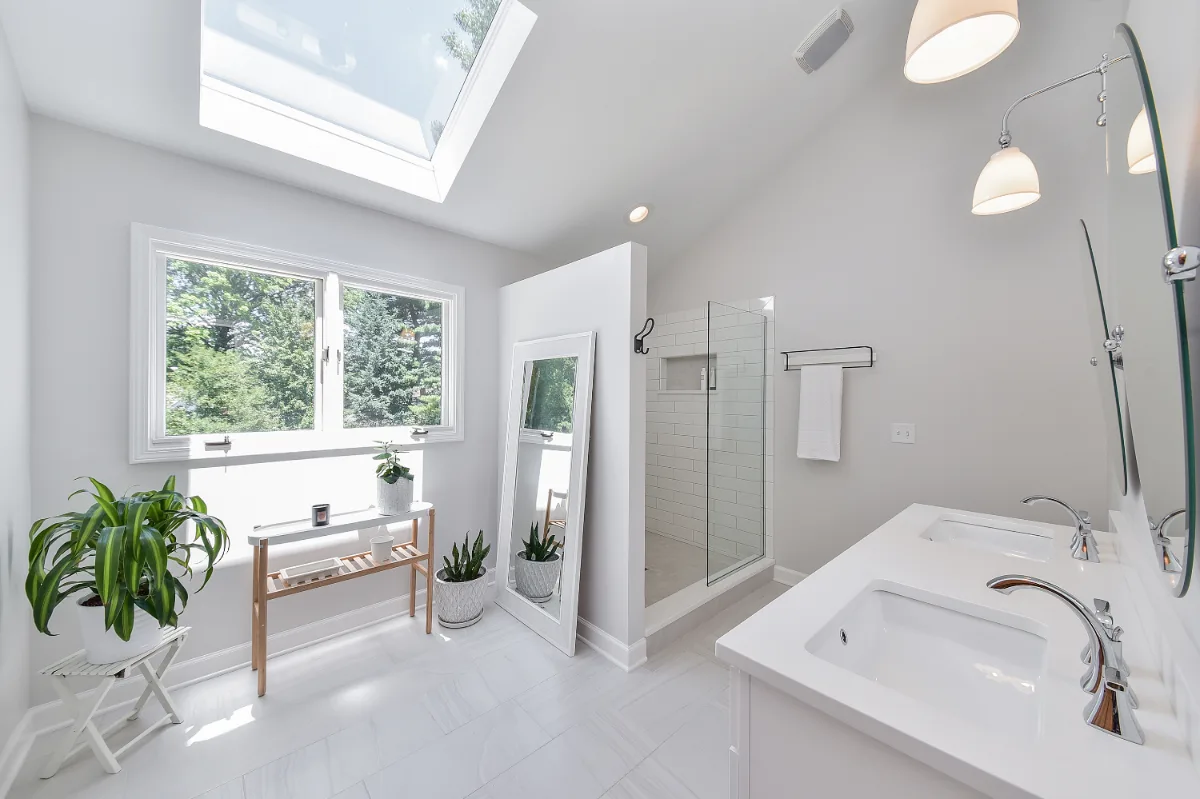
Minimalist lighting is not the absence of thought. It is the result of a great deal of it. In a bathroom designed around clean proportions, natural materials and the quality of the light itself rather than the visibility of its sources, each fixture choice is deliberate precisely because it will not be rescued by decoration.
Slim recessed fixtures in a warm white or polished chrome trim disappear into the ceiling and allow the light they produce to do the work. A single horizontal LED bar above the mirror reads as architectural hardware rather than a feature. LED strips inside millwork or beneath a floating vanity contribute warmth and depth without any visible source. The room feels complete and calm in a way that decorated or ornamented fixtures rarely achieve.
This approach is particularly well suited to primary baths in Franklin and Brentwood homes where the design language of the whole house tends toward restraint: clean millwork profiles, large-format stone tile, quiet hardware finishes. In those contexts, lighting that announces itself interrupts rather than completes the design. Lighting that disappears into the architecture allows the space to read as unified and considered.
Bathroom Vanity Lighting: Height, Spacing and Ratings
For the most flattering light at the mirror, mount a pair of sconces on either side at roughly face height, typically about 60 to 66 inches from the floor to the center of the fixture and about 36 to 40 inches apart, so light falls evenly across the face. If wall space only allows a fixture above the mirror, a bar light mounted around 75 to 80 inches from the floor and sized to roughly three-quarters of the mirror width works well, ideally paired with a backlit mirror or side lighting to soften shadows.
Location ratings matter as much as placement. Fixtures near a tub or shower should be rated for damp locations, and any fixture inside the shower must be wet-location rated. Hanging fixtures such as pendants and chandeliers have their own clearance requirements near tubs and showers, noted in the statement fixtures section above. Our spa bathroom ideas guide shows how these layers come together.
How to Combine These Bathroom Lighting Ideas
The bathrooms in Williamson County that feel most complete and considered are not the result of choosing one lighting idea and executing it well. They are the result of combining several, each serving a specific purpose, all chosen in relationship to each other.
A primary bath remodel might begin with a layered plan as its foundation: recessed ambient fixtures on dimmers, wall sconces at mirror height and LED strips beneath the vanity for warmth at floor level. A backlit mirror replaces the sconce pair at the vanity and handles task lighting with consistent, flattering light. Waterproof recessed fixtures inside the shower provide clean visibility, and a niche strip highlights the tile detail and built-in shelving. Smart controls allow the whole system to shift from morning brightness to evening warmth with a single adjustment.
Each element in that plan earns its place. None of them reads as a trend applied independently. Together they produce a bathroom that is genuinely pleasurable to use at any hour, which is the standard a remodel in this market should be held to.
The goal is not complexity. It is intention. A lighting plan with three well-chosen sources that work together will outperform one with ten sources that were added without a unifying idea.
Final Thoughts
Lighting shapes the experience of a bathroom more than almost any other single decision in a remodel. It determines how finishes read, how the room feels at different hours, how well the space serves the people who use it each day, and whether the overall investment in the project reads as beautiful or simply adequate.
The ten ideas here reflect the directions shaping refined bathroom remodels in Franklin, Brentwood and across Williamson County. They are not trends in the sense of being temporary. They are the result of homeowners and designers paying closer attention to what makes a bathroom genuinely worth being in.
It is time that you love your bathroom at each hour of the day. If you are planning a bathroom remodel in Franklin or Brentwood and want a lighting plan that works as hard as the finishes you choose, Sebring Design Build would love to be part of that conversation.