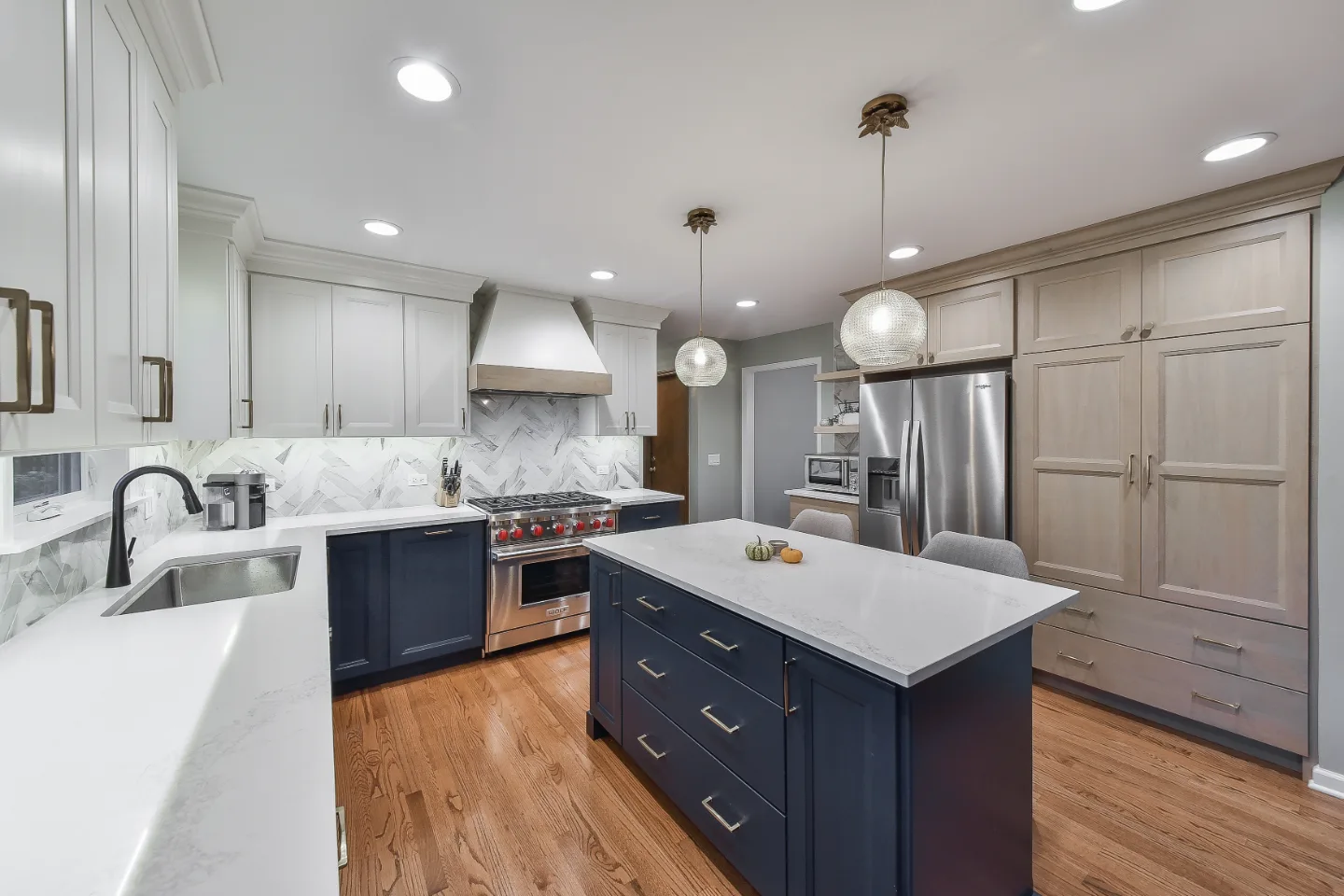
The range hood has become one of the most significant design decisions in a Franklin or Brentwood kitchen remodel. What was once specified primarily for function, a required exhaust system concealed as inconspicuously as possible, is now frequently the room's defining architectural element. The range and hood together form the kitchen's primary focal wall, and in the most thoughtfully designed kitchens in Williamson County, that wall is planned as deliberately as any other surface in the room.
The trends shaping kitchen hoods today reflect the dual expectation that has emerged in the market: the hood must perform as a ventilation system and contribute as a design element. These two requirements are not in conflict. When they are addressed together in the design phase, the result is a hood that genuinely defines the kitchen. Here are ten directions worth understanding for any Franklin or Brentwood kitchen remodel, many of them visible throughout our kitchen remodel portfolio.
1. Downdraft Range Hoods
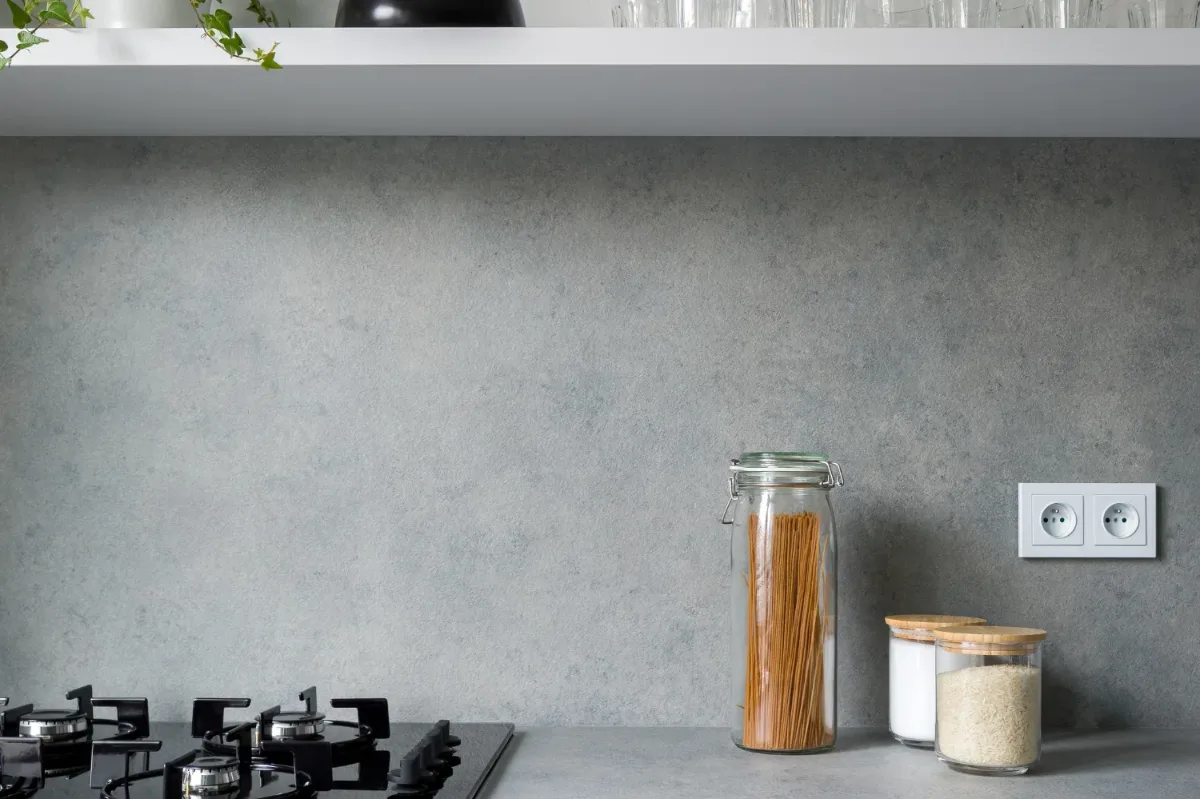
A downdraft range hood is the ventilation solution that allows a kitchen island cooktop to function without any overhead structure interrupting the sightlines above the island. Rather than drawing cooking vapors upward to an overhead exhaust, a downdraft system draws them downward through a vent at or behind the cooktop surface, directing them into ductwork below the floor. When not in use, the vent panel retracts flush with the cooktop, and the island surface reads as completely uninterrupted.
The appeal in Franklin and Brentwood kitchens is specifically spatial. An island cooktop in a kitchen with high ceilings and an open-concept design, where an overhead canopy or wall-mount hood would interrupt the room's vertical openness, is the ideal application for a downdraft system. The tradeoff is ventilation efficiency: because the system draws vapors downward rather than capturing them at the source above the cooking surface, downdraft systems are generally less efficient than overhead hoods for high-heat cooking. In a kitchen where the cooktop is used primarily for moderate-heat preparation rather than frequent high-heat searing or wok cooking, a properly specified downdraft system performs adequately.
2. Canopy Range Hoods
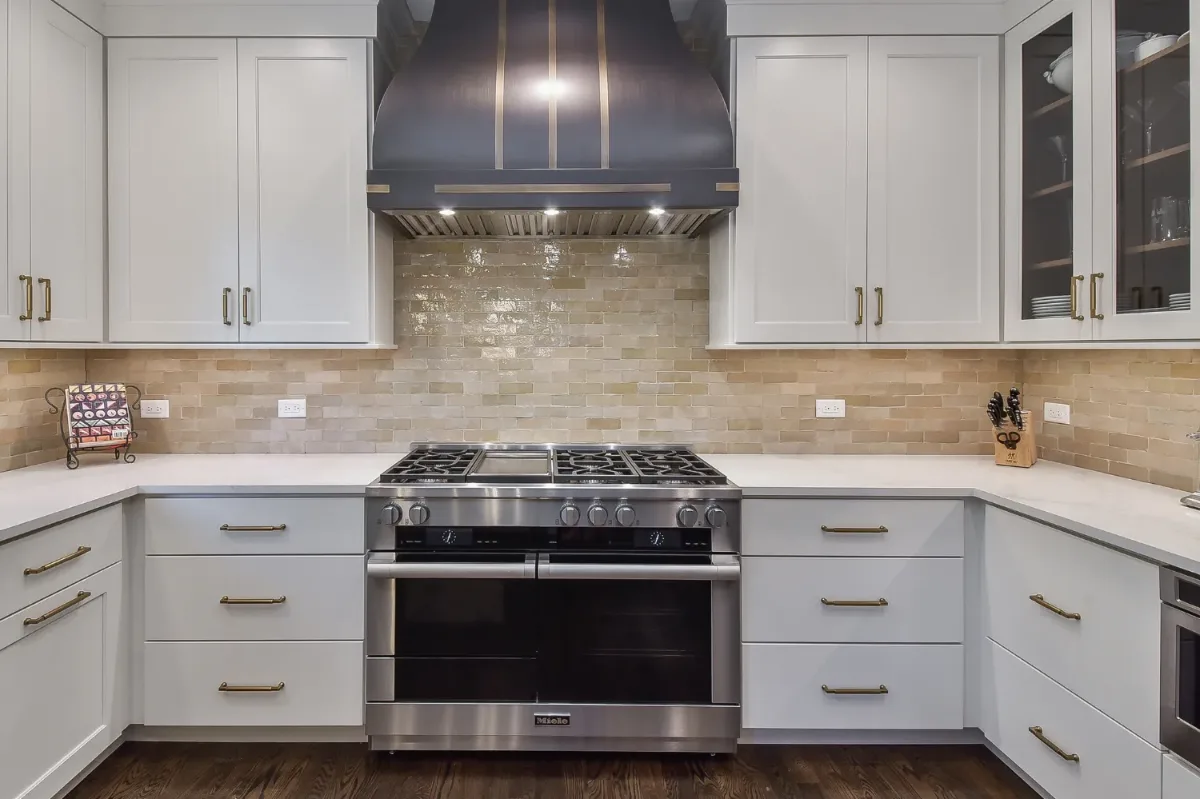
A canopy range hood, also called an island hood or ceiling-mount hood, is suspended from the ceiling above an island cooktop, creating a finished visual element that is visible from any angle of the kitchen. Unlike a wall-mount hood that has a back wall to lean against and finish against, the canopy hood must be designed to look intentional and resolved from all four sides. When it is designed together with the island itself, as our kitchen island ideas guide describes, a canopy hood produces a kitchen centerpiece that no other hood type can deliver.
The structural requirement for a canopy hood is ceiling ductwork that runs from the hood to the exterior. This requires planning during the design phase, because the ductwork path through ceiling joists and potentially across multiple structural bays needs to be determined before framing is complete. In open-concept Franklin and Brentwood kitchens where the ceiling is fully open, the ductwork can often be concealed within a decorative ceiling element or a coffered ceiling detail that adds design value to the kitchen while housing the necessary mechanical path.
3. Under-Cabinet Range Hoods
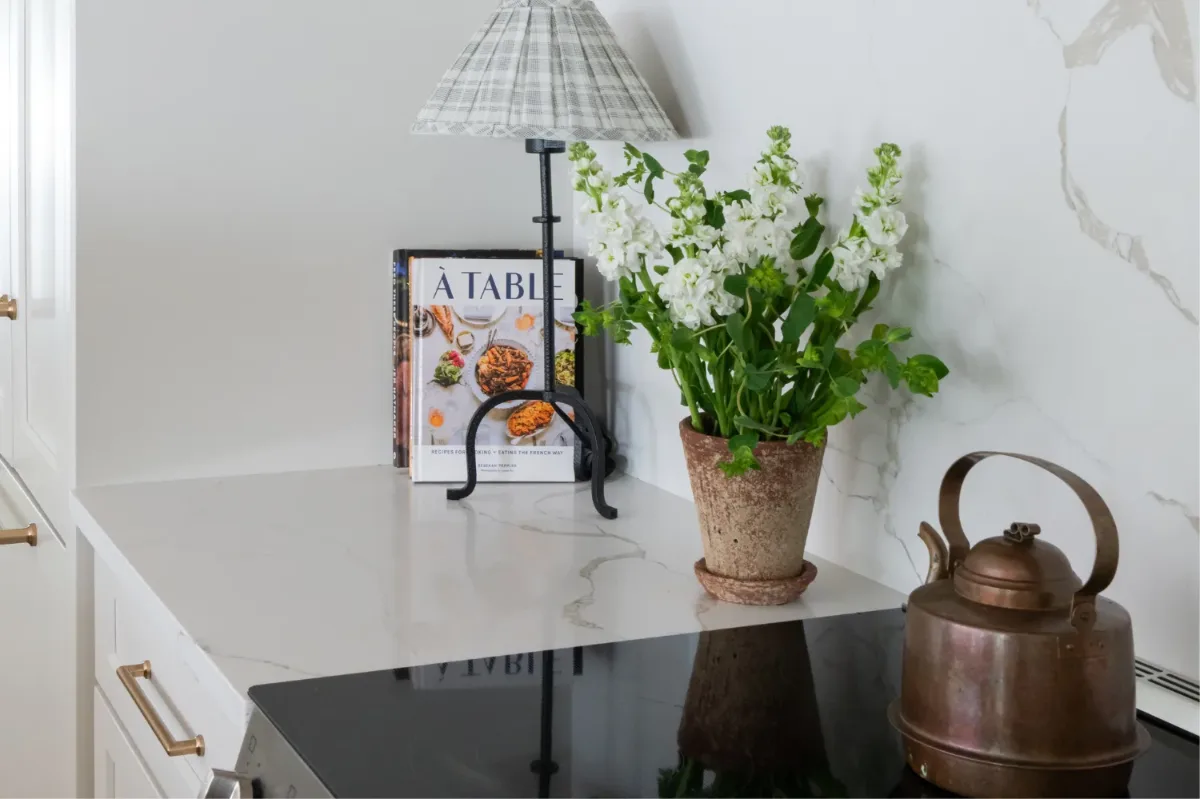
An under-cabinet range hood is the most space-efficient ventilation option available, and the most appropriate choice for Franklin and Brentwood kitchens where the range is positioned against a wall with upper cabinets directly above and where the available vertical space is limited. The hood installs directly beneath the existing upper cabinet, with ductwork routed through the cabinet above and then through the wall to the exterior.
The practical advantage is that the hood uses no additional ceiling or wall space. The visual advantage is that in a kitchen where the cabinetry is the primary design statement, the under-cabinet hood recedes rather than competing. The limitation is capacity: under-cabinet hoods are physically smaller than wall-mount or canopy options and therefore typically have lower CFM ratings. For a kitchen where the range is used primarily for everyday family cooking rather than high-volume or high-heat professional cooking, a properly specified under-cabinet hood in the 400 to 600 CFM range provides adequate ventilation.
4. Hidden and Integrated Hoods
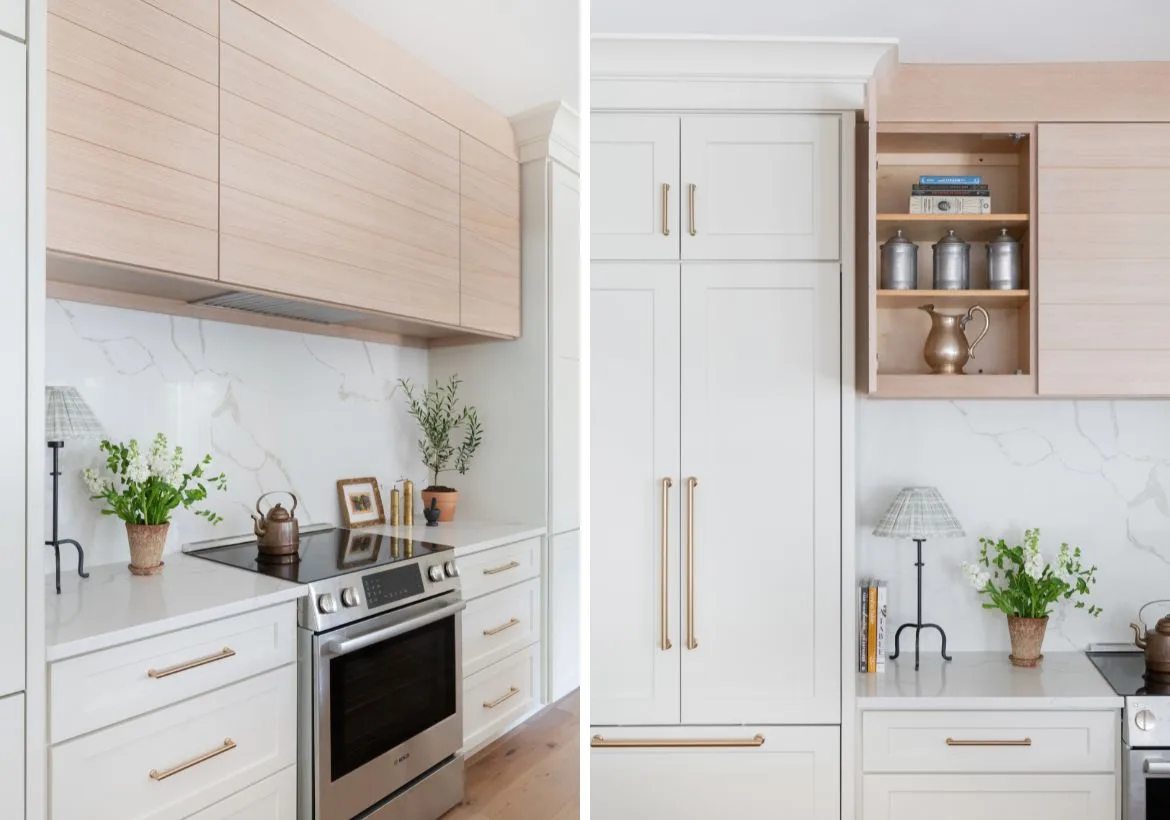
A hidden range hood, concealed behind a custom panel that matches the surrounding cabinetry, is the ventilation approach that prioritizes the seamless visual field of the kitchen above all other design considerations. When executed correctly, the result is a kitchen where the range wall reads as continuous cabinetry from countertop to ceiling, with no visible appliance interrupting the visual plane.
"The hidden hood is one of the most frequently requested and most frequently reconsidered design choices in our kitchen projects," says Bryan Sebring, CGR. "Clients come in wanting the look of completely seamless cabinetry. Once we walk through the functional requirements, the panel sizing that ventilation capacity demands, and show them what a well-designed custom painted hood can bring to the focal wall of the kitchen, a majority of them end up choosing a statement hood instead. The hidden hood works beautifully in the right kitchen. But in many of the kitchens we design in Franklin and Brentwood, the hood is actually the design opportunity, not the problem to solve."
For clients where the hidden approach remains the right choice, the execution requires precise coordination between the hood specification and the cabinetry maker. The panel covering the hood must match the surrounding cabinetry doors exactly in profile, finish and hardware, which is worth keeping in mind when choosing knobs and pulls. The ventilation grille, which must be visible for the hood to function, is typically integrated into the base of the panel or concealed within a recessed trim detail that reads as a design element rather than a mechanical necessity.
5. Custom Brass Range Hoods
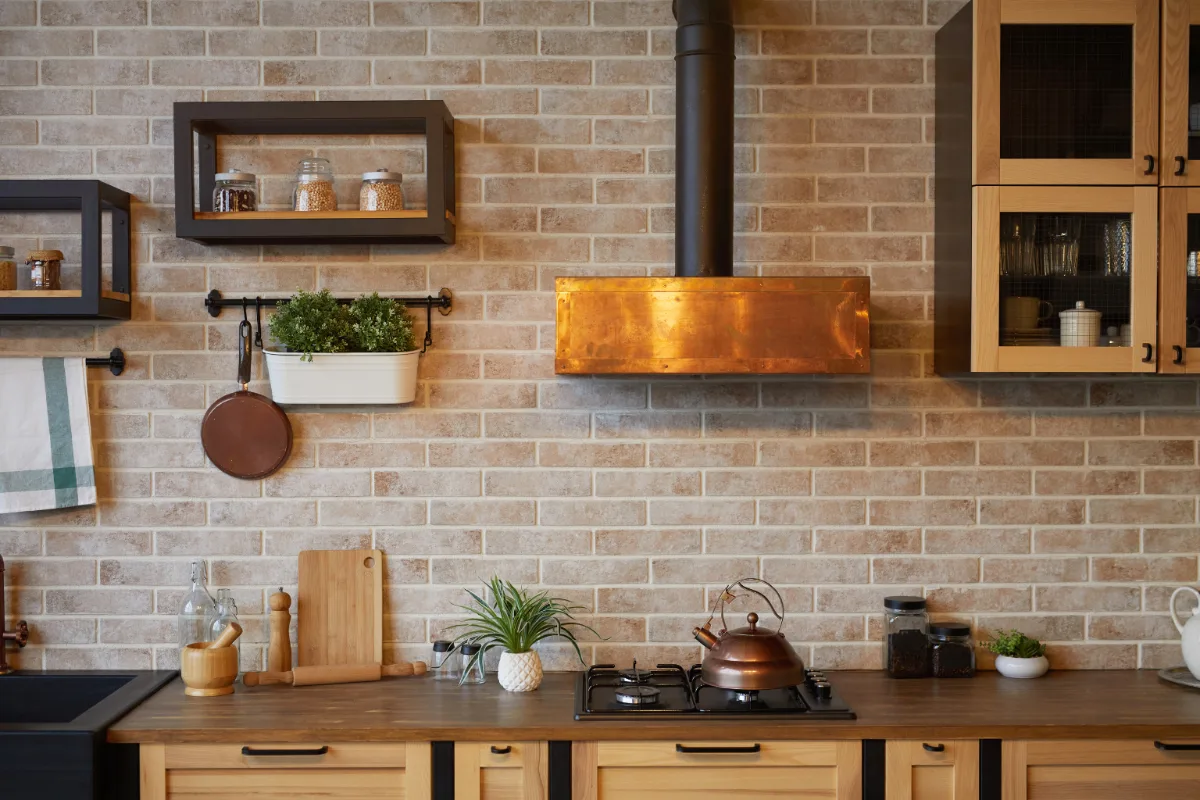
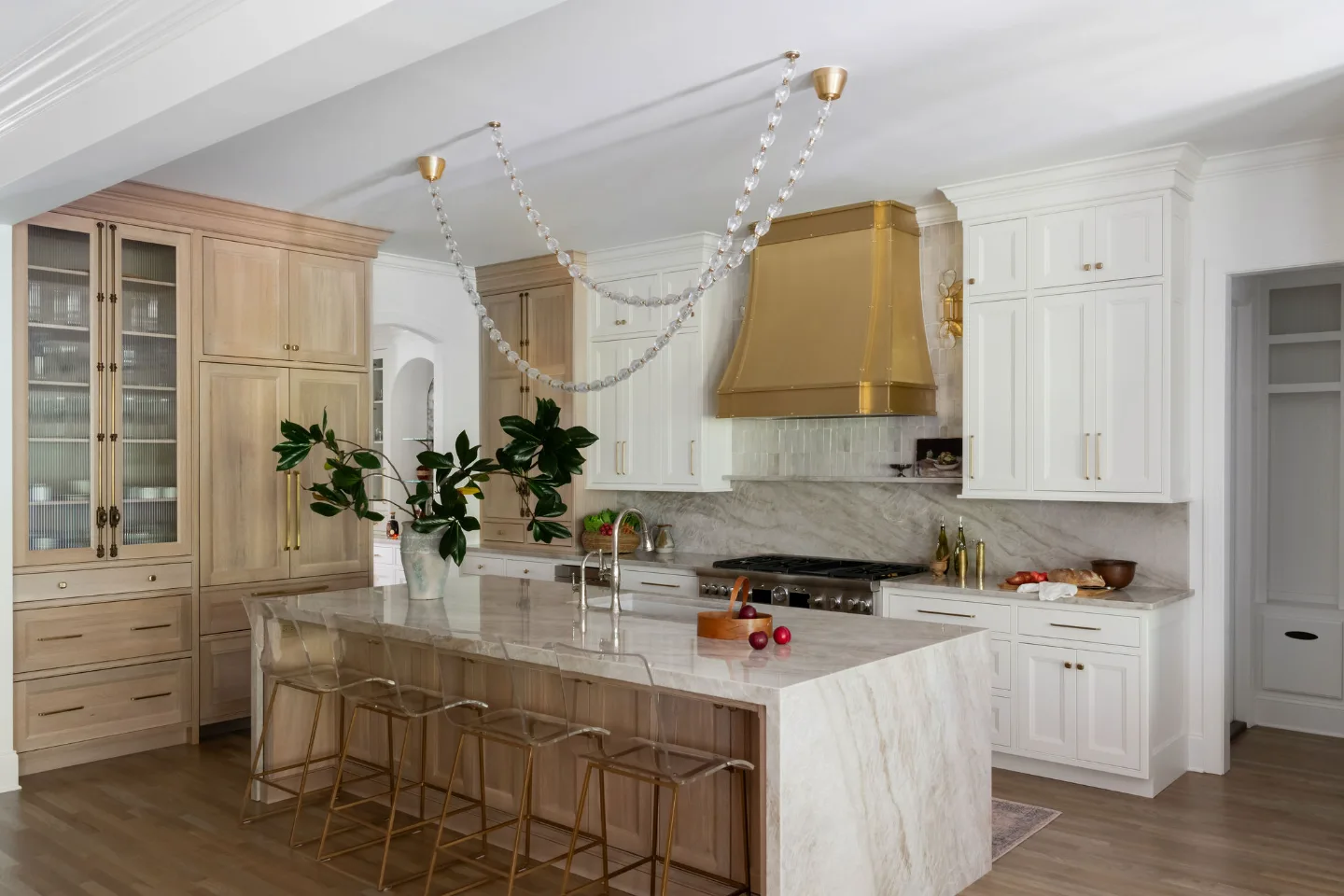
A custom brass range hood is the kitchen hood specification that most durably communicates luxury in a Franklin or Brentwood kitchen. Brass has a warmth and depth that polished stainless cannot replicate, and because unlacquered brass develops a living patina over time, a brass hood grows more beautiful as it ages rather than requiring maintenance to stay consistent.
The visual case for brass in the Franklin and Brentwood market is rooted in the material's relationship to the warm stone, white oak and warm-painted-cabinetry palettes that define the region's kitchen aesthetic. A large custom brass hood above a professional range, against a ceiling-height Calacatta marble backsplash and surrounded by painted cabinetry in warm off-white, reads as the kitchen's definitive design statement. It does not compete with the stone because the warm tones of both materials are in conversation rather than conflict.
Custom brass hoods are fabricated by metal fabricators working from a template established during the kitchen's design phase. The form, the profile and any surface detail, hammered texture, beveled edges or applied molding bands, are specified before fabrication begins. The result is a hood that exists nowhere else and that can be designed to the exact proportions that the kitchen's ceiling height, range width and cabinetry layout require.
6. Fingerprint-Resistant Stainless Steel
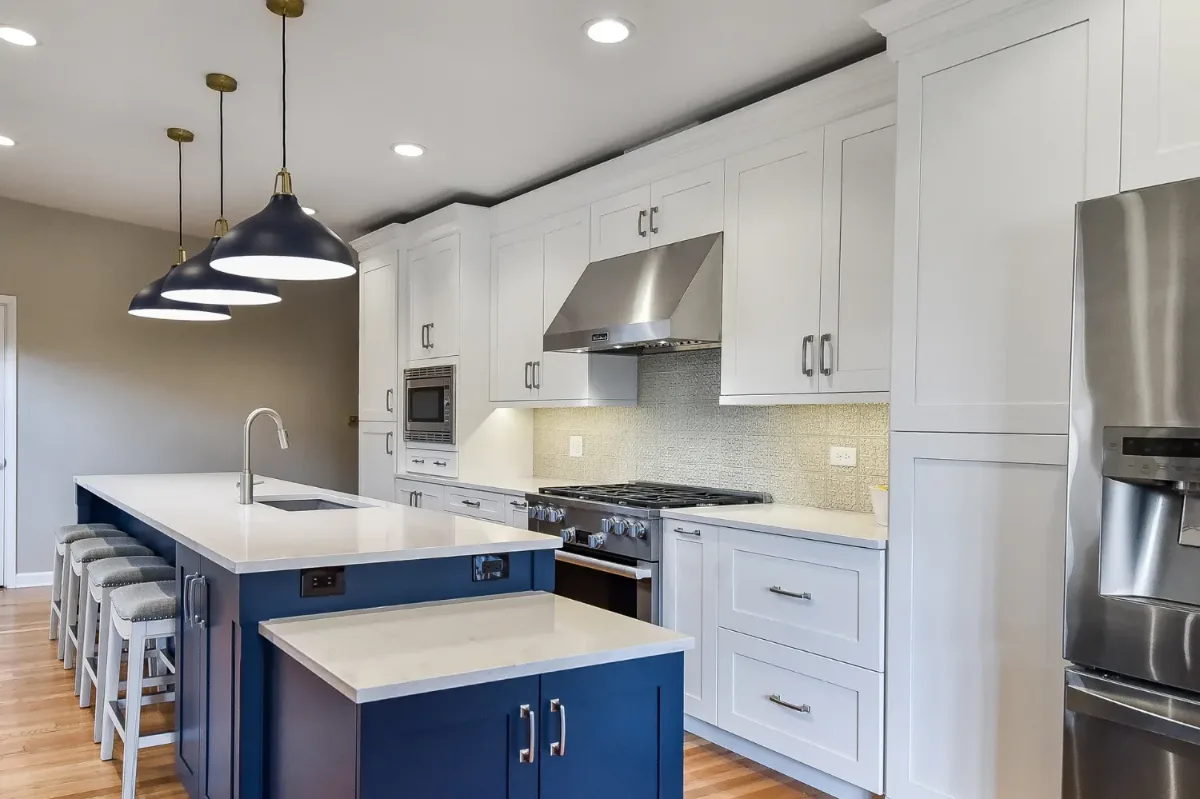
Stainless steel remains the dominant hood material in the professional and semi-professional range category, and the shift toward fingerprint-resistant matte finishes has resolved the primary maintenance complaint of polished stainless in a household kitchen. A matte or brushed stainless hood in a fingerprint-resistant finish maintains a consistently clean appearance in daily use without the constant wiping that polished stainless demands.
For Franklin and Brentwood kitchens where the range and hood are specified together as a coordinated professional-grade cooking zone, brushed stainless or matte stainless in a fingerprint-resistant finish produces a kitchen where the cooking area reads as serious and purposefully equipped without the visual formality of polished metal. Paired with the warm-painted-cabinetry and natural stone palette that defines most Williamson County kitchens, a matte stainless hood creates a contrast that communicates both function and design intent.
7. Custom Metal Hoods in Copper and Steel
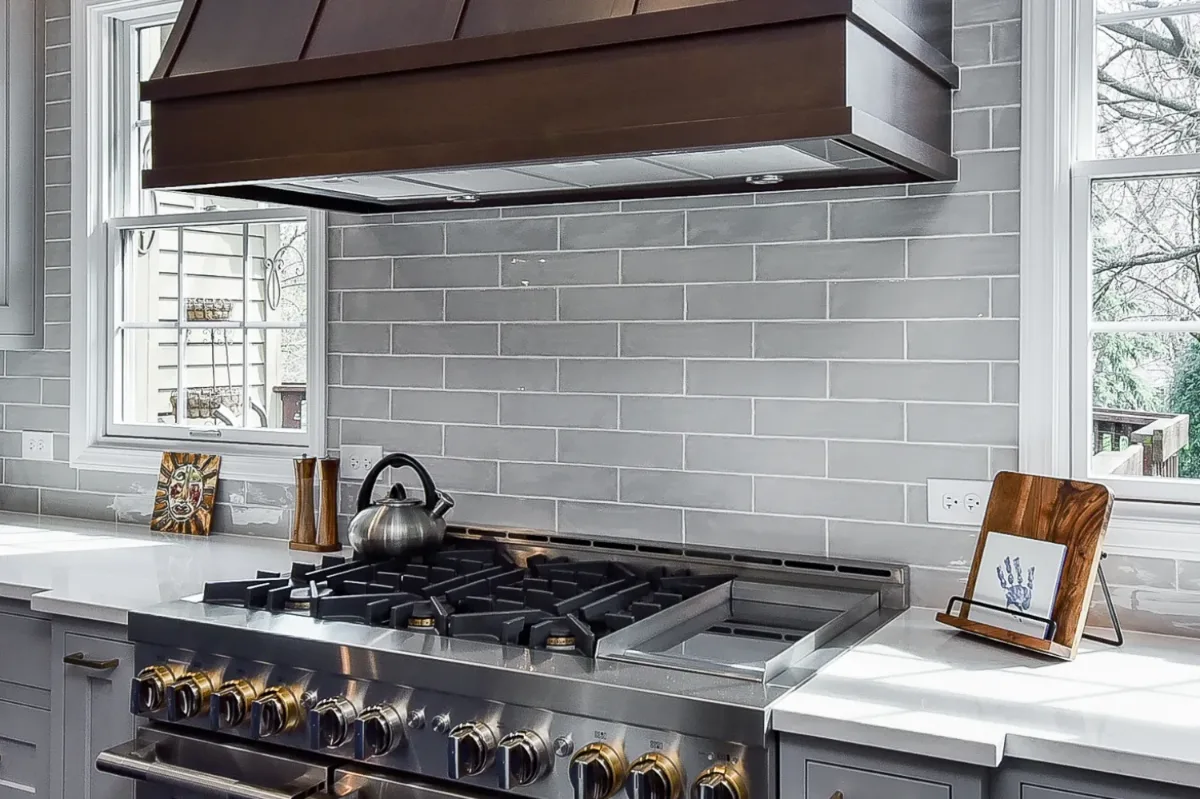
Custom metal hoods in copper, hammered steel and hand-forged iron offer a material vocabulary that no factory-produced hood can deliver: the visible evidence of craft, of a human hand and eye involved in the production of the piece. A hammered copper hood above a professional range has a warmth and a textural quality that reads as genuinely handmade rather than manufactured, and that quality is visible from across the room.
Copper develops a patina over time that moves from the bright reddish-orange of new copper through progressively darker and more complex tones as it ages in the kitchen environment. Some homeowners request a pre-aged patina applied during fabrication so the hood reads as already warm and established from the first day of installation. Others prefer the bright copper and value the evolution of the patina as part of the material's story in the kitchen. Both approaches produce a hood that is identifiably different from any other material available.
Custom metal hoods require the same early design decision that custom brass hoods do: the form, dimensions and surface treatment must be established during the design phase so the fabricator can work from confirmed measurements to a confirmed specification.
8. Wood Range Hoods: Painted and Stained Hood Covers
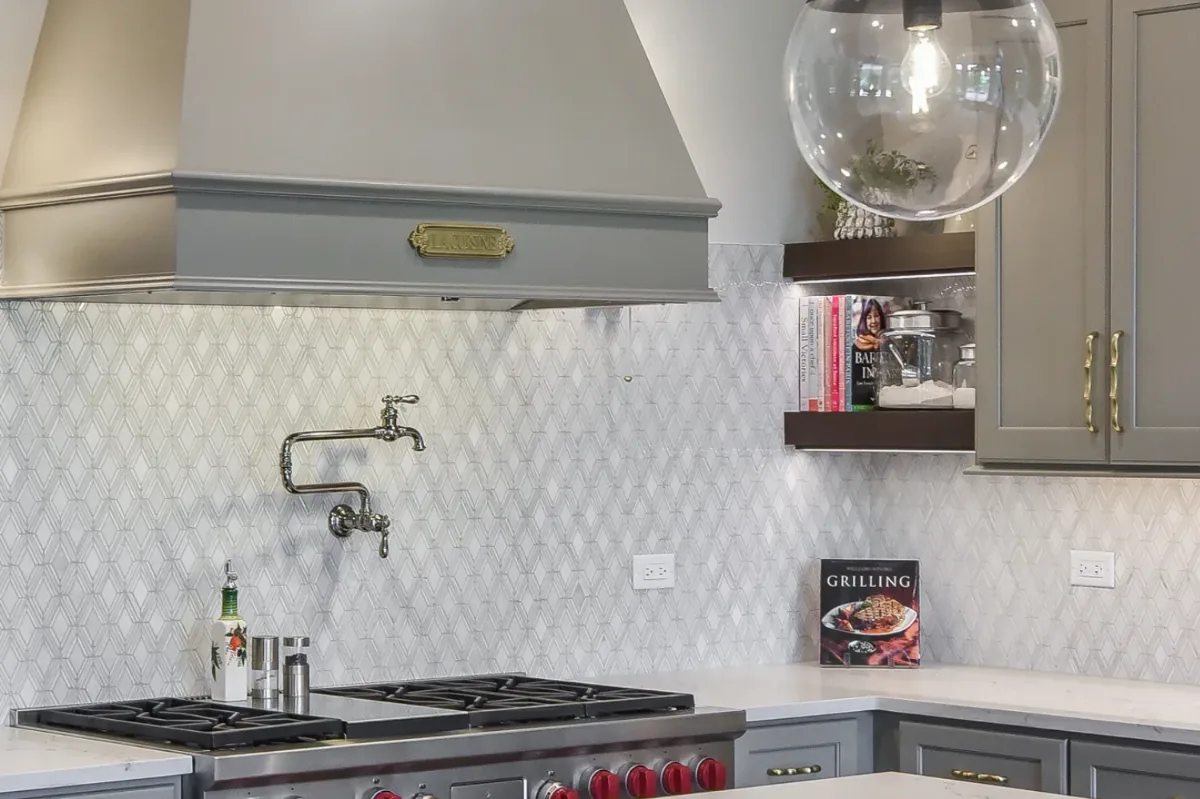
The painted wood hood surround with brass accents is a hood specification that often appears in Franklin and Brentwood kitchens that read as carefully designed, and the reason is that it combines the two qualities that define the market's kitchen aesthetic: warm, organic material and precise craft detail. A large painted hood form with applied molding, a custom profile that relates to the ceiling height and the cabinetry below it, and unlacquered brass strap hardware or accent detail at the base produces a focal element that reads as genuinely architectural rather than as an appliance cover.
The hood surround, often called a range hood cover, is not the hood itself. It is the architectural element that surrounds and frames the mechanical ventilation component, which is a liner insert sized to the required CFM rating housed within the surround. The surround is a cabinetry element, built and finished by the kitchen's cabinet maker, and it therefore receives the same quality of construction and finish as the rest of the cabinetry. When the surround is specified in the same paint color and door profile as the kitchen's cabinetry and detailed with the same brass hardware finish used throughout the kitchen, the result is a hood that reads as a unified part of the design rather than a separately sourced appliance.
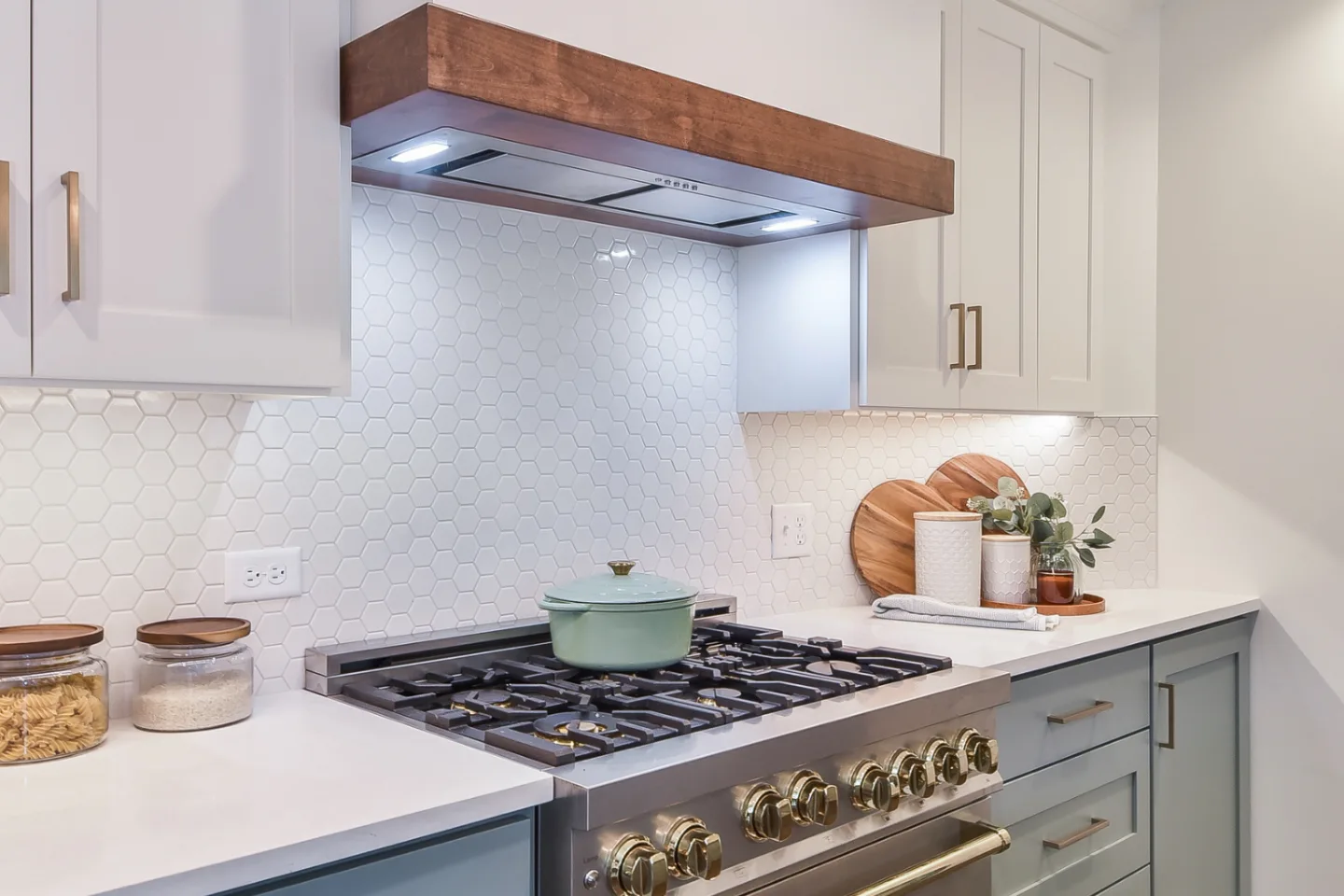
Stained and natural wood range hoods offer a warmer alternative. A rift-sawn white oak hood in a natural or lightly washed finish brings quiet texture to a modern or transitional kitchen, walnut adds depth against pale stone, and reclaimed wood or a hood wrapped in wood slats gives a farmhouse or organic modern kitchen real character. Shapes range from a clean box to a tapered or curved chimney, and a wood band or contrasting brass strap at the base finishes the form. Because the wood is a cover around a metal liner, it can be any species or finish the design calls for.
9. Integrated LED Lighting
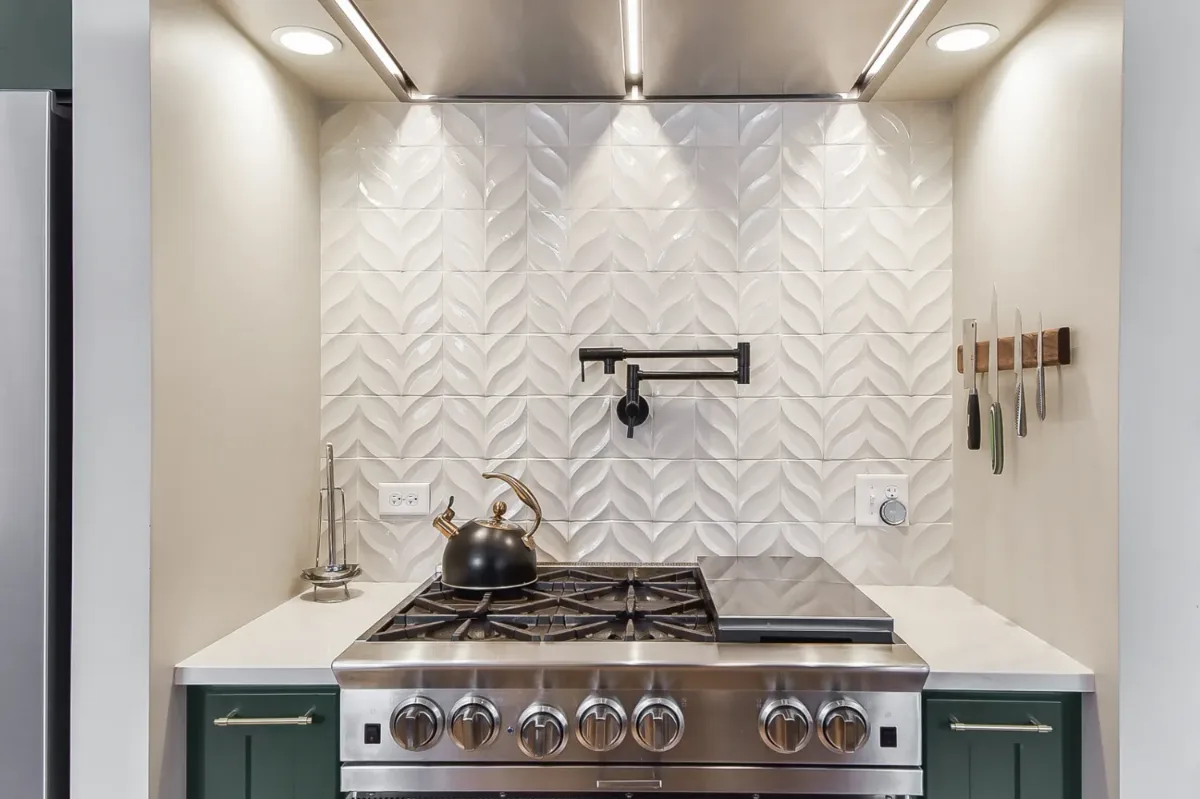
Integrated LED lighting beneath or within the range hood is now a standard specification rather than an optional upgrade. As with choosing island lighting, the difference between properly specified hood lighting and under-specified hood lighting is visible in daily cooking. The hood lighting should provide adequate task illumination of the cooktop surface for food preparation and monitoring, at a brightness and color temperature that serves the activity rather than simply creating a warm glow.
Warm white LEDs in the 2700K to 3000K range, positioned at the base of the hood to direct light downward onto the cooking surface, provide the warmth that integrates naturally with the kitchen's ambient lighting palette while delivering the brightness needed for accurate color reading at the cooktop. Dimmable LEDs allow the hood lighting to shift between full task brightness during active cooking and a softer ambient level that maintains a warm accent at the range wall during the evening hours when the kitchen's overhead lighting is dimmed.
10. Sustainable Materials and Conscious Specification
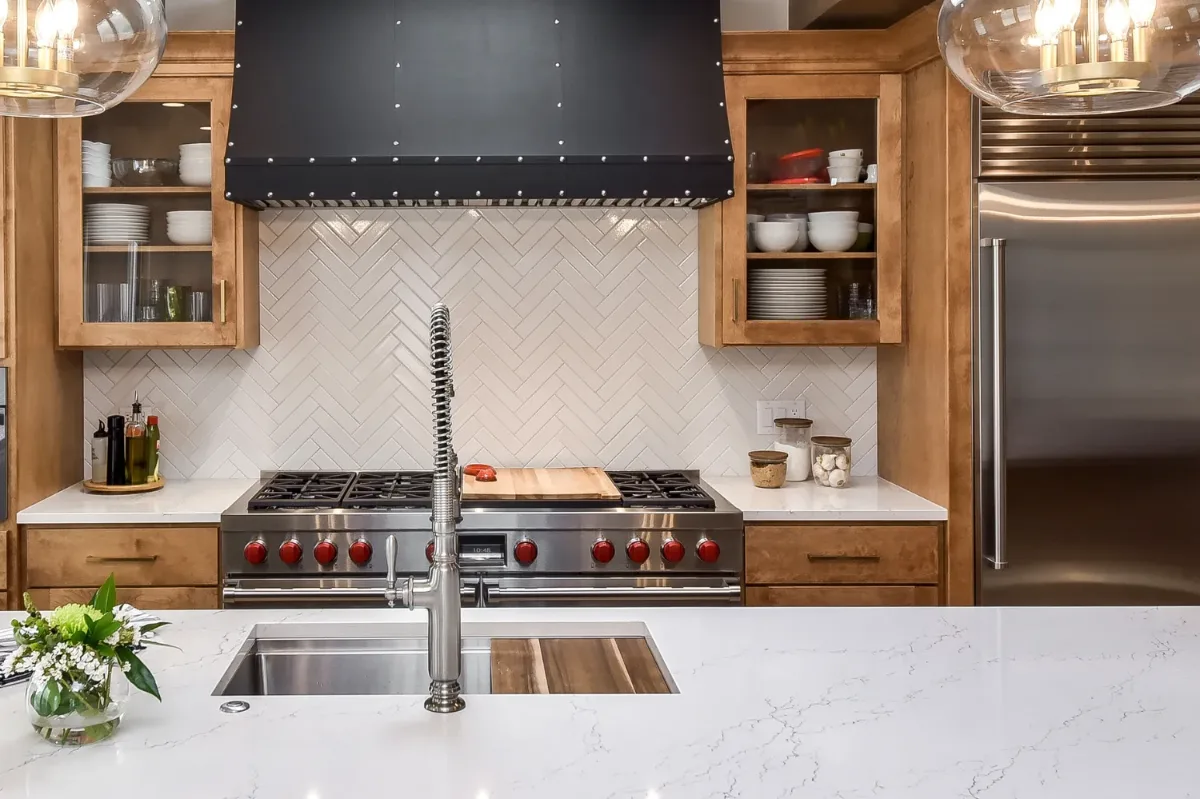
Sustainable material choices in kitchen hood specification are growing in the Franklin and Brentwood market as homeowners consider the environmental dimension of a remodel investment that will serve the home for decades. The most meaningful sustainable choices in hood specification are the liner materials, the surround construction and the finish applied to the surround.
Sustainable wood species from certified responsibly managed forests, used for the hood surround's millwork construction, reduce the environmental impact without compromising the quality of the finished element. Low-VOC paints and stains applied to the surround reduce indoor air quality impact in the kitchen. Reclaimed wood used as a surface element within a contemporary hood surround produces a finished element with genuine material character and a sustainable credential that no newly manufactured material can match.
The most important sustainability decision in kitchen ventilation is the hood's energy efficiency: a variable-speed motor that adjusts CFM output based on actual cooking activity uses meaningfully less energy than a fixed-speed motor running at full capacity continuously. This is a specification decision made at the hood liner selection stage rather than at the surround design stage, and it is worth understanding during the design phase.
How to Size a Range Hood: Width, Height, CFM and Makeup Air
A range hood should be at least as wide as the cooktop, and ideally about 3 inches wider on each side so it captures rising smoke and steam. Island hoods, which have no wall to help contain vapors, benefit from extra width. Most wall and island hoods mount about 30 to 36 inches above the cooking surface, but the manufacturer's installation instructions set the exact range for each model, and gas cooktops often need the higher end.
Ventilation capacity is measured in cubic feet per minute, or CFM. For gas ranges, a common guideline is about 100 CFM for each 10,000 BTUs of total burner output. For electric and induction cooktops, about 100 CFM per linear foot of cooktop width is a typical starting point. Larger hoods bring a code requirement many homeowners do not expect: under the International Residential Code, a kitchen exhaust system rated above 400 CFM generally requires makeup air, a dedicated way to bring replacement air back into the house. Your local building department confirms how this applies, and it is far easier and less costly to plan during design than to add later.
The vent duct matters as much as the hood. Under the International Residential Code, a ducted range hood must exhaust to the outdoors, never into an attic or wall cavity, through smooth, rigid metal duct rather than flexible foil. Use the duct diameter the hood manufacturer specifies, which grows with CFM, keep the run as short and straight as possible with few elbows, and finish it at a wall or roof cap with a backdraft damper. Planning the duct route during design, before framing and cabinetry are set, is what lets a powerful hood perform the way it is rated.
The Hood Decision Belongs in the Design Phase
A kitchen remodel that leaves the hood specification for later, to be selected from a showroom after the cabinetry is ordered and the stone is specified, is a kitchen remodel that misses its most significant design opportunity. The hood's form, height and width establish the proportions of the entire range wall. The hood's material establishes whether the kitchen reads as warm and organic or clean and professional. The hood's size determines the ceiling-height backsplash opportunity and the relationship between the cabinetry above and below.
In Franklin and Brentwood kitchen remodels where the range wall is the kitchen's primary architectural statement, the hood is the element that anchors that statement. It deserves the same design attention at the same stage in the process as the cabinetry and the stone.
Sebring Design Build specifies and designs kitchen hoods for Franklin, Brentwood and Williamson County kitchen remodels as an integrated element of each project design. If you are ready to transform your kitchen with a hood designed as deliberately as everything else in the room, contact Sebring Design Build to schedule your complimentary consultation. Learn more about our kitchen remodeling services in Franklin, TN.