The kitchen island in a Franklin or Brentwood home is rarely used for one thing at a time. It is where morning coffee happens alongside homework review, where dinner prep overlaps with conversation, where guests gather while the host cooks and where the family reconvenes at the end of the day. That range of activity is precisely what makes island lighting one of the more consequential decisions in a kitchen remodel.
Whatever lighting is chosen above the island has to serve each scenario well, from the bright, focused light needed for food preparation to the softer, more ambient quality that makes a casual dinner at the counter feel settled and comfortable. At the same time, the fixture or fixtures have to earn their visual place in a kitchen that has likely received significant investment in cabinetry, countertops and hardware. In a kitchen finished in painted white oak, honed quartzite and unlacquered brass, the island lighting is not simply functional. It is a design element with as much visual responsibility as anything else in the room.
This guide covers the lighting decisions that matter most above a kitchen island, from understanding what each type of light actually does to selecting the fixture style, scale and material that will perform and look right for the life of the kitchen, the same standard reflected throughout our kitchen remodel portfolio.
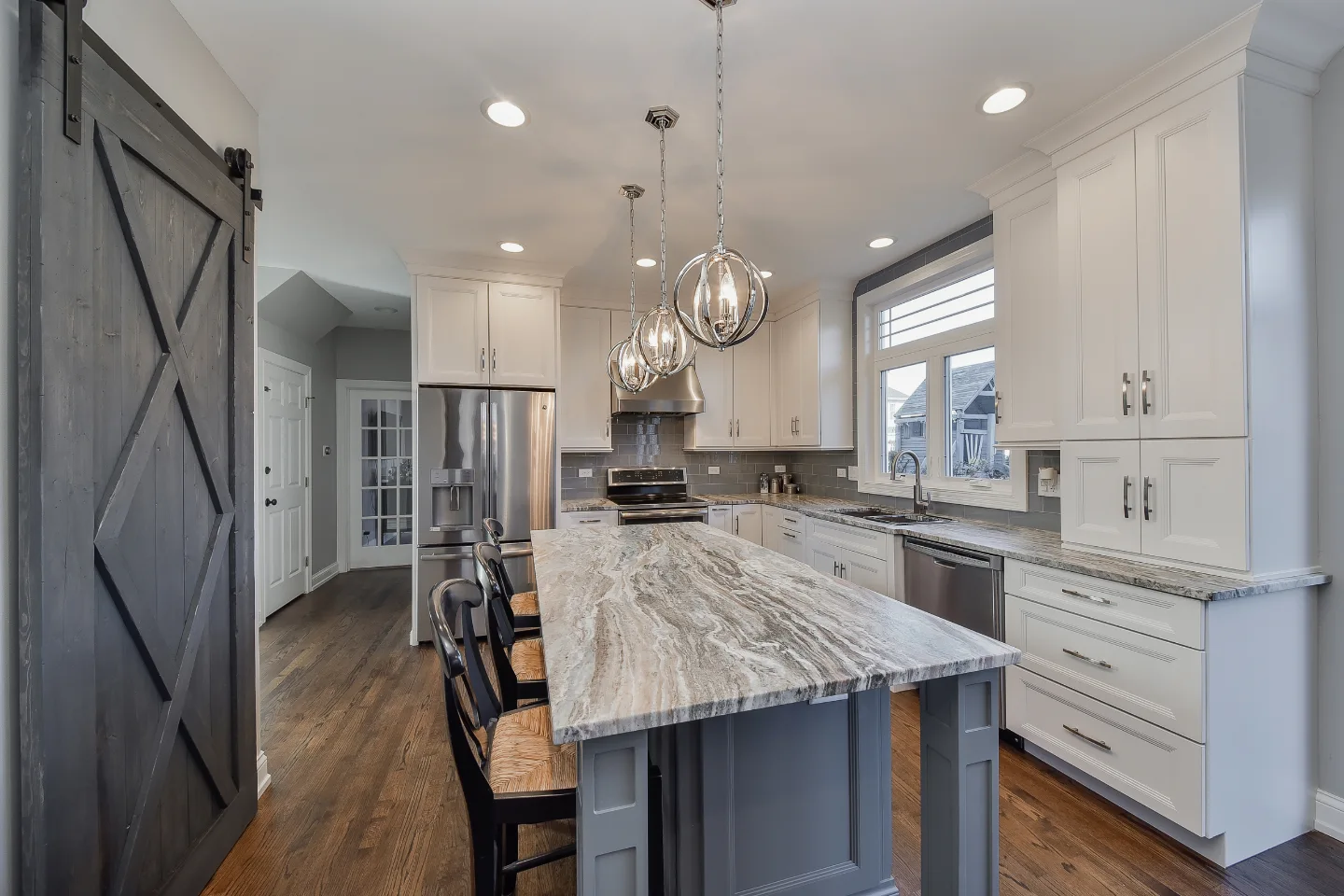
The Functions of Light Above the Kitchen Island
Before choosing a fixture, it helps to be clear about what the light is being asked to do. Island lighting can serve three distinct purposes, and the most considered lighting plans address all three simultaneously rather than asking one fixture to do everything. For a broader look at island proportions, materials and layout, our guide to kitchen island design trends covers the full picture.
1. Task Lighting
Task lighting is directed, focused light that illuminates the island surface clearly enough to support food preparation, reading a recipe or any other activity requiring visual precision. For island lighting to function as effective task lighting, the fixture needs to cast light downward rather than distributing it in all directions. Pendants with open or translucent bottoms direct light onto the work surface efficiently. The brightness level matters as well: approximately 30 lumens per square foot of island surface is the standard benchmark for adequate task illumination. A kitchen island of 18 square feet, roughly three by six feet, needs around 540 lumens directed onto its surface.
Dimmers are essential for task lighting over an island. The brightness appropriate for meal preparation is typically too harsh for a casual evening at the counter. A dimmer allows the same fixture to serve both contexts.
2. Ambient Lighting
Ambient lighting provides the general illumination that makes the kitchen usable as a whole rather than just the specific surface it is directed at. Island pendants or a chandelier centered above the island contribute meaningfully to the ambient light quality of the entire kitchen, particularly in open-plan layouts where the island sits at the center of a larger living and dining environment.
A common mistake in ambient lighting design is assuming that a single large fixture will provide more light than multiple smaller ones. A large pendant with one bulb will typically deliver less usable ambient light than three smaller pendants with equivalent individual brightness. Multiple fixtures distributed along the island length create a more even, balanced light quality across the kitchen.
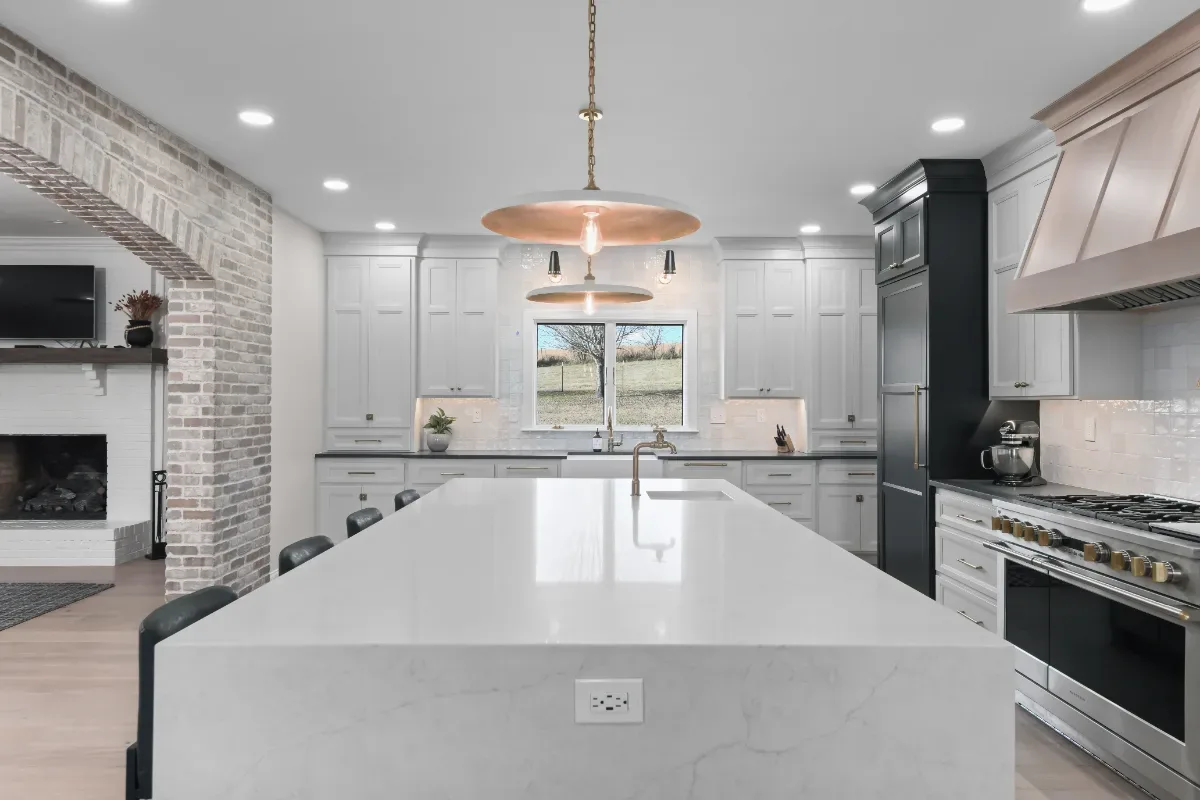
3. Accent Lighting
Accent lighting draws attention to specific features of the kitchen rather than illuminating it generally. Above the island, accent light is most effective when it highlights the countertop material itself. A well-specified island light can bring out the veining in a honed quartzite slab, reveal the movement in a piece of Calacatta marble, or pick up the warm grain in a wood countertop. A carefully aimed pendant or a fixture positioned to cast grazing light across the surface produces a quality of visual richness that overhead ambient lighting rarely achieves on its own.
The choice of fixture type, and how many fixtures to use, follows directly from understanding which of these three functions the island lighting primarily needs to serve. In the kitchens we design across Franklin and Brentwood, the answer is often all three, which is why layered lighting over the island, with pendants handling task and accent functions and ceiling fixtures providing ambient, produces the most satisfying and versatile result.
Pendant Lights: The Most Versatile Island Lighting
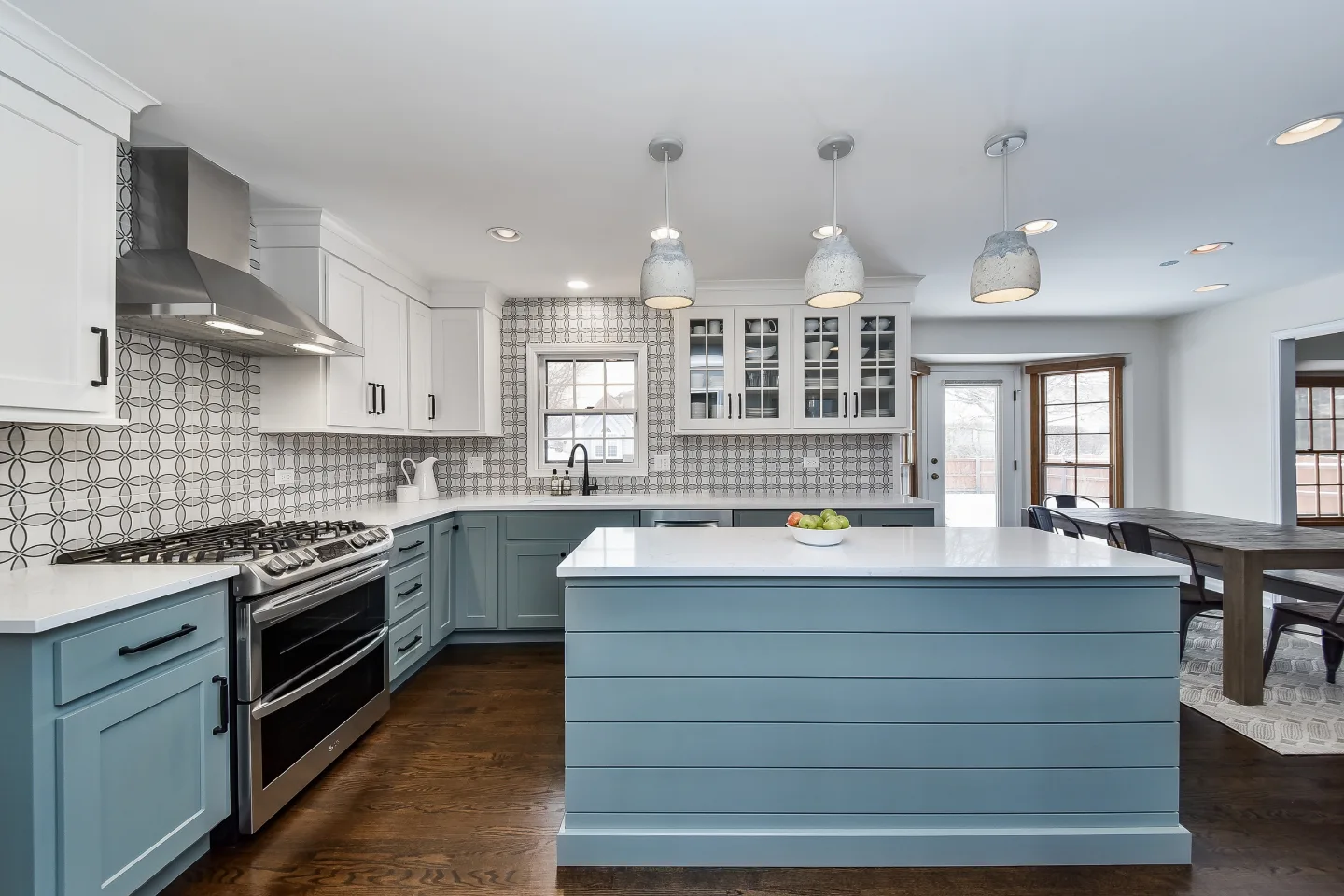
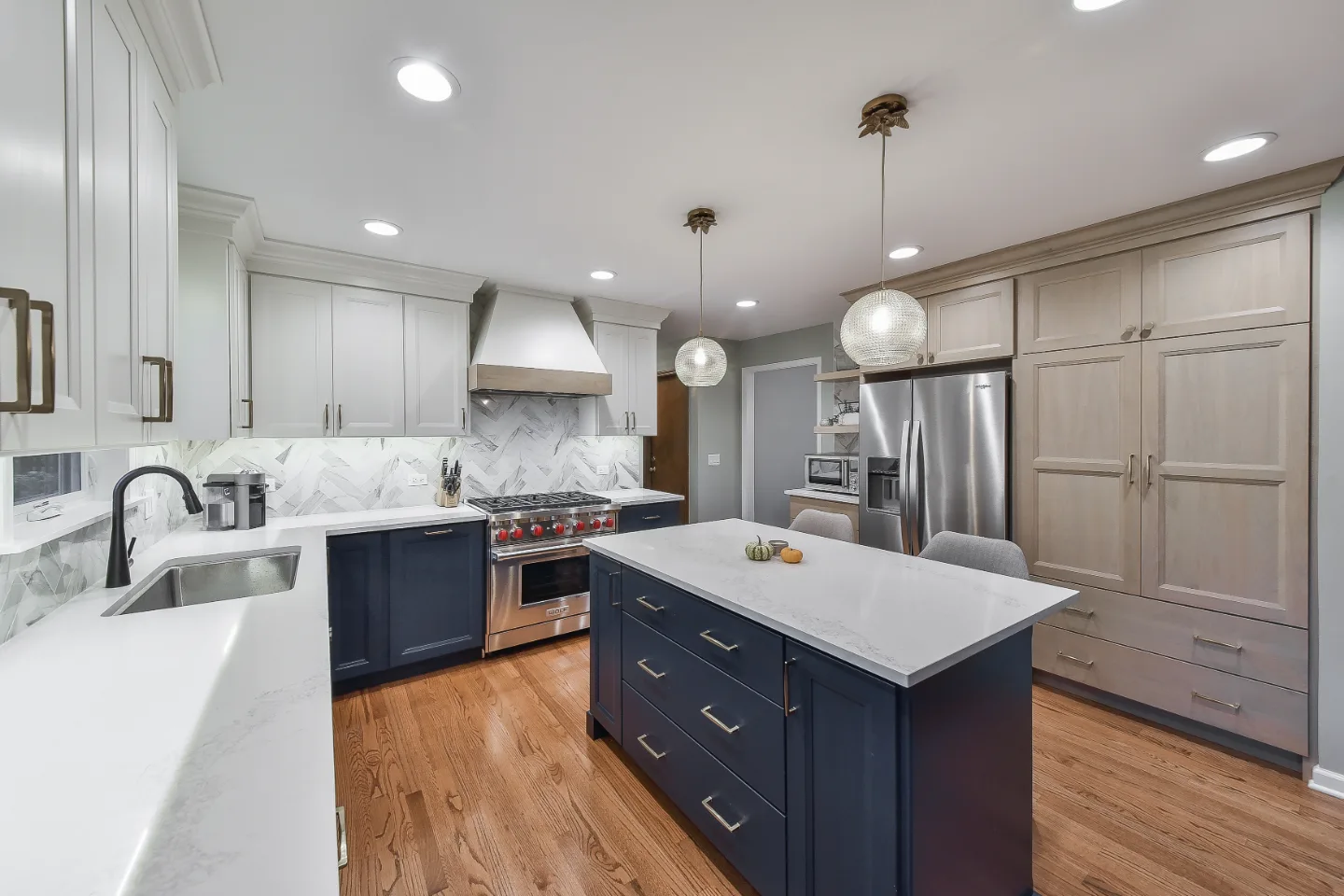
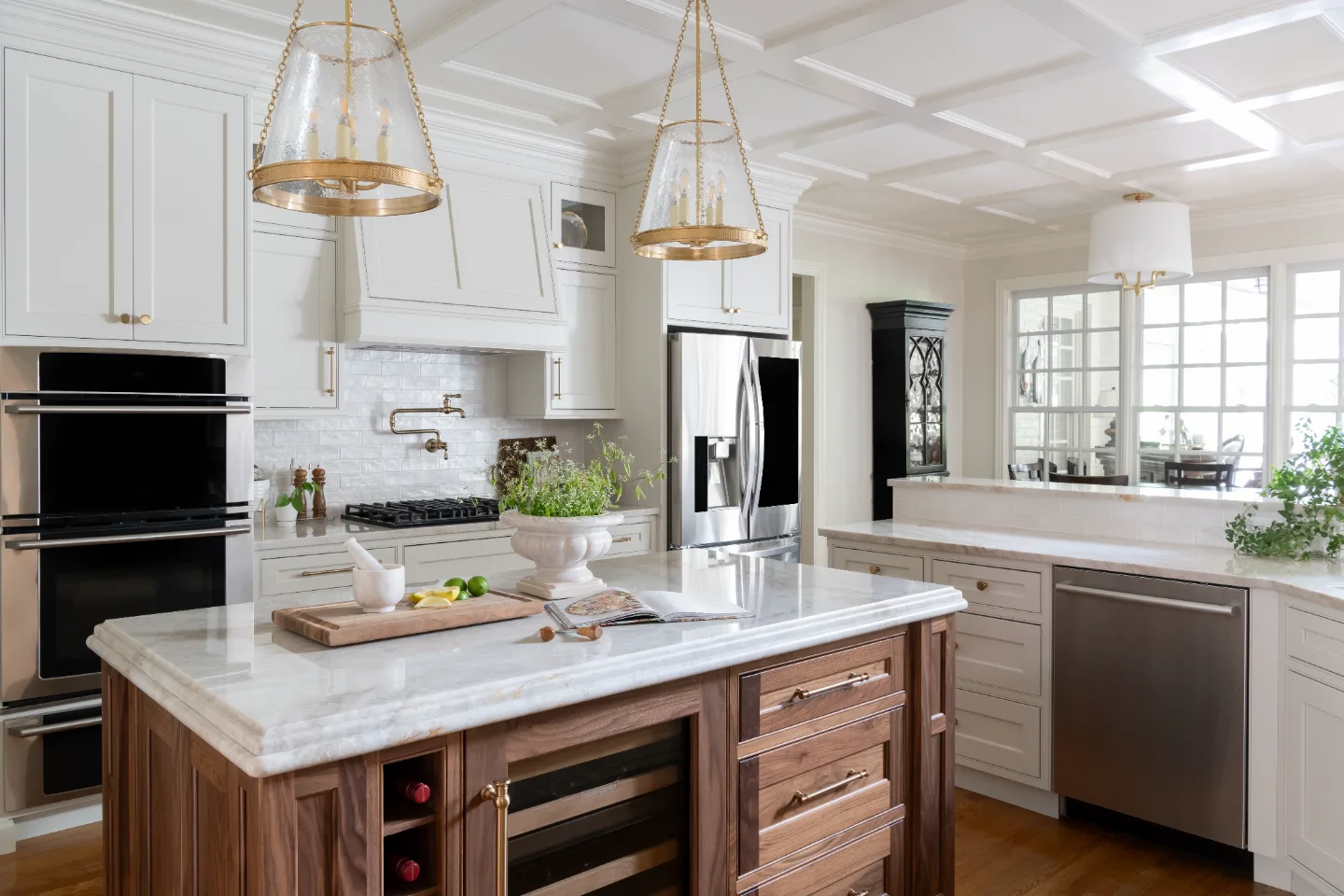
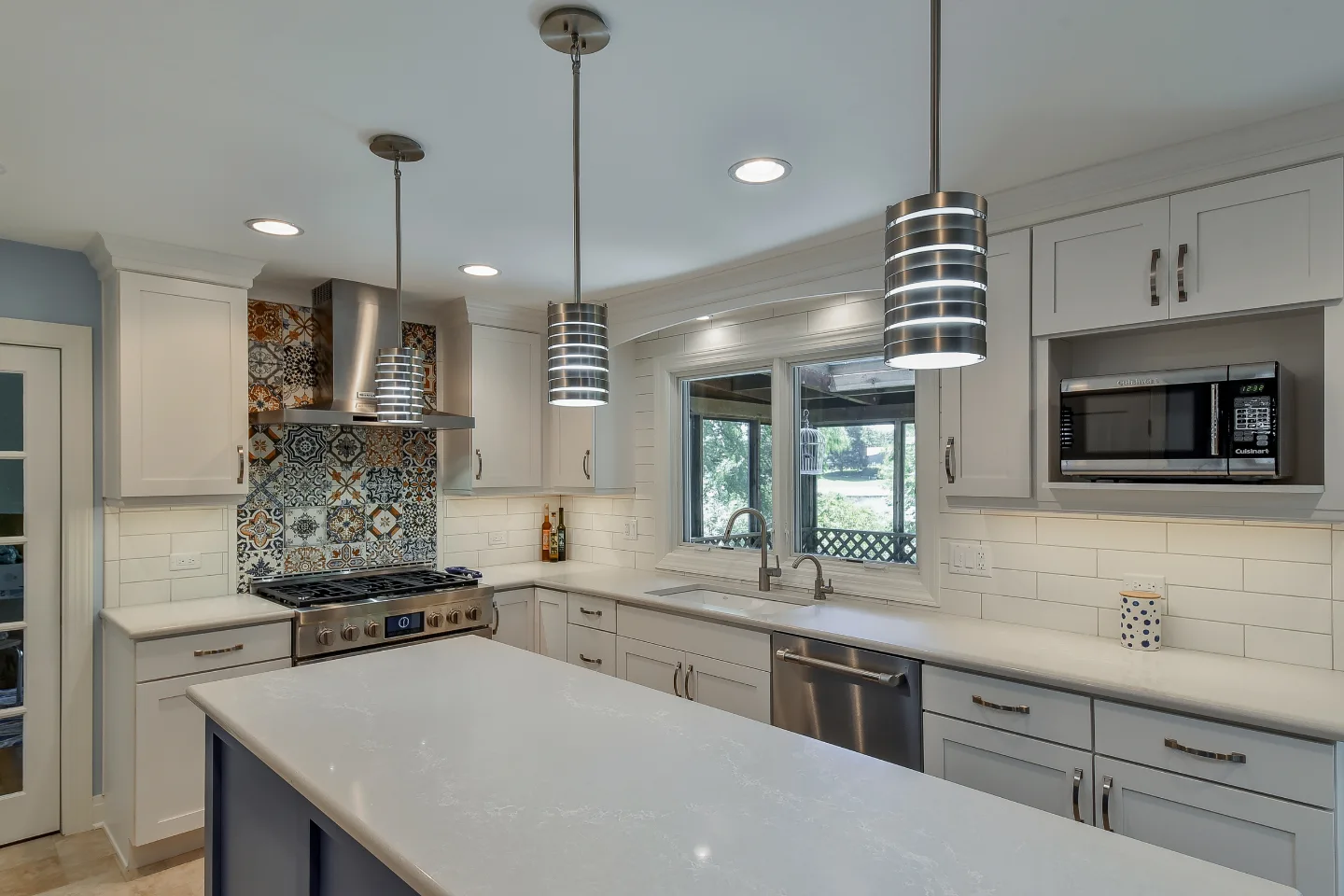
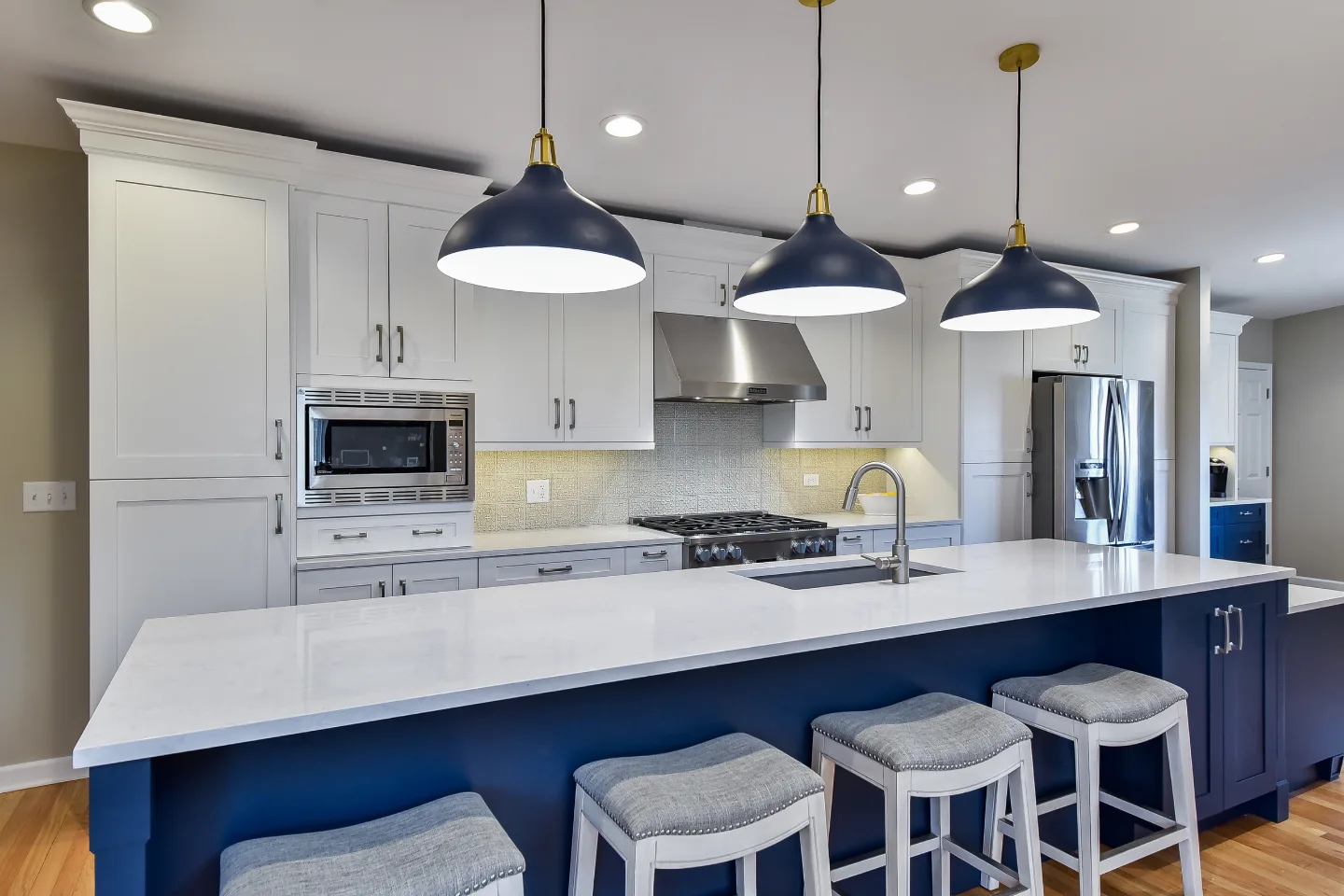
Pendant lights are often the first choice above a kitchen island in the Williamson County remodels we design because they do more than any other fixture type. They provide focused task light, contribute to ambient quality and carry significant visual weight in the design of the kitchen. A well-chosen pendant in the right material and scale completes the island zone in a way that no ceiling-mounted fixture can. Make sure you consider this when planning your kitchen layout.
The most important decision in pendant lighting is size and quantity relative to the island itself. A pendant that is too small for the island it is meant to serve reads as timid and provides inadequate light. A pendant that is too large dominates the kitchen at the expense of every other design element. For most kitchen islands, the pendant or pendants should cover roughly two-thirds of the island's length when measured collectively, with equal spacing between them and balanced clearance on each end.
"The pendant selection is where we spend the most time with clients because it is doing the most work," says Bryan Sebring, CGR. "It has to provide the right light for cooking and for conversation, and it has to look like it belongs with the cabinetry and countertops. When those three things come together, the kitchen feels finished in a way it did not before the fixture went in."
Hanging height matters as much as fixture size. The standard clearance between the bottom of a pendant and the island surface is 30 to 36 inches for an island used primarily for food preparation. In a kitchen where the island is also used for dining, increasing that clearance by a few inches improves sight lines across the counter and reduces the visual weight of the fixture at eye level. For spacing, plan roughly 24 to 30 inches between pendant centers and keep each fixture at least six inches in from the ends of the island.
When moving beyond white kitchens, material and finish choices should follow the hardware palette already established in the kitchen. A kitchen with unlacquered brass cabinet hardware reads best with pendants in a warm metal, aged brass or bronze rather than polished nickel or matte black. The fixture does not need to be identical in finish to every other hardware element, but it should be in conversation with them. A polished nickel pendant over an island surrounded by unlacquered brass hardware creates a visual conflict that reads as a decision made separately from the kitchen rather than as part of it.
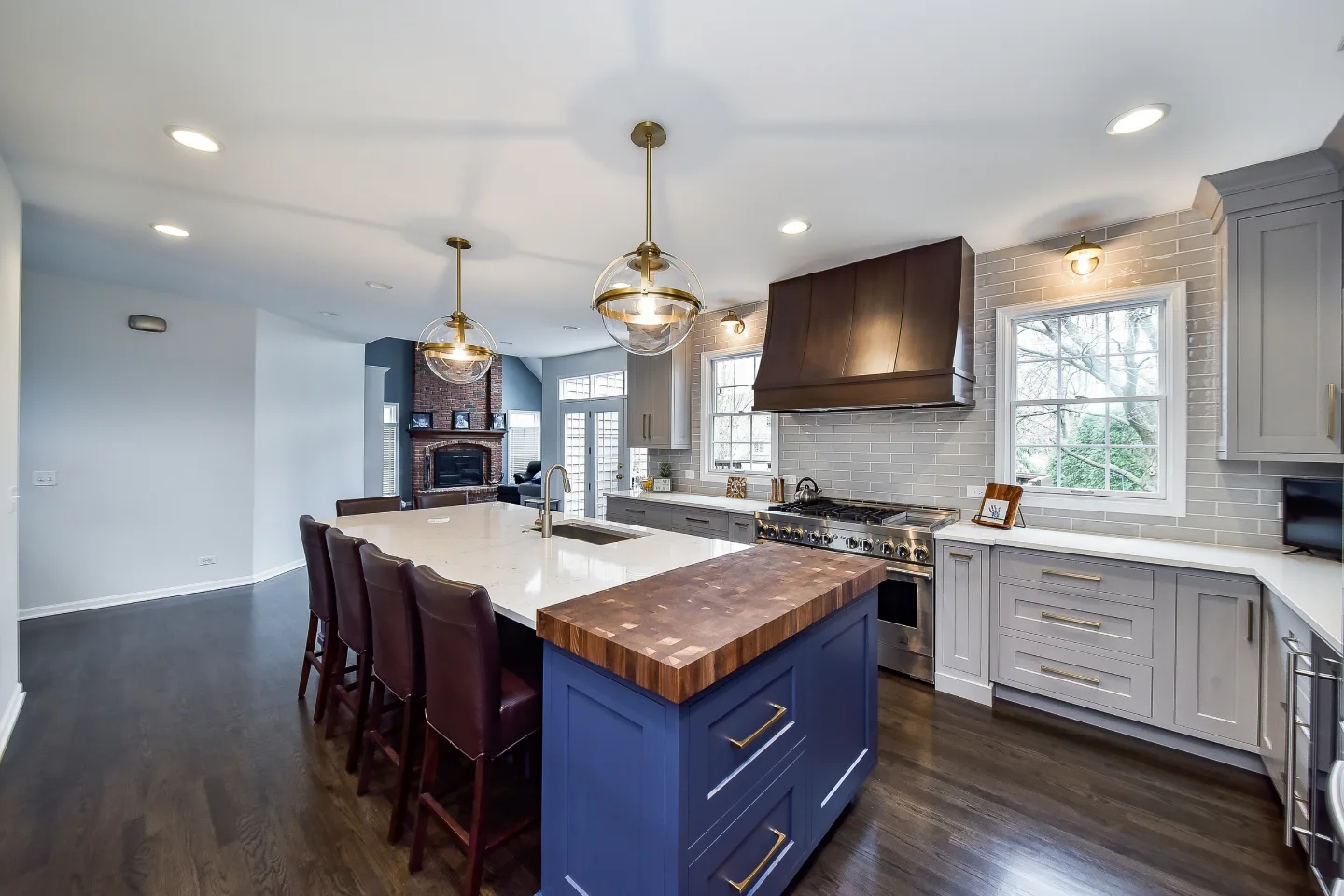
Recessed Lighting: Clean, Functional and Invisible
Some homeowners find pendant fixtures at odds with the clean, unobstructed visual quality they want in the kitchen. In those cases, recessed lighting above the island provides the task and ambient light the island needs without any visible hardware hanging in the space. This approach works particularly well in kitchens with lower ceiling heights where a pendant would hang uncomfortably close to the work surface, or in kitchens with a strong architectural identity that a pendant fixture would interrupt.
The most important element in a recessed lighting installation is the housing, which is the component that holds the bulb and trim within the ceiling. New construction housing is appropriate when the ceiling is open during a remodel; retrofit housing is designed for installations in finished ceilings without requiring significant demolition. The right housing type depends on the specific ceiling construction and the scope of the remodel.
Trim, which is the visible component that extends through the ceiling surface, serves both aesthetic and functional purposes. A baffle trim reduces glare from a bright bulb. An eyeball or adjustable trim allows the light to be directed precisely toward the island surface rather than straight down. In a kitchen with a ceiling finish that deserves attention, a low-profile or flush trim keeps the ceiling plane clean.
For island lighting specifically, smaller recessed fixtures in the three to four inch diameter range provide more focused, controlled light on the counter surface than larger six inch fixtures, which tend to distribute light too broadly to serve as effective task lighting. Recessed fixtures on dimmers give the same flexibility that pendants on dimmers provide, allowing brightness to shift from functional to ambient as the activity on the island changes.
Chandeliers: Statement Lighting for the Island
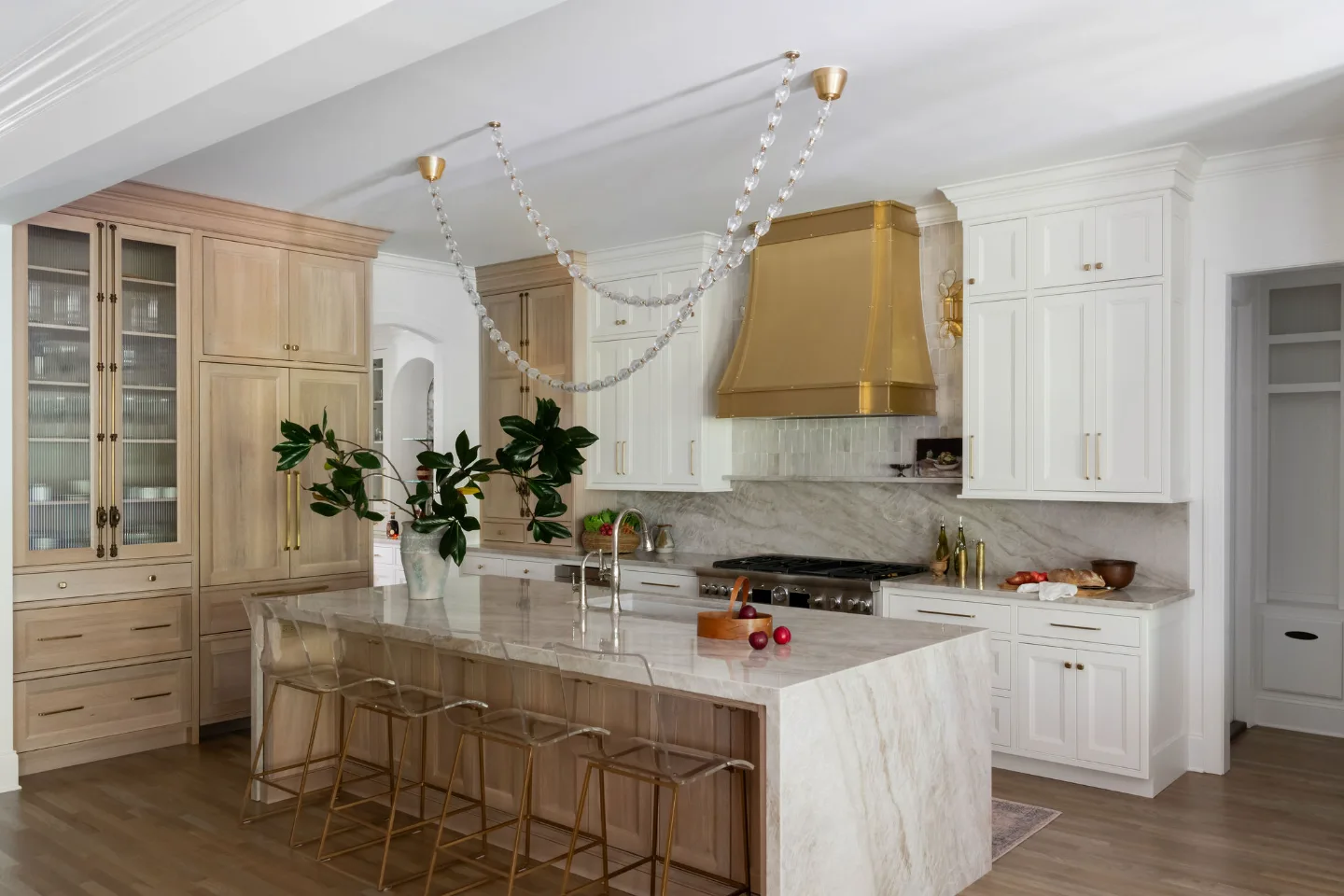
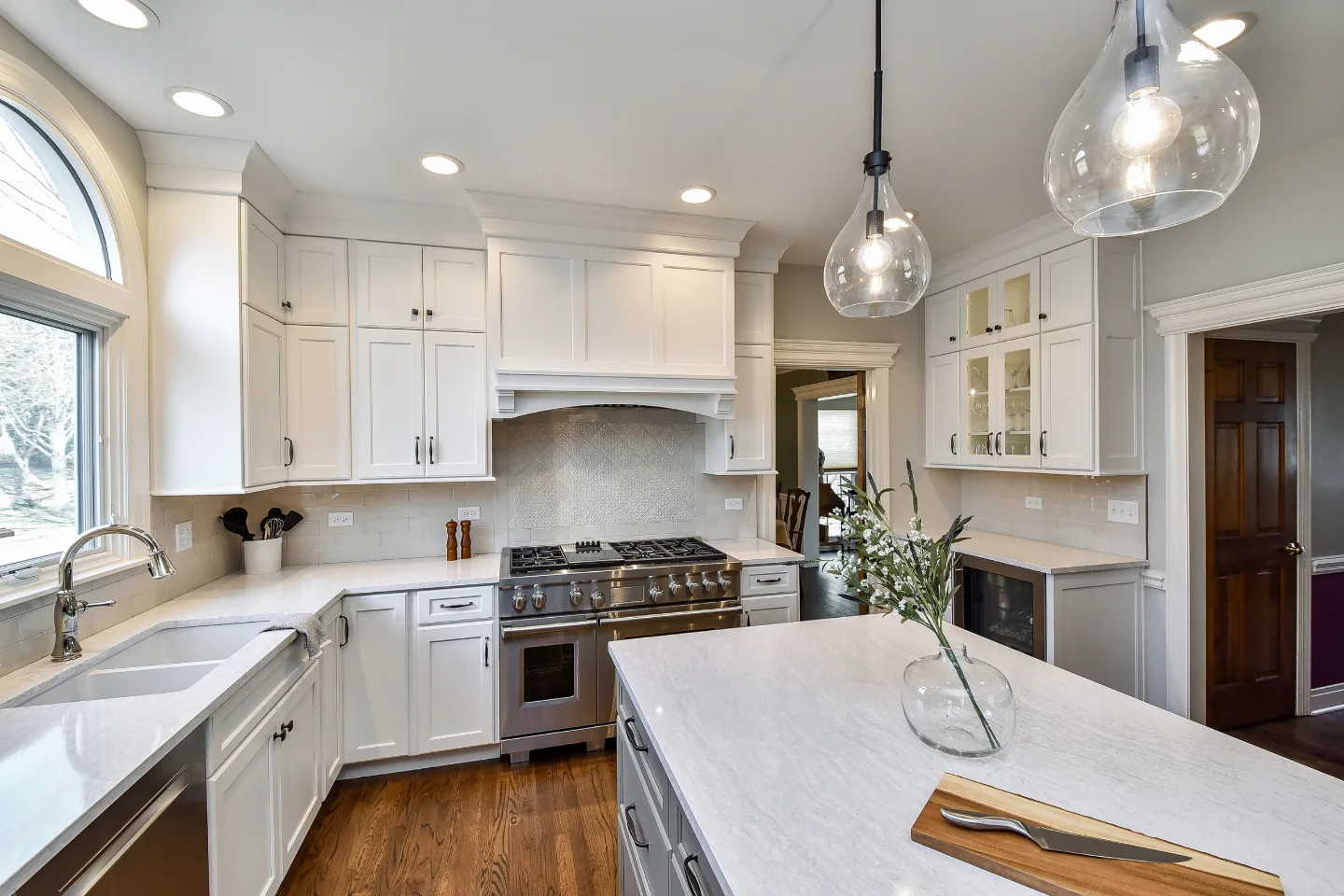
In a kitchen with the ceiling height and visual scale to support it, a chandelier above the island is one of the most powerful design decisions in the room. It establishes the island as the clear focal point of the kitchen, creates visual presence the moment anyone enters the space, and introduces a level of material detail and craftsmanship that smaller pendants rarely achieve.
The design relationship between the chandelier and the rest of the kitchen is the most critical consideration. A chandelier does not need to match the kitchen cabinetry or the hardware exactly, but it needs to be in a compatible material language. A kitchen designed in painted white oak, honed stone and unlacquered brass calls for a chandelier in a warm metal with honest material quality, aged iron, natural brass or burnished bronze, rather than in polished chrome or a highly manufactured finish.
Scale requires particular attention. A chandelier chosen for a dining room but installed over a kitchen island will often feel too large because the sightlines in a kitchen are typically more compressed than in a formal dining space. The chandelier should extend to roughly half the island width at most, with enough visual breathing room at the sides to allow the countertop and cabinetry to read without competition. Hanging height follows the same 30 to 36 inch clearance guideline as pendant lighting, adjusted upward if the kitchen also uses the island for seating and dining.
Under-Cabinet LED Strips: Ambient Light at the Island Base
Under-cabinet LED strips installed at the base of the island, along the toe-kick or the underside of the countertop overhang, serve a different function from overhead island lighting but add a quality of warmth and depth that overhead sources alone cannot provide. A soft LED glow at the base of the island in the evening, when the overhead lights are dimmed or off, creates a settled, residential atmosphere in the kitchen that most overhead lighting is too bright to produce on its own.
This type of lighting is particularly effective in kitchens where the island has a floating quality, either through a stone base or a simple cabinet design without heavy base molding. The LED strip at the floor level makes the island appear to float and fills the lower zone of the kitchen with gentle warmth. The same approach applied along the underside of the countertop overhang, where the light grazes the cabinetry below, can introduce a quality of depth and material richness that the upper lighting does not reach.
Warm-toned LED strips in the 2700 to 3000 Kelvin range perform best in this application because they complement the warm material palettes often chosen in Williamson County kitchens without reading as clinical or cool. The strips can typically be left on while the main kitchen lights are off, providing enough gentle illumination for someone moving through the kitchen without requiring the full overhead system to activate.
Bringing the Lighting Plan Together
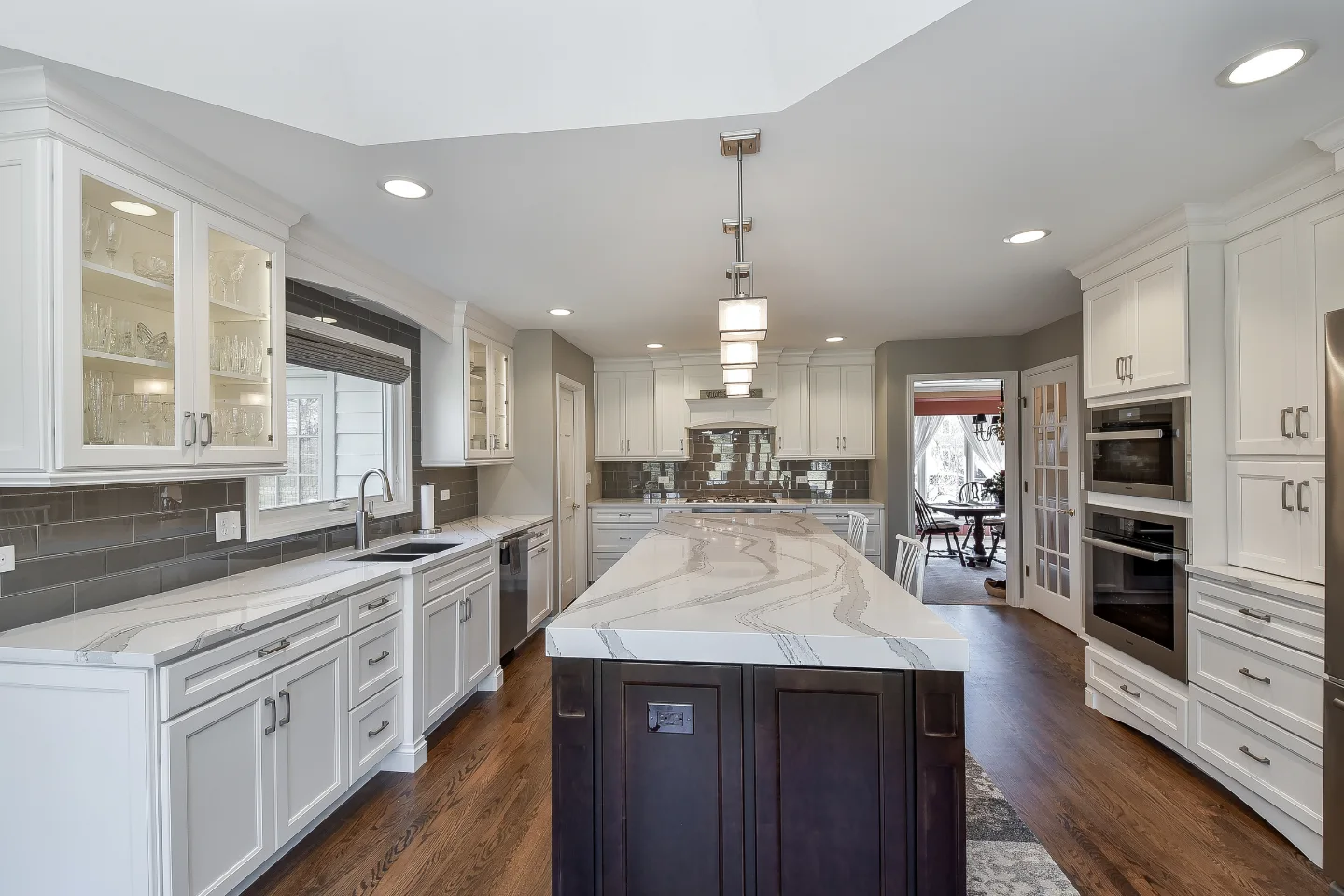
The most effective island lighting in Franklin and Brentwood kitchens is a considered system rather than a single fixture decision. Overhead pendants or a chandelier handle the task and visual design requirements. Ceiling recessed fixtures contribute ambient light to the kitchen as a whole. Under-cabinet LED strips at the island base add warmth and depth at the lower zone. Dimmers on each circuit allow the system to shift its quality from bright and functional to warm and ambient as the activity in the kitchen changes.
All of these decisions interact with each other and with the material palette of the kitchen, which is why island lighting is most successfully resolved as part of the overall kitchen design rather than as a separate choice made after the cabinetry and countertops are already set. The pendant material should relate to the hardware. The fixture scale should relate to the island dimensions. The light quality should relate to how the kitchen is used.
It is time that you love each detail of your kitchen. If you are planning a kitchen remodel in Franklin or Brentwood and want guidance on island lighting that works as beautifully as it looks, schedule your complimentary consultation with Sebring Design Build. Our designers address lighting as part of each kitchen plan, not as an afterthought.