The kitchen floor is the largest uninterrupted surface in most homes, and the most demanding one. It takes daily foot traffic, dropped utensils, spilled liquids, dragged chairs and the weight of heavy appliances. It needs to handle all of that while still reading as beautiful in a space where the visual standard is the highest in the house.
In Franklin and Brentwood kitchens, where the investment in cabinetry, countertops and fixtures is significant, the floor needs to be both worthy of that investment aesthetically and practical enough to survive the reality of daily life. The five flooring options that appear most frequently in Williamson County kitchen remodels each bring a distinct combination of visual quality, performance and maintenance requirements. Understanding those combinations honestly is what makes the selection process productive rather than simply overwhelming, as reflected throughout our kitchen remodel portfolio.
Hardwood and Engineered Hardwood
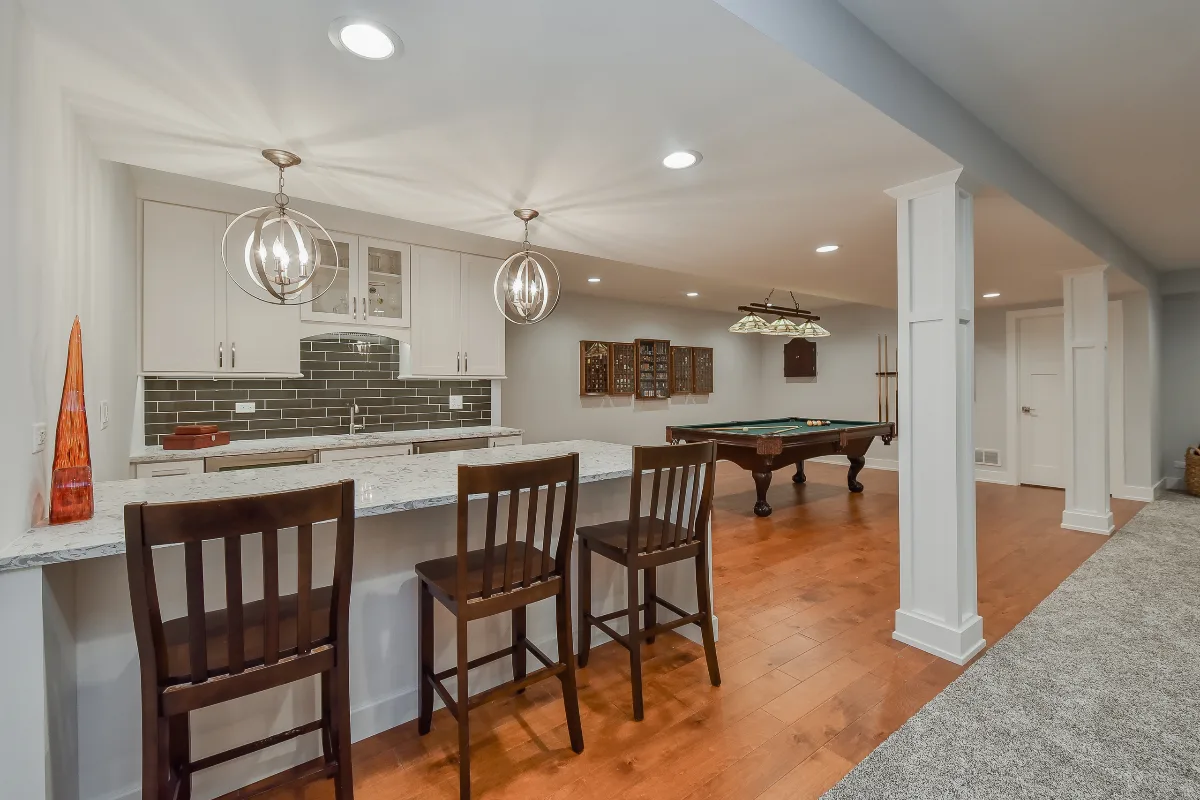
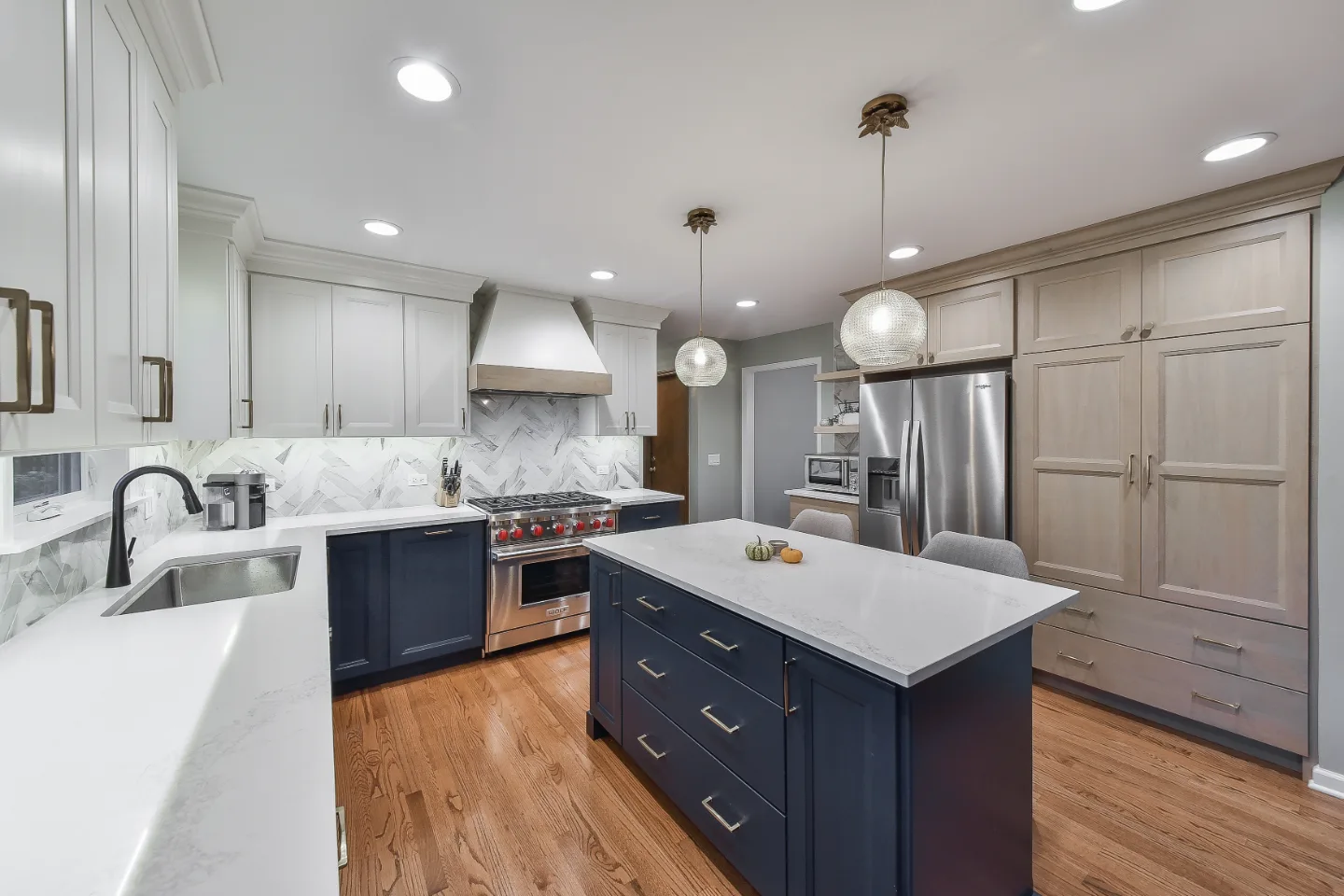
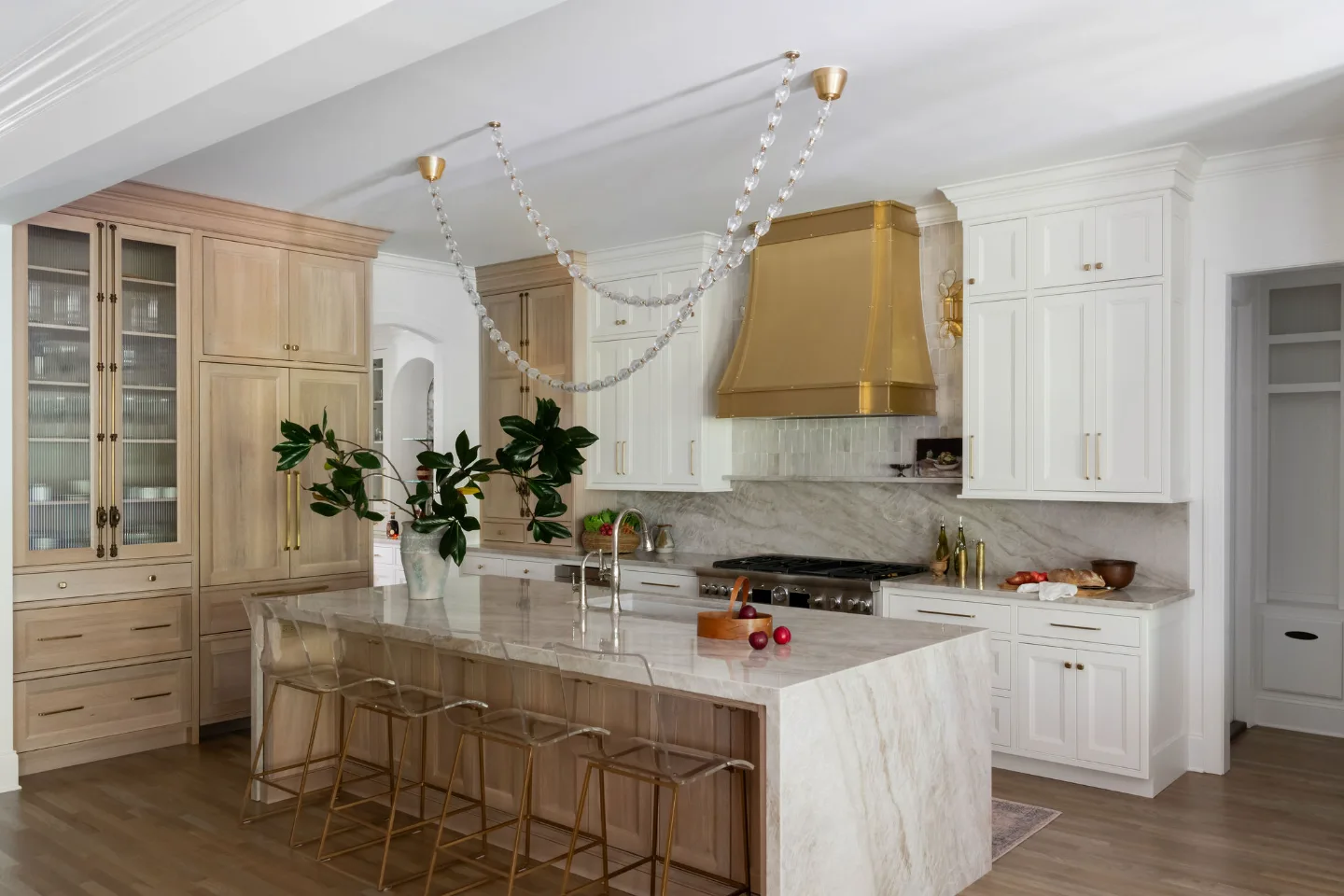
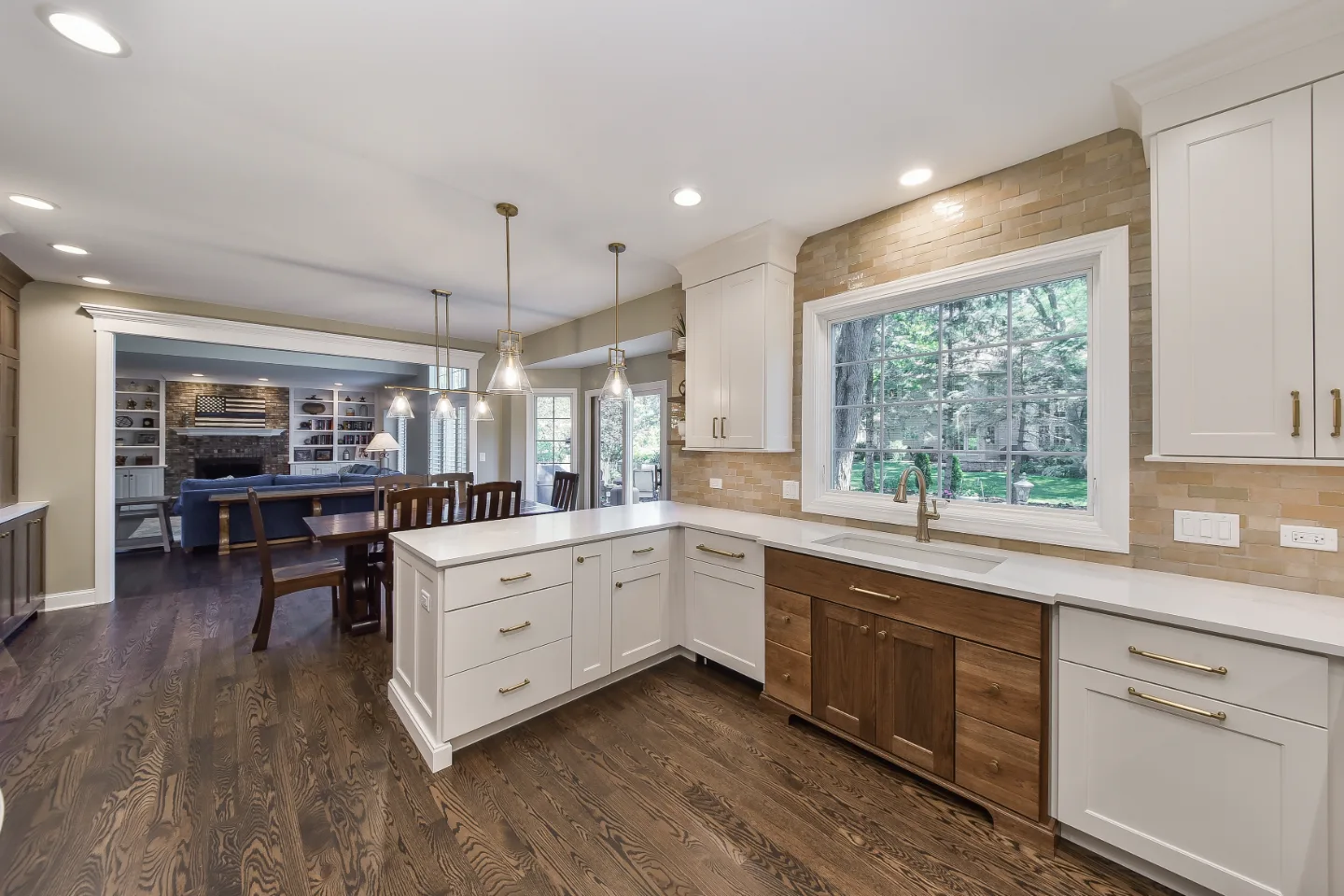
Hardwood flooring in a kitchen brings a warmth and material quality that no manufactured product can precisely replicate. Wide-plank white oak in a natural or lightly wire-brushed finish is a favorite in Franklin and Brentwood primary kitchen remodels, and it is the floor that reads most seamlessly with the painted Shaker cabinetry, honed quartzite countertops and unlacquered brass hardware that define the Williamson County kitchen aesthetic.
The two formats are solid hardwood and engineered hardwood. Solid hardwood is milled from a single plank of wood and can be sanded and refinished multiple times over the life of the floor, extending its useful life across decades. Engineered hardwood is constructed with a real wood veneer over a plywood or composite core, which makes it more dimensionally stable than solid hardwood in environments with fluctuating humidity. In a kitchen, where humidity from cooking, cleaning and dishwasher steam cycles regularly, engineered hardwood is the more practical format. For species, harder woods including white oak, hickory, maple and ash are the most practical for kitchen use, while walnut works with a little more care. Softer species such as pine and cedar dent and scratch too readily for a high-traffic kitchen environment. Bamboo, a fast-growing and highly renewable material, is also a durable and increasingly popular alternative for homeowners who want the warmth of a wood-look floor with a more sustainable sourcing story.
The case against hardwood in a kitchen is moisture. Prolonged exposure to water, from a slow leak under the dishwasher, a regularly wet area around the sink or high ambient humidity over years, can cause solid hardwood to swell, warp or cup. Engineered hardwood handles these conditions better than solid, but neither format is as moisture-tolerant as porcelain tile or luxury vinyl plank. The maintenance commitment is real: spills need to be wiped promptly, the finish requires periodic reapplication and the floor benefits from felt pads under furniture legs. For households that are willing to provide that care, hardwood delivers a quality of beauty and resale value that justifies the investment.
The Best Wood for Kitchen Floors
The best wood for a kitchen floor is a hard, stable species in an engineered format. White oak is the most versatile choice: it is hard enough for daily kitchen traffic, takes stain evenly and resists moisture better than many species thanks to its closed grain. Hickory and hard maple are harder still, and hickory's strong grain hides wear well. Walnut is beautiful but noticeably softer, so it shows dents and scratches sooner in a busy kitchen. Softwoods such as pine are best avoided.
Format and finish matter as much as species. Engineered hardwood with a thicker wear layer, roughly 3 to 6 millimeters, can usually be sanded and refinished once or more, giving it a long life. A durable, low-sheen finish hides daily wear, and many kitchens use a site-applied finish that seals the seams between boards against spills. For the look of wood with full waterproofing, our guide to tile that looks like wood compares the options.
Travertine and Natural Stone
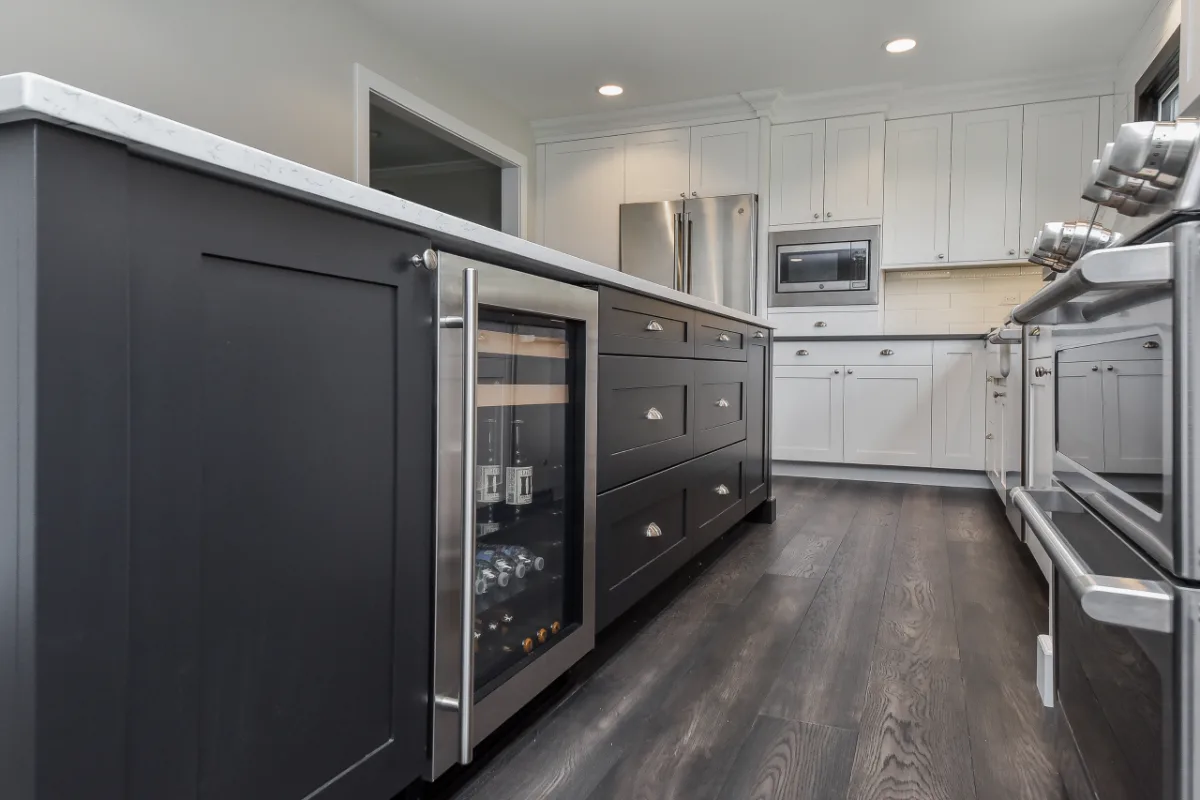
Travertine is a natural limestone formed by mineral springs that produces a warm, organic surface with subtle veining and variation between tiles. It comes in a range of tones from warm ivory to beige, soft gold and reddish-brown depending on the mineral content of the source. The available finishes range from polished, which reads similarly to marble, to honed, which provides a matte, more casual surface, to tumbled or brushed, which produces a more rustic, antiqued character.
The appeal of travertine in a kitchen is its natural warmth and material authenticity. No two tiles are identical, and the floor reads as genuinely organic rather than manufactured. Tumbled travertine with its textured surface provides good slip resistance, which is a practical advantage in a kitchen environment where the floor surface occasionally gets wet. Honed travertine in a large format is a frequent choice in Franklin and Brentwood kitchen remodels where a warmer, more natural-looking alternative to porcelain is wanted.
The limitations of travertine center on maintenance. Unlike porcelain tile, which is essentially impervious to staining, travertine is a porous natural stone that absorbs spills if they are not cleaned promptly. Red wine, acidic liquids and oils can stain the surface if they penetrate it. The floor should be resealed at one- to two-year intervals with a high-quality stone sealer to protect the porous surface from absorption. Travertine requires a mild pH-neutral stone cleaner rather than standard household floor cleaners, which can etch the surface over time.
On investment, travertine sits alongside mid-range porcelain and high-end hardwood, and the maintenance commitment described above is a real factor to weigh against that investment over the life of the floor.
Porcelain and Ceramic Tile
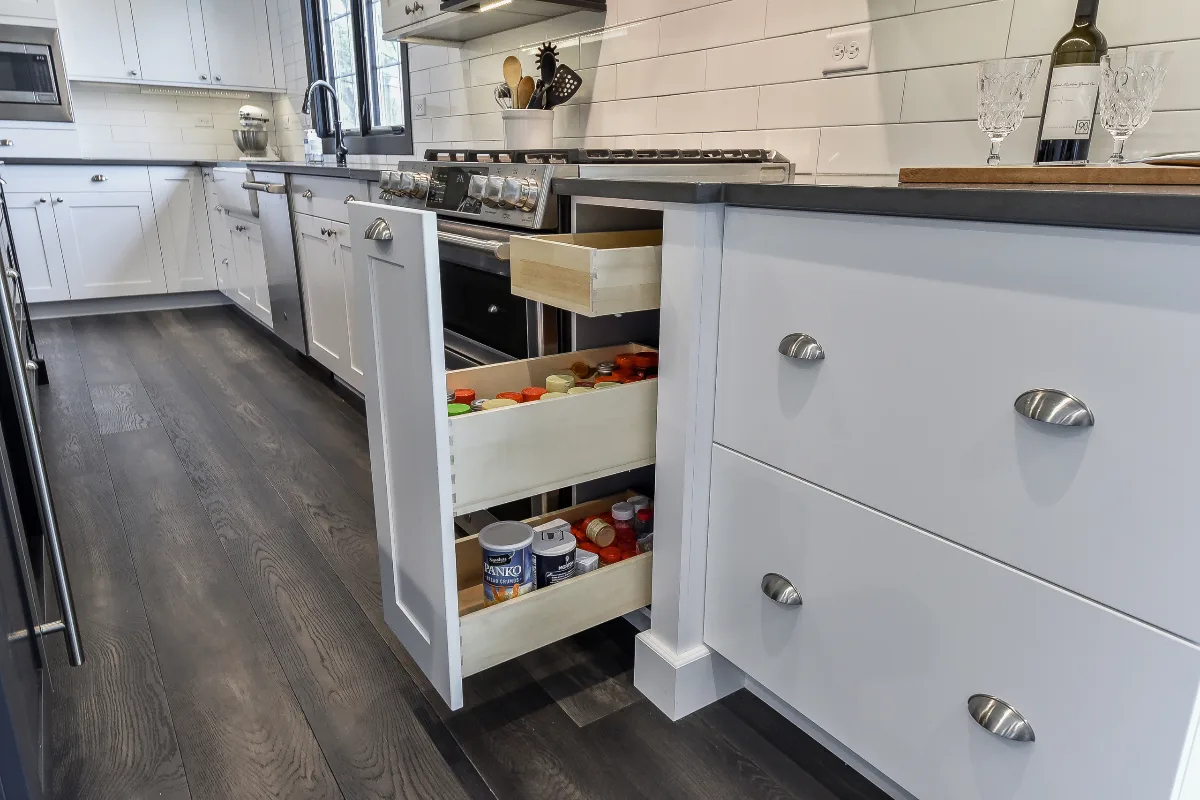
Porcelain tile is the most practically capable kitchen flooring material available. It is waterproof, extremely durable under normal residential use, resistant to staining without sealing and available in a range of sizes, colors and surface textures that allows it to visually replicate natural stone, wood, concrete and ceramic at a fraction of the maintenance those materials require.
The distinction between ceramic and porcelain matters in a kitchen environment. Ceramic tile is fired at lower temperatures and has a higher moisture absorption rate, making it less appropriate for a wet kitchen environment than porcelain. Full-body porcelain, where the color and pattern run through the full thickness of the tile rather than existing only as a surface glaze, is the most durable format: if a tile chips, the color beneath matches the surface. In a large-format configuration of 24 by 24 inches or larger, porcelain tile produces minimal grout lines, which is the biggest maintenance advantage in a kitchen floor.
The limitation homeowners raise most often about tile in a kitchen is comfort underfoot. Hard tile surfaces are less forgiving on feet and joints during extended periods of standing than resilient flooring options like hardwood or vinyl plank. Radiant heat beneath a tile floor addresses this limitation directly, producing a warm surface that is one of the most genuinely luxurious daily experiences available in a kitchen. In Franklin and Brentwood kitchens where radiant floor heat is part of the specification, large-format porcelain tile is typically the flooring that receives it, as tile and stone are among the best conductors of radiant heat.
Large-format tiles requiring precise layout and additional subfloor preparation represent the more involved end of the installation process, and that complexity is worth discussing early in the design phase of the kitchen remodel process, since it can affect the overall kitchen remodel timeline.
Kitchen Floor Tile Ideas
Kitchen floor tile has moved well beyond the small beige squares of the past. Large-format porcelain in a soft stone look creates a calm, nearly seamless floor with few grout lines. Wood-look porcelain planks deliver the warmth of oak with complete water resistance. Honed marble or limestone laid in a checkerboard brings classic character, while herringbone, hexagon or handmade terracotta add pattern and texture to more traditional kitchens.
Two practical details make any tile floor better. Choose a tile rated for wet interior floors, typically with a dynamic coefficient of friction of 0.42 or higher, so the surface stays safe when it gets wet. And consider rectified tile with narrow grout joints and a stain-resistant grout, such as high-performance or epoxy grout, to keep cleaning easy for years.
Luxury Vinyl Plank
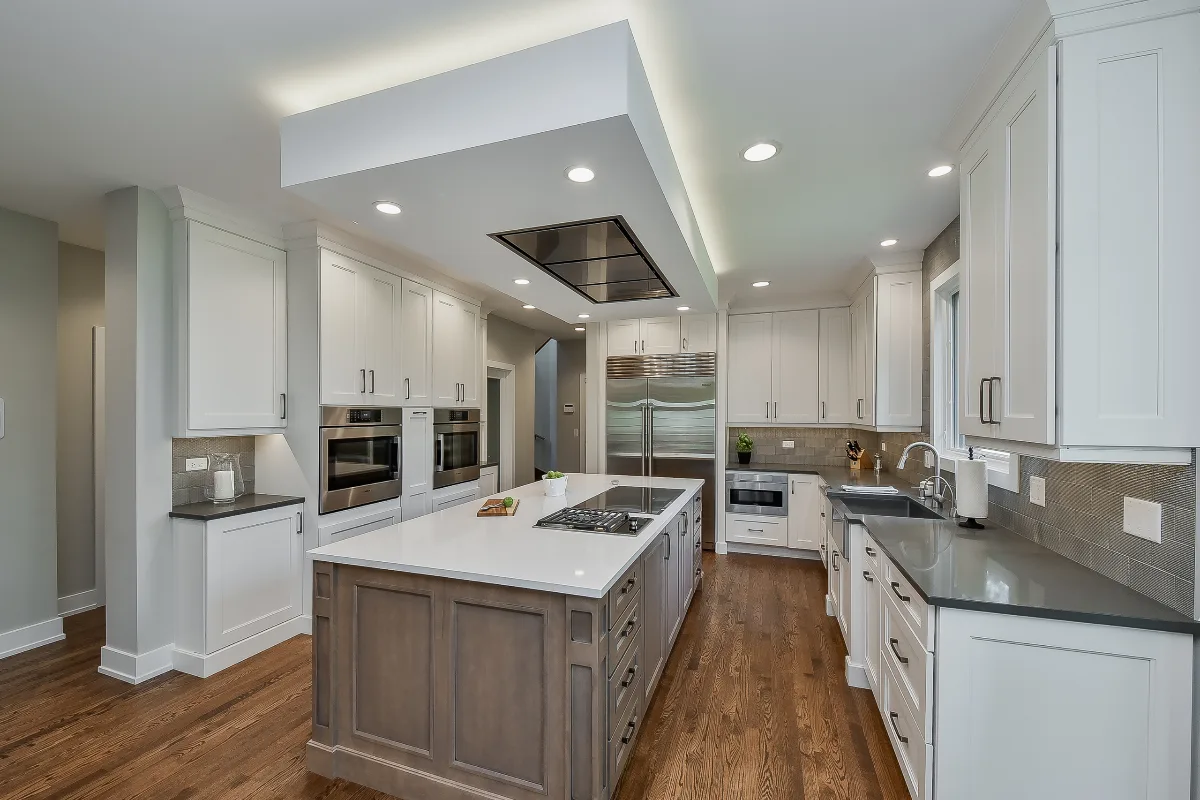
Luxury vinyl plank has become a leading alternative to engineered hardwood in Franklin and Brentwood kitchen remodels, for a straightforward reason: the best current LVP products read as virtually indistinguishable from natural wood at typical viewing distances, while being genuinely waterproof and substantially more scratch-resistant.
LVP is constructed as a multi-layer composite product with a photographic wood-grain layer protected by a clear wear layer. Wear layer thickness is the most important specification to verify: residential products range from 12 to 20 mils, with 20 mils providing substantially better scratch and scuff resistance in a high-traffic kitchen. Products with a stone plastic composite (SPC) rigid core are the most dimensionally stable, handling the temperature and humidity fluctuations of a kitchen environment without the expansion and contraction that softer-core products exhibit.
The overall investment for quality residential LVP is meaningfully lower than an equivalent visual quality tier of engineered hardwood, which is the primary reason LVP has captured as much of the kitchen flooring market as it has in recent years.
Laminate
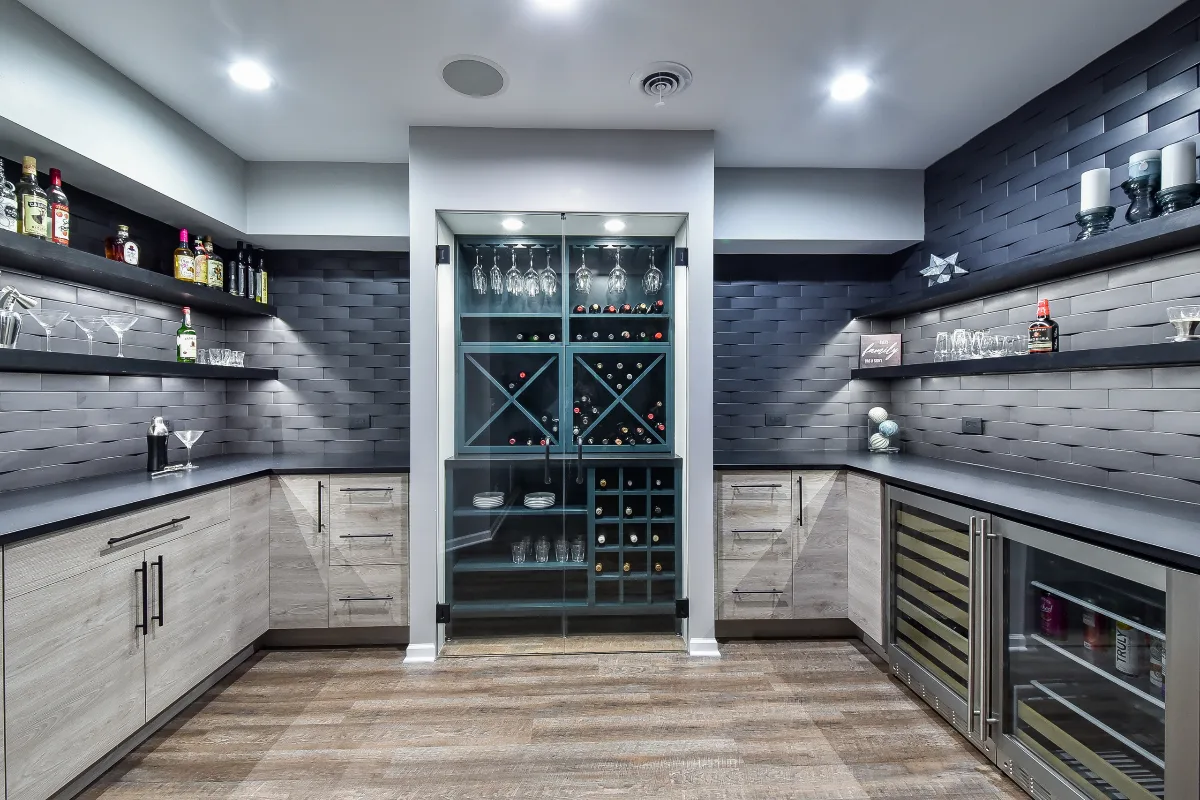
Laminate flooring occupies the entry level of the wood-look flooring category. It uses a photographic film layer to replicate the appearance of hardwood, positioned above a high-density fiberboard core and protected by a wear layer. Laminate was the dominant alternative to hardwood flooring through the 2000s and 2010s, but luxury vinyl plank has largely displaced it in new specifications because LVP provides better moisture resistance, better durability and comparable or superior visual quality at similar investment levels.
The primary advantage of laminate is accessibility, making it the most approachable entry point for a wood-look floor. It is harder and more scratch-resistant than most wood flooring, and it handles the scuffs and impact from daily kitchen use reasonably well.
The meaningful limitation of laminate in a kitchen environment is its sensitivity to moisture. Standard laminate's high-density fiberboard core swells and deteriorates when exposed to standing water or repeated moisture exposure, which makes it a less appropriate specification for a kitchen than either tile, natural stone or LVP. Waterproof laminate products have improved this limitation for some applications, but they remain less moisture-tolerant than equivalent LVP products.
When the investment allows for LVP or tile, laminate is rarely the stronger specification for a Franklin or Brentwood kitchen. It serves best as an entry-level option in secondary spaces or in temporary flooring situations where cost is the primary constraint.
Choosing the Right Floor for Your Kitchen
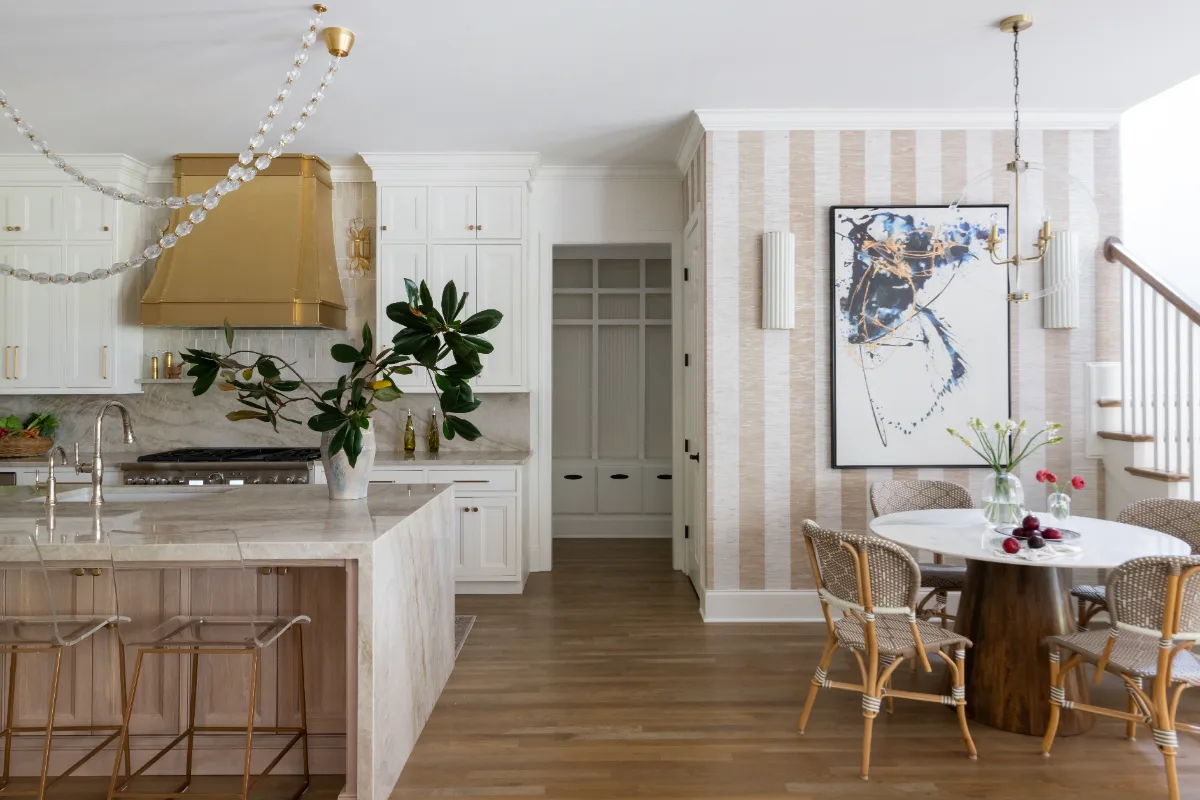
The flooring decision for a Franklin or Brentwood kitchen remodel involves three considerations that should be weighted in sequence: performance in the kitchen environment, visual compatibility with the kitchen's design direction and the overall kitchen remodel investment.
Performance is the first filter because the kitchen is the most demanding environment in the house for flooring. Moisture tolerance, scratch resistance and ease of cleaning determine how the floor holds up over the ten to twenty years between kitchen remodels. Tile and LVP are the strongest performers against these criteria. Engineered hardwood and travertine perform well with appropriate care. Laminate and solid hardwood carry the most risk in a high-moisture kitchen environment.
Visual compatibility is the second filter. The floor should be in a material and color conversation with the kitchen's cabinetry, countertops and hardware rather than existing as a separate selection made independently. Wide-plank white oak flooring, whether engineered hardwood or high-quality LVP in a warm wood tone, is the specification that most consistently complements the painted Shaker cabinetry and warm brass hardware of the transitional kitchens that define the Williamson County market.
Investment is the third filter, and it determines which of the appropriate-performance and visually compatible options is accessible. Porcelain tile and LVP both provide excellent performance at a meaningfully lower investment than hardwood and natural stone, which makes them the practical choice for households where much of the kitchen remodel investment has been allocated to cabinetry, countertops and appliances.
Flooring selection is one step within our broader kitchen remodel process. Sebring Design Build specifies flooring as part of each complete kitchen remodel in Franklin, Brentwood and across Williamson County. If you are planning a kitchen remodel in Franklin, TN and want guidance on the right flooring option for your home, contact Sebring Design Build to schedule your complimentary consultation.