When planning a kitchen remodel in Franklin or Brentwood, one of the most consequential decisions a homeowner makes is choosing a design direction. There are many design vocabularies available: farmhouse, transitional, contemporary, rustic. But most kitchens in Williamson County still orient toward one of two primary frameworks: modern or traditional. Understanding what each actually means, and how those meanings translate into specific material and layout choices, makes the decision considerably easier.
Each direction has a distinct personality. Modern kitchens read as composed, minimal and architecturally precise. Traditional kitchens read as warm, layered and full of craft detail. Neither is inherently better than the other. The better question is which one fits the household, the house and the way the kitchen is used.
Here is what each style actually looks like, how they compare in practical terms and how to determine which direction serves your home best, with examples of both throughout our kitchen remodel portfolio.
What Makes a Kitchen Modern?
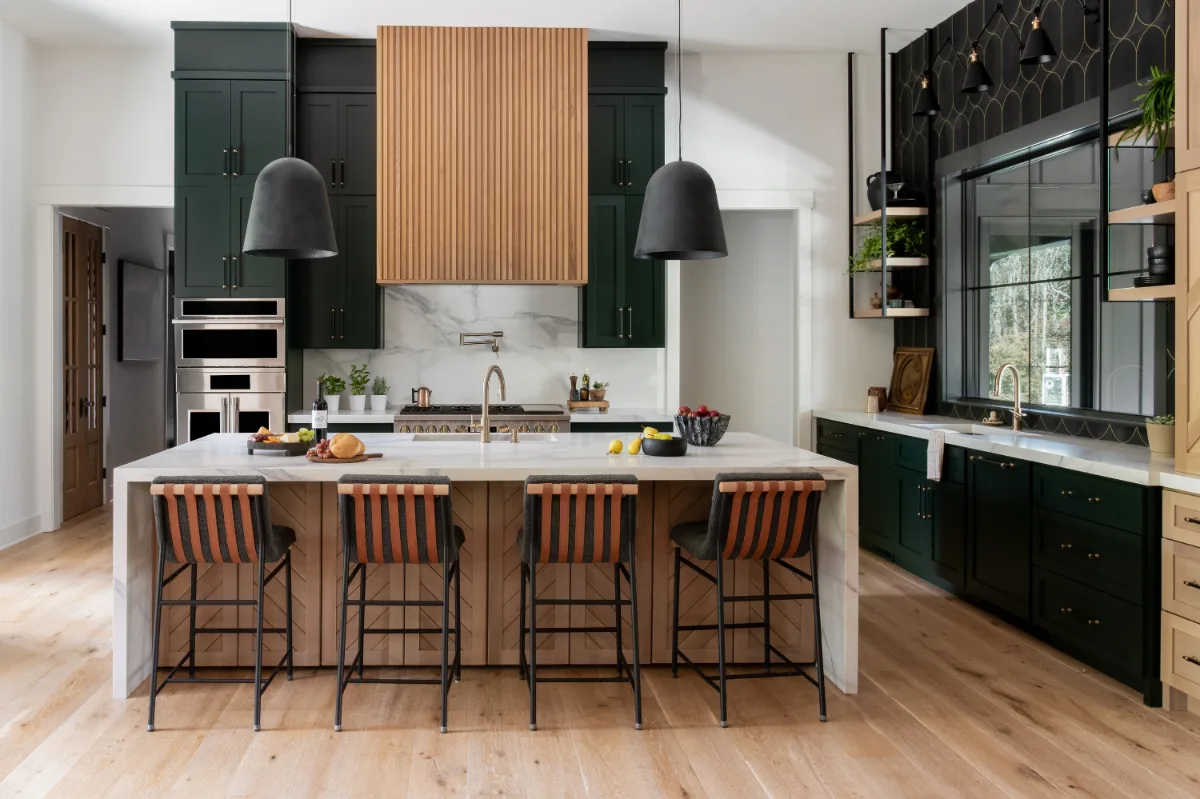
Modern kitchens are organized around simplicity, efficiency and visual restraint. Each element serves a function, and the design tends to reduce rather than accumulate. The result is a kitchen that reads as composed and architecturally intentional, where nothing competes for attention and the quality of the materials and the precision of the construction become the primary visual experience.
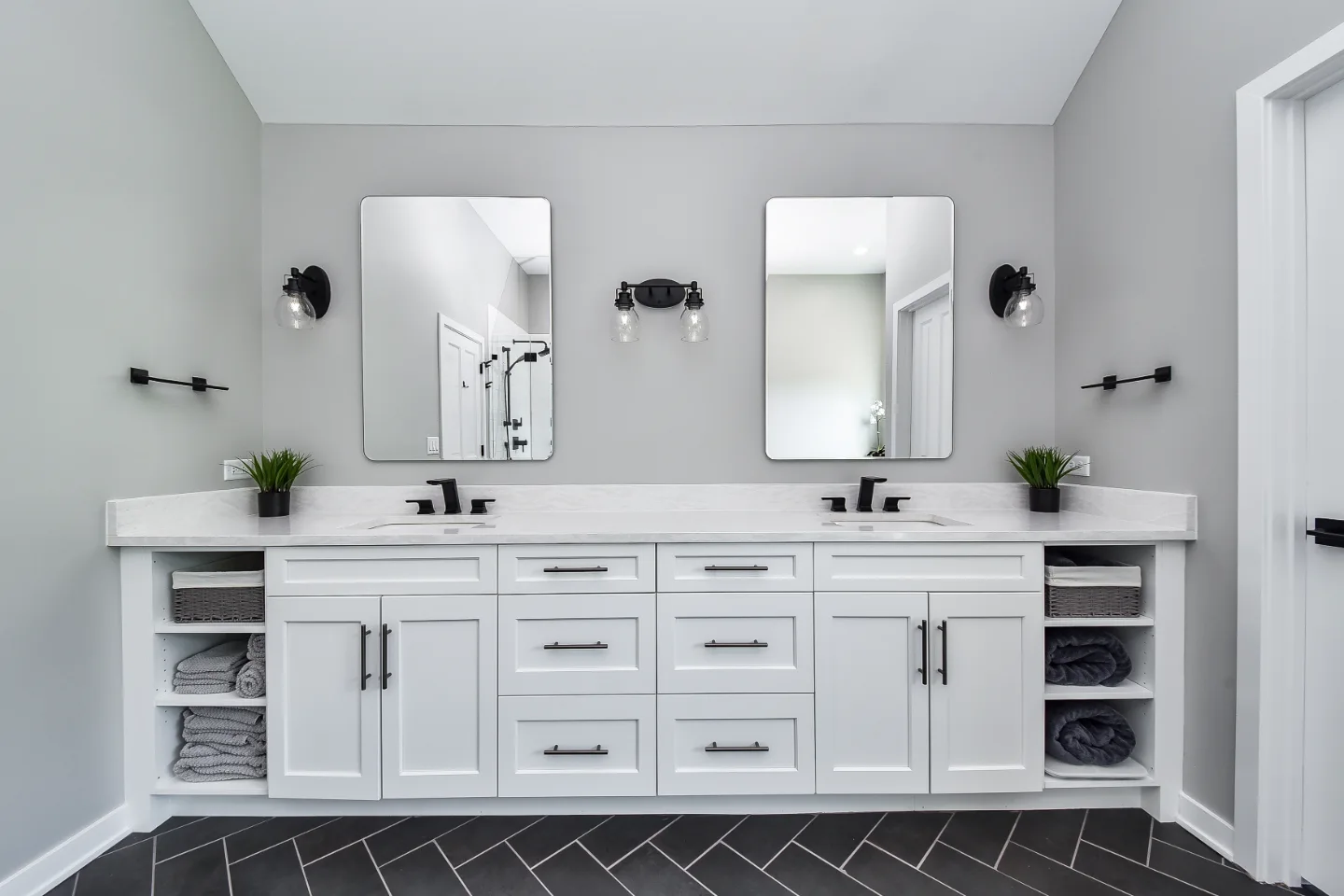
Cabinetry in a modern kitchen is typically flat-panel or slab, with no raised profiles, no ornamental moldings and no decorative detail at the door level. Hardware is either fully recessed, integrated into the door profile or push-to-open. The goal is a continuous, uninterrupted cabinetry surface where the seams between doors and drawers read as the only visible line. In Franklin and Brentwood homes, modern cabinetry in a warm white, soft off-white or dark charcoal achieves this quality while remaining compatible with the warm residential aesthetic of the surrounding architecture.
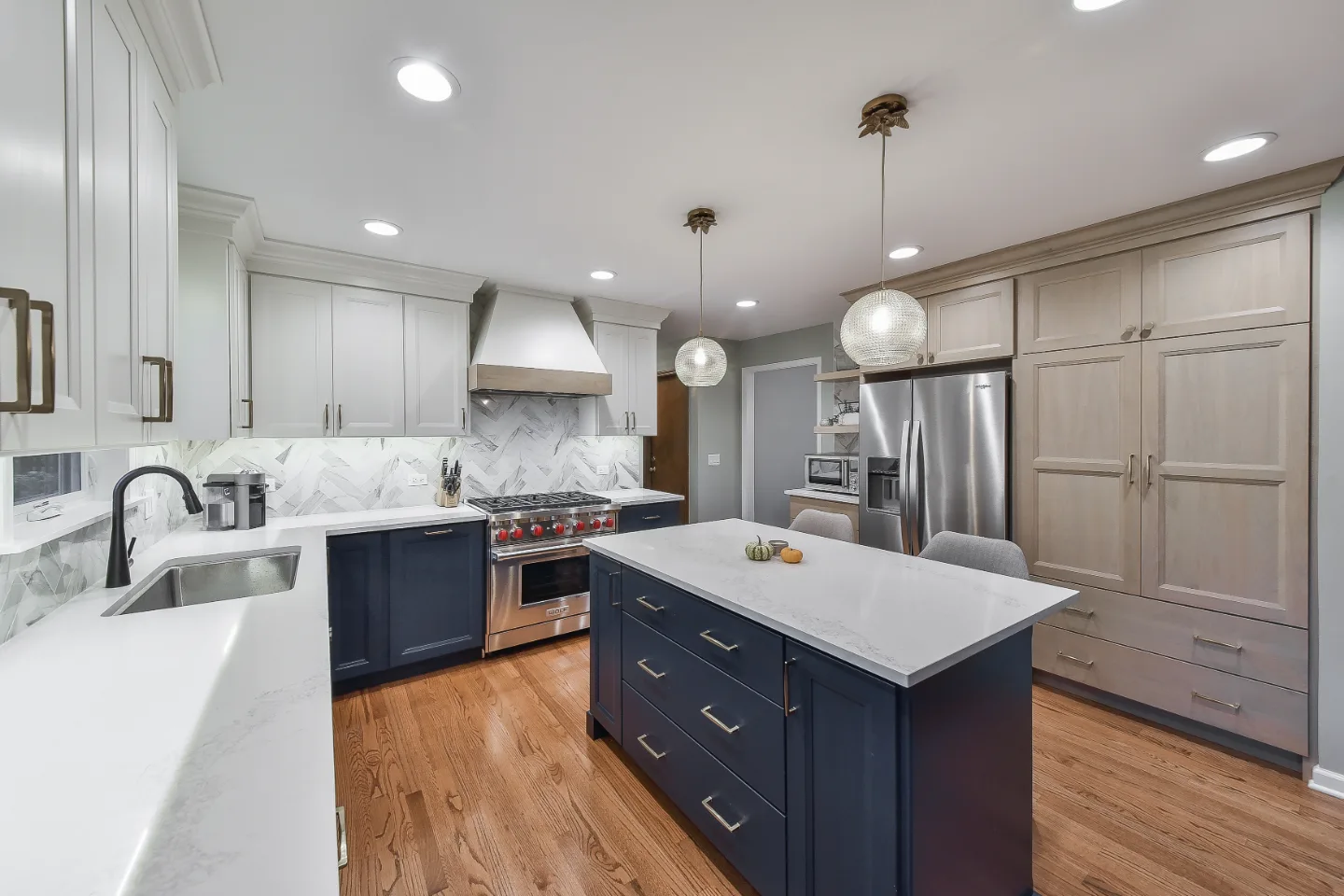
Color palettes in modern kitchens tend toward the neutral and controlled. White, warm grey, charcoal and the natural tones of wood and stone form the baseline. Accent color, when it appears, is typically concentrated in a single location, a deep ink blue island in an otherwise white kitchen, a matte black range against warm white cabinetry, rather than distributed across multiple surfaces.
Material choices in a modern kitchen favor surfaces that are consistent, durable and visually continuous. Engineered quartz countertops in a soft white or subtle pattern, large-format stone or porcelain tile on the backsplash, and integrated appliances that disappear into the cabinetry are all characteristic of the modern vocabulary. The visual effect is one of restraint and material confidence rather than decorative complexity.
Layout in a modern kitchen tends strongly toward open-plan. The island is typically the organizational center of the kitchen, functioning simultaneously as prep surface, storage, seating area and visual anchor between the kitchen and the adjacent living space. The relationship between the kitchen and the rooms it connects to is a deliberate design decision in a modern layout rather than a consequence of floor plan constraints.
What Makes a Kitchen Traditional?
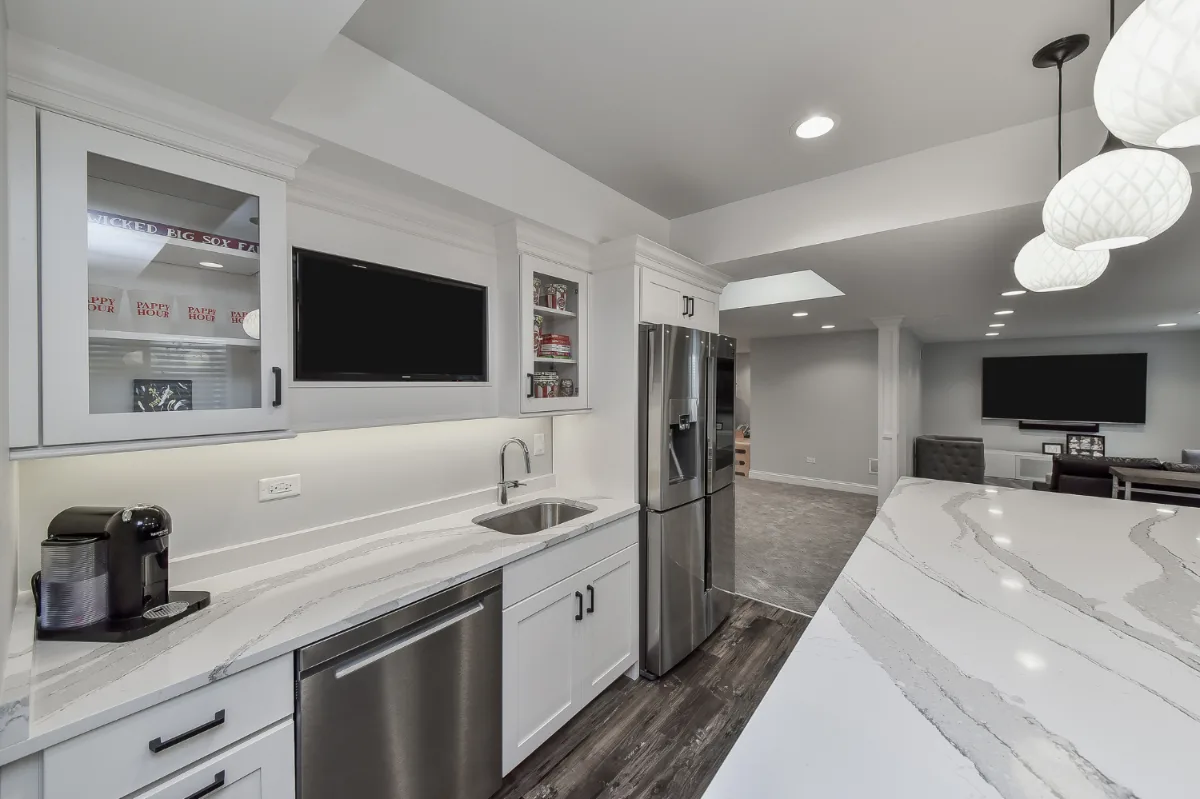
Traditional kitchens are organized around warmth, craft and the quality of accumulated detail. Where modern kitchens reduce, traditional kitchens add. Where modern kitchens reveal the structure, traditional kitchens enrich it. The result is a kitchen that feels layered, comfortable and genuinely welcoming in a way that is less about visual restraint and more about the quality of the materials and the care of the craftsmanship.
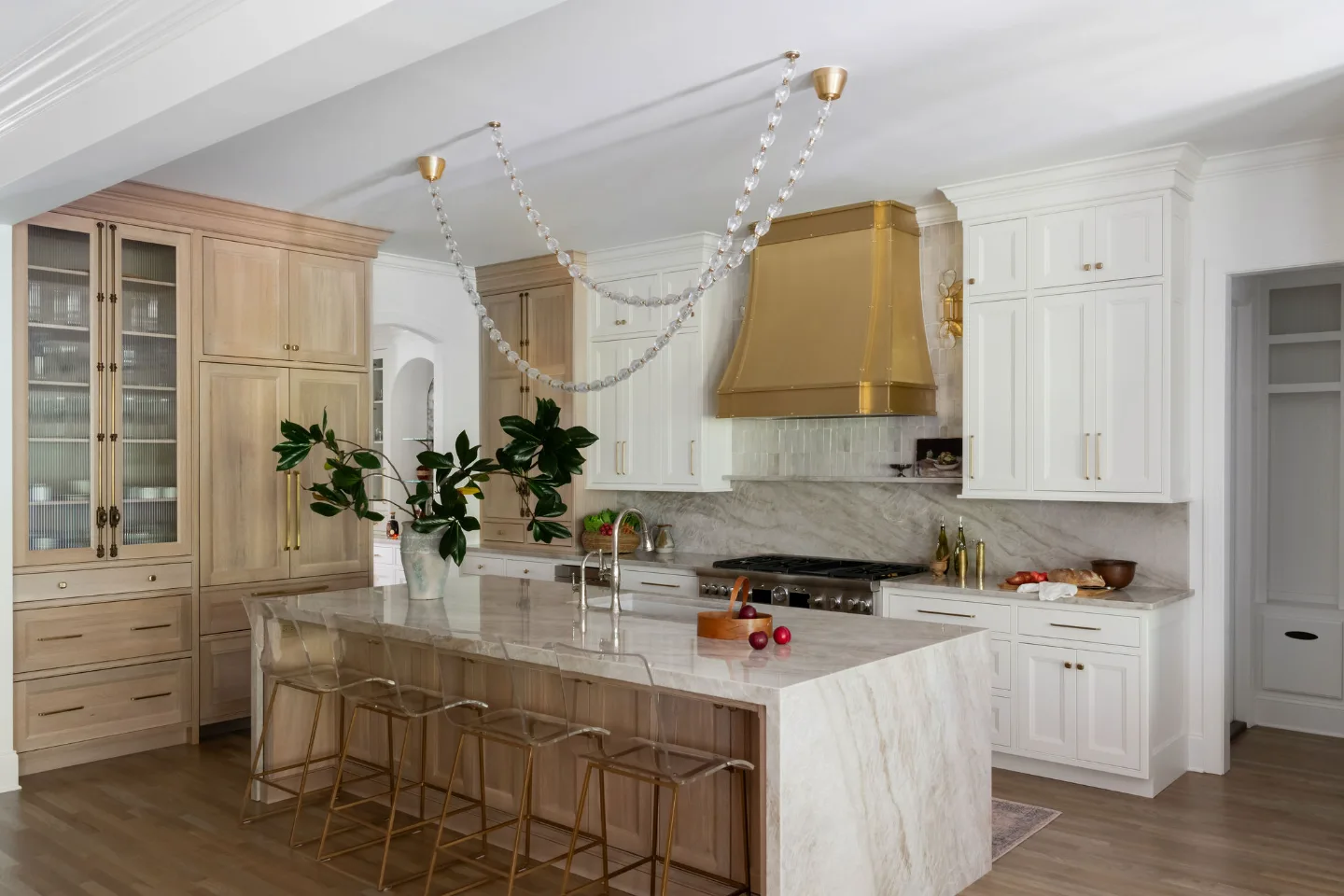
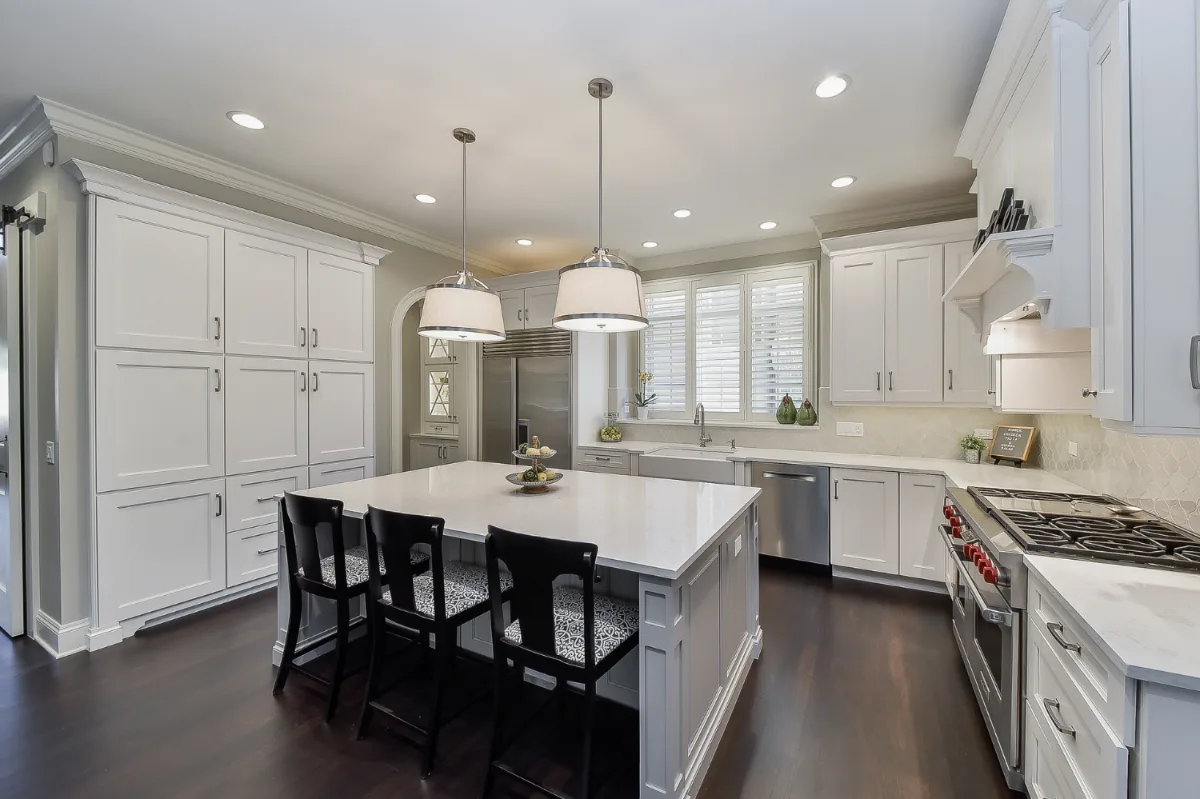
Cabinetry in a traditional kitchen carries the majority of the design character. Shaker-profile doors, especially in inset construction, produce the most refined version of traditional cabinetry, with the clean linearity of the Shaker profile providing enough architectural discipline to prevent the kitchen from reading as fussy. More ornate traditional cabinetry incorporates raised panel doors, decorative beadboard and crown molding that extends from the top of the upper cabinets to the ceiling. Hardware in a traditional kitchen is visible and intentional: unlacquered brass, aged bronze, polished nickel or antique brass, chosen as much for its visual contribution as for its function.
Material choices in a traditional kitchen favor natural materials in warm tones. Honed quartzite or marble countertops, wide-plank white oak or warm hardwood flooring and handcrafted tile backsplashes in a classic format such as subway or hexagon mosaic are characteristic of the traditional vocabulary. These are materials that develop character and warmth over time rather than maintaining the pristine uniformity of engineered surfaces.
Color palettes in traditional kitchens draw from the warm end of the neutral spectrum. Warm whites, soft off-whites, aged linen, soft sage and muted blue-grey are the most common choices in Franklin and Brentwood traditional kitchens. These palettes provide a grounded, residential quality that feels appropriate to the neighborhood context of most homes in the Williamson County market.
Fixtures and lighting in a traditional kitchen reinforce the design vocabulary through craft and material quality. Pendant lights in an aged brass or unlacquered brass finish, a farmhouse-style apron front sink and a custom plaster hood above the range are elements that contribute warmth and character while remaining formally appropriate to the overall design.
Modern vs. Traditional: How They Compare
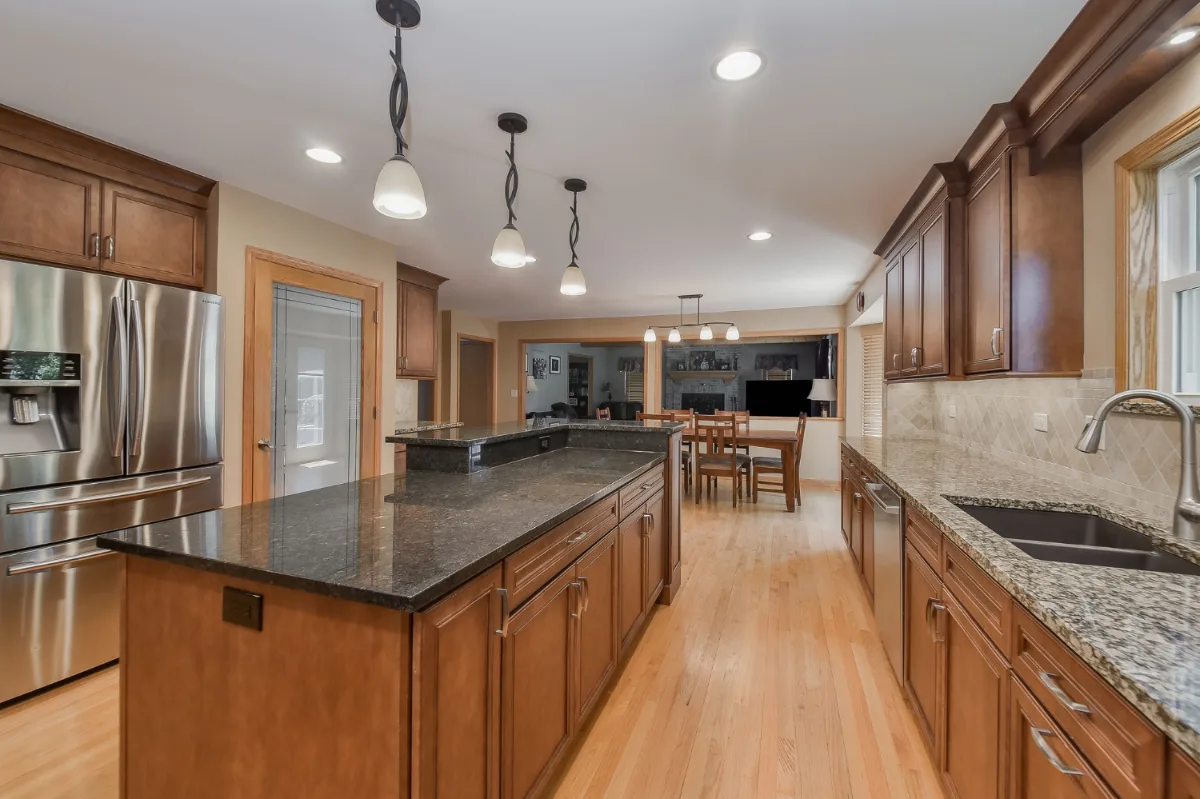
Choosing between modern and traditional is less a matter of personal taste in isolation and more a matter of how each style aligns with specific practical considerations.
Modern kitchens tend to read better in homes with open floor plans, contemporary architecture and a visual language that favors restraint throughout the rest of the interior. The minimal surface quality of flat-panel cabinetry and integrated appliances requires precise construction tolerances to read as beautiful rather than clinical. The absence of decorative detail means that any imprecision in installation is more visible rather than absorbed into the complexity of the design.
Traditional kitchens tend to read better in homes with more architectural character, higher ceilings that benefit from crown molding and a visual language that favors warmth and texture throughout the interior. The craft detail of inset cabinetry, visible hardware and natural material backsplashes requires skilled workmanship to execute well, but the investment in quality craftsmanship is immediately apparent and appreciated in the finished result.
From a maintenance standpoint, modern kitchens often incorporate easier-care surfaces: engineered quartz requires no sealing and is highly resistant to staining; integrated appliances present no gaps or seams to collect debris; large-format backsplash tile minimizes grout lines. Traditional kitchens using natural stone countertops require periodic sealing; wood flooring requires more careful management around moisture; visible hardware requires occasional cleaning to maintain its finish.
From a resale perspective, both directions are well-received in the Williamson County market. Traditional kitchens in warm whites and natural materials have historically the broader appeal. Modern kitchens in quality materials and well-executed layouts have become substantially more accepted, particularly among buyers relocating from larger metropolitan markets.
What Is a Transitional Kitchen?
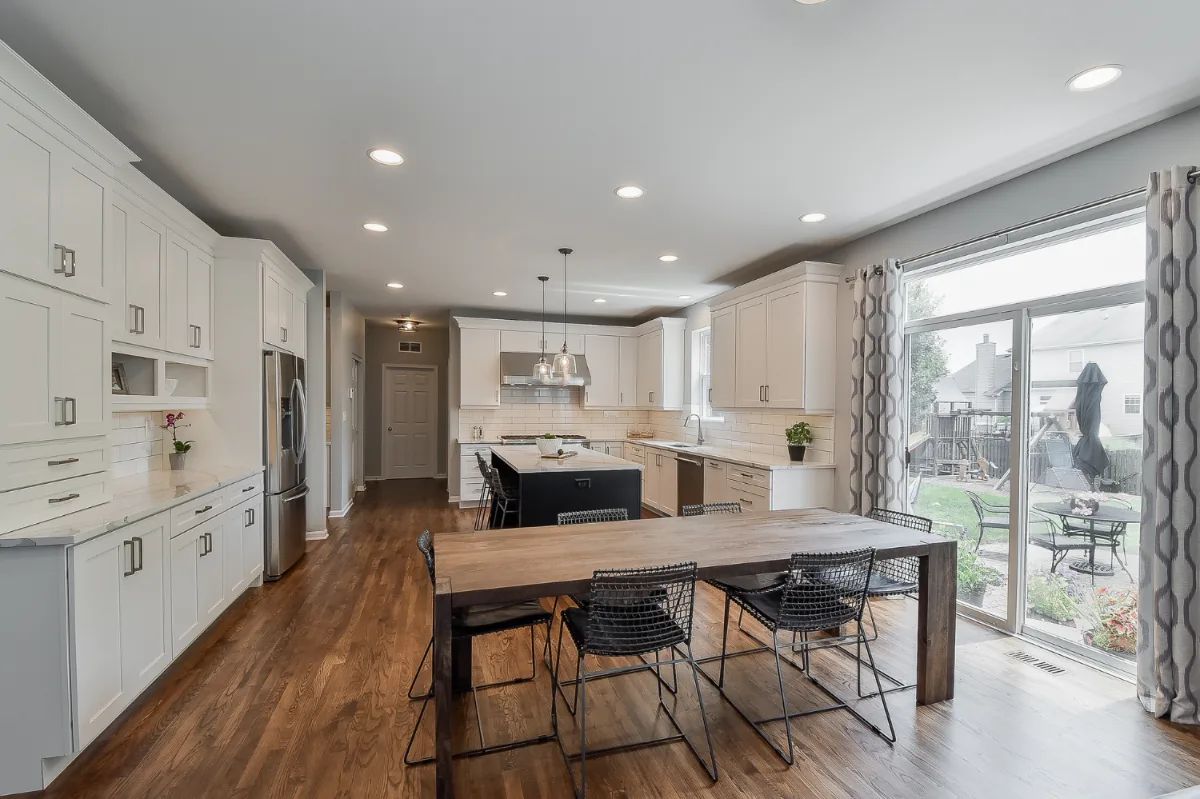
The most common design direction in Williamson County kitchen remodels is neither purely modern nor purely traditional. It is transitional: a vocabulary that takes the most valuable qualities of each style and resolves them into a single design that reads as composed, warm and enduring.
Transitional design is not a compromise between modern and traditional. It is a deliberate and confident choice that selects specific elements from each vocabulary based on how well they work together. Shaker-profile cabinetry in a painted finish occupies this transitional territory naturally: its form is historically rooted in traditional craft, its proportions and clean lines read as compatible with contemporary design, and its painted finish in a warm white or a deep saturated color allows it to move in either direction depending on the surrounding material choices.
"Most of the kitchens we design in Franklin and Brentwood fall somewhere in the transitional range," says Bryan Sebring, CGR. "The clients typically want warmth and material quality, which pulls toward traditional. But they also want clean organization and a kitchen that does not feel heavy or dated, which pulls toward modern. The Shaker-profile inset cabinet in a painted finish with unlacquered brass hardware and honed quartzite is a combination that serves both of those instincts at the same time. It has become the standard in this market for good reason."
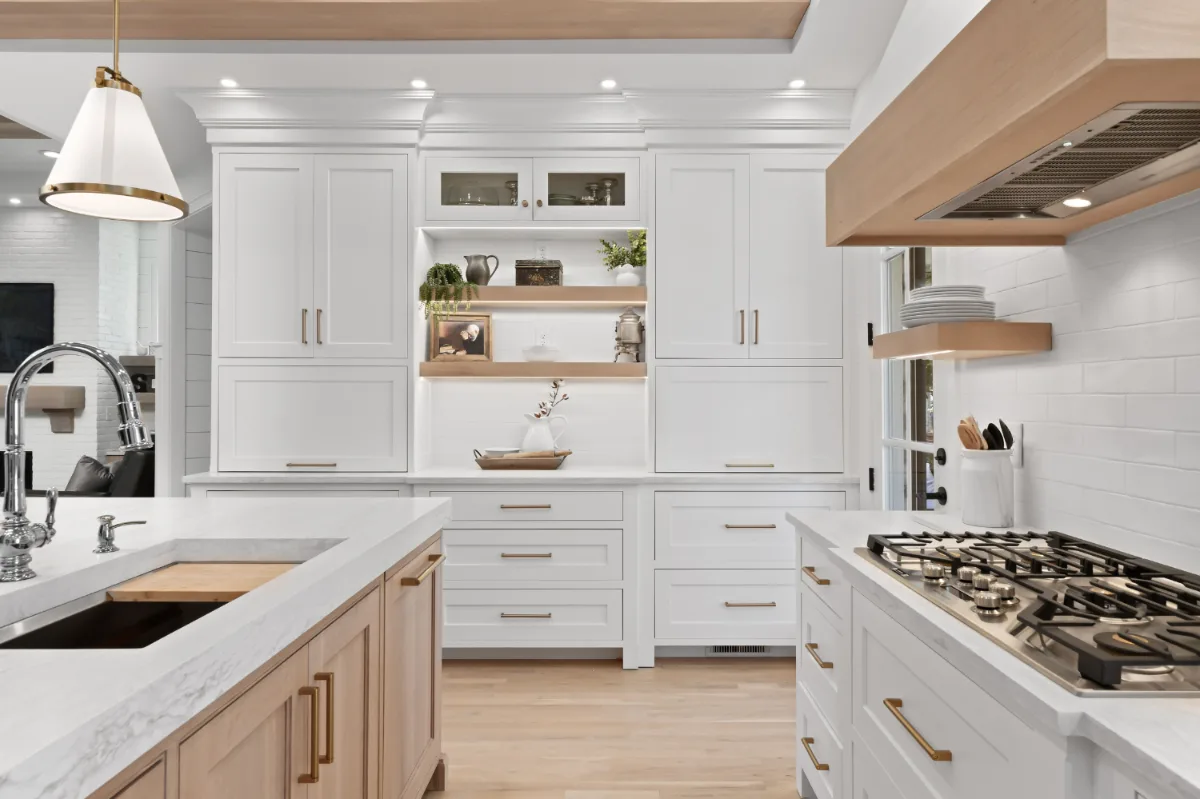
The material pairings that make transitional design work are the ones where a traditionally grounded form is executed in a material or finish that modernizes it: painted white oak cabinetry with integrated pulls, honed quartzite in a clean white tone paired with warm brass hardware, a custom plaster hood above a commercial-grade range set in a minimal Shaker kitchen. These combinations create the warmth and craft quality that the traditional vocabulary provides while maintaining the visual calm and spatial organization that the modern vocabulary achieves.
Transitional Kitchen Design Ideas
A transitional kitchen comes together through a handful of consistent choices. Cabinetry is usually a Shaker or slim Shaker door, inset or full overlay, painted in a warm white, soft greige or muted green, or finished in natural white oak. Hardware stays simple and substantial: unlacquered brass or polished nickel bar pulls and knobs with clean profiles. Countertops lean toward honed quartzite or marble, and the backsplash is typically a full-height stone slab, handmade zellige or a classic subway tile.
The finishing pieces carry the balance. A plaster or painted wood range hood adds a traditional silhouette without ornament, simple glass or metal pendants keep the island light, and a warm neutral palette with one accent, often a deeper island color, keeps the room calm. Decor stays edited: a few objects on open shelves, a runner, fresh greenery. Our guides to kitchen cabinet styles and timeless kitchen design go deeper on each choice.
How to Choose What Is Right for Your Home
The decision between modern, traditional and transitional does not begin with design preferences. It begins with the specific context of the house and the specific habits of the household.
The architecture of the home provides the first filter. A Franklin home with eight-foot ceilings, strong millwork and traditional architectural details throughout the rest of the interior almost always benefits from a kitchen that shares the same vocabulary. A Brentwood home with ten-foot ceilings, minimal millwork and contemporary design language throughout will typically read more coherently with a modern or transitional kitchen. The kitchen that fights its architectural context requires more deliberate design thinking to succeed than the kitchen that works with it.
How the household uses the kitchen provides the second filter. A kitchen that is the center of daily family life, where multiple people cook simultaneously, where homework and socializing happen alongside meal preparation, benefits from the warmth and layering that traditional design provides. A kitchen used primarily by one or two people for efficient meal preparation, where visual calm and ease of cleaning are the highest priorities, may perform better in a modern or contemporary direction.
Natural light in the specific kitchen is a practical constraint that affects material and color choice within either direction. Darker cabinetry, whether a modern charcoal or a traditional dark walnut stain, requires more natural light or more deliberately layered artificial lighting to read as inviting rather than heavy. Lighter palettes in both directions accommodate a wider range of lighting conditions.
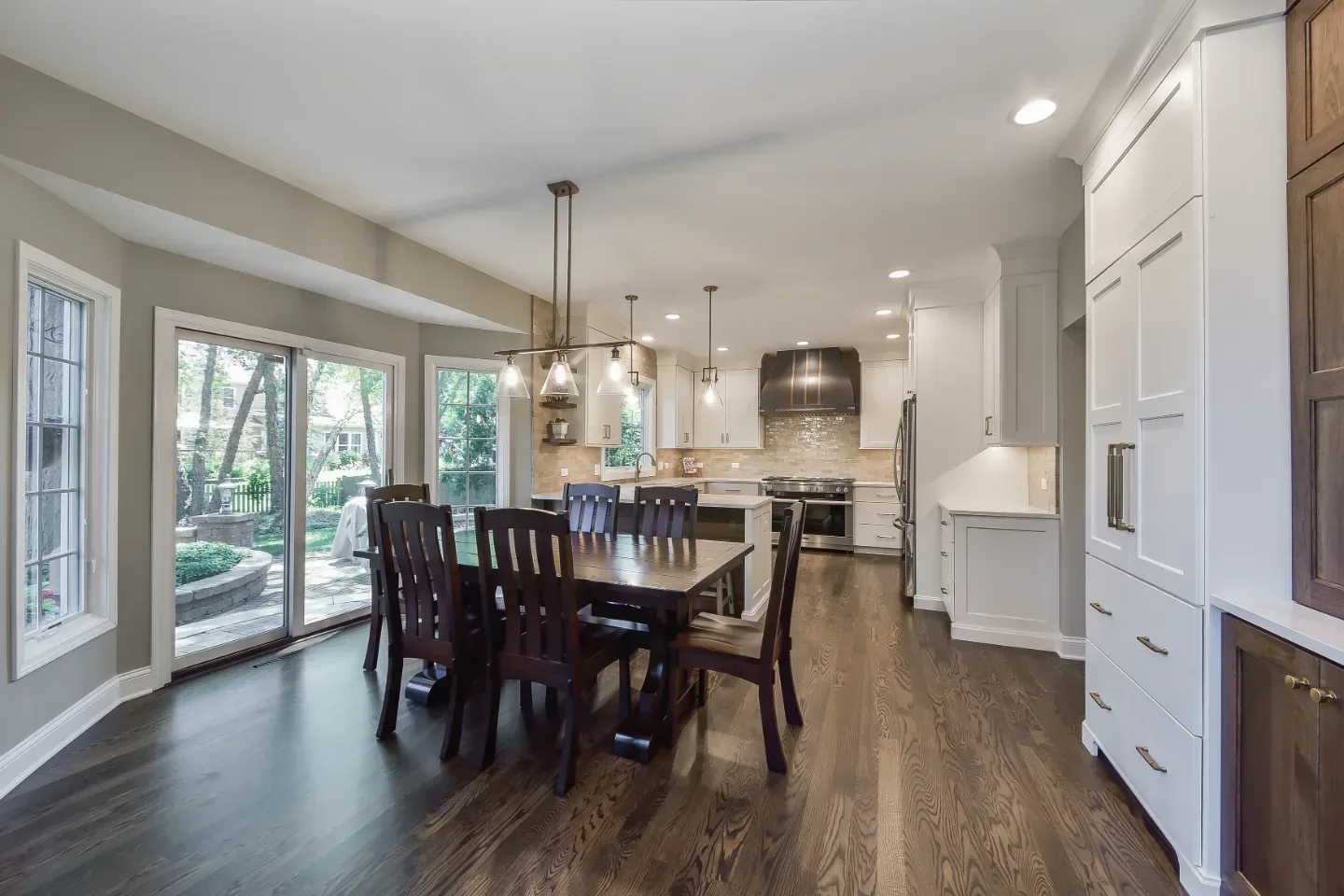
Finally, the surrounding interior of the home matters more than homeowners typically anticipate when they begin the kitchen selection process. A kitchen visible from the living room or dining area needs to be in a coherent material and color conversation with those adjacent spaces. The kitchen that reads beautifully in a showroom but creates a jarring visual transition into the surrounding home fails at one of its most fundamental jobs.
Your Kitchen Should Feel Like You
The best kitchen remodel is the one that resolves all of these practical considerations through a design vocabulary that also reflects the household's specific aesthetic sensibility. That combination, function, context and personal expression, is what distinguishes a kitchen that performs well from one that also feels genuinely like home.
In Franklin, Brentwood and across Williamson County, Sebring Design Build works with homeowners to identify which direction, or which combination of directions, serves both the house and the people living in it. The conversation begins with how the household uses the kitchen and what the home's architecture requires, and it moves from there into material selection, layout planning and the specific craft details that make the finished kitchen feel resolved and personal.
It is time that you love your kitchen each time you walk into it. If you are planning a kitchen remodel and want to explore which design direction is right for your Franklin or Brentwood home, contact Sebring Design Build to schedule your complimentary consultation. We would love to start designing a kitchen remodel in Franklin, TN that is genuinely built around the way your family lives.