Every so often, a room that was once overlooked becomes the unsung hero of the modern home. In recent years, that space has been the mudroom. Tucked away by the garage or side entry, it is not flashy, but it has quickly become one of the most requested features in Franklin and Brentwood home remodels, and for good reason.
Families today are juggling more than ever: kids, pets, groceries, sports gear, deliveries and endless movement in and out of the house. Without a system, that daily flow turns into clutter and chaos. The mudroom steps in as the great equalizer, a space that organizes, protects and simplifies life before it spills into the rest of your home.
What makes this evolution fascinating is how quietly it has happened. The mudroom is not a showpiece like the kitchen or living room. It does not need center stage. Instead, it works behind the scenes, bringing structure and calm to the moments that bookend each day: the coming and the going, the rush and the return.
Families who invest in a well-designed mudroom consistently describe it as one of the most transformative decisions in their remodel. This is more than a design trend. It is a lifestyle upgrade. Our roundup of mudroom and entryway design trends covers the specific ideas shaping the best of these spaces right now.
From Afterthought to Everyday Essential
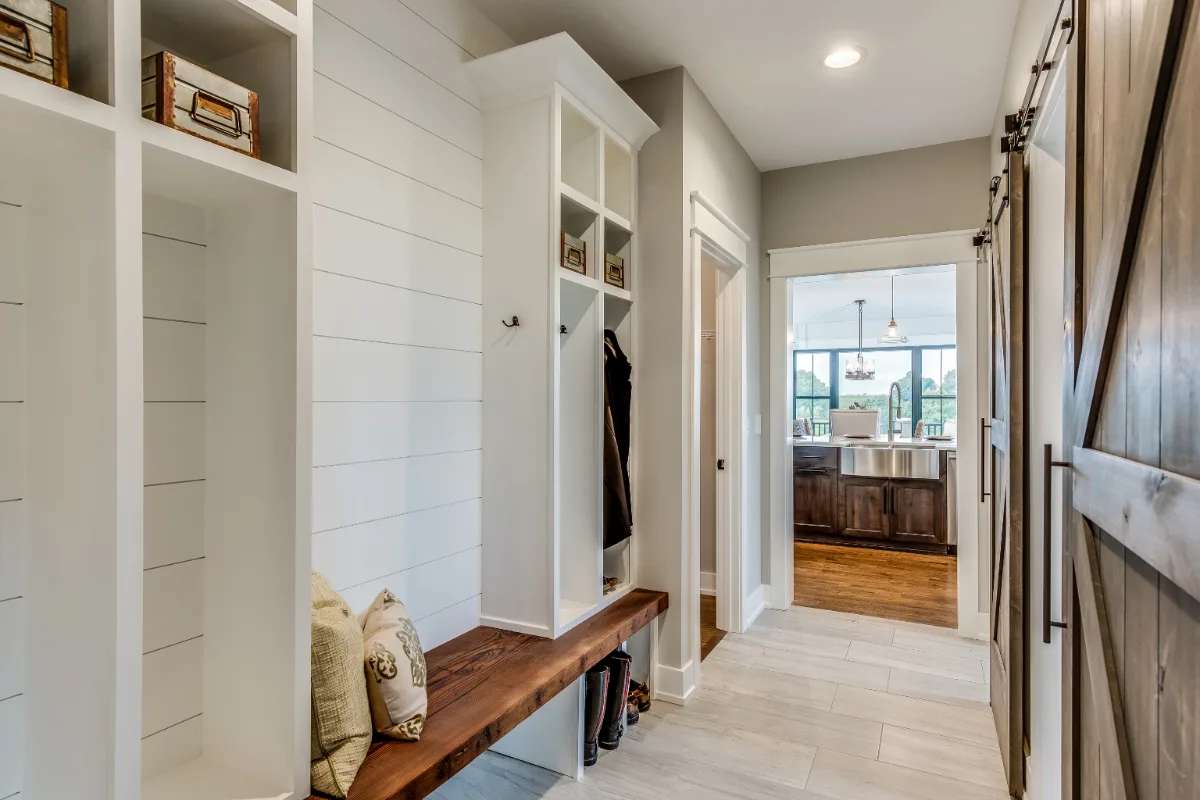
For decades, mudrooms were relegated to farmhouses or older homes in cold, wet climates: practical zones meant to contain the dirt. But as suburban life expanded and open-concept layouts became the norm, the need for a transition space quietly re-emerged. People began to crave a place that could absorb the everyday clutter of life, the shoes, backpacks, coats, mail, pet supplies and deliveries that pile up at the threshold.
The modern mudroom is an answer to the new realities of how families live. Open floor plans left fewer walls and hallways to absorb the mess of daily comings and goings. Families became busier, pets became more common and the stuff of life multiplied. The mudroom rose from obscurity as the architectural antidote to disorder, a way to restore calm and control without sacrificing aesthetics.
In Franklin and Brentwood homes, where the garage entry or side door is the primary point of daily traffic for families, the mudroom has become the space that makes the rest of the house function. It sets the tone for how the day begins and how it ends.
The Invisible Upgrade That Changes Everything
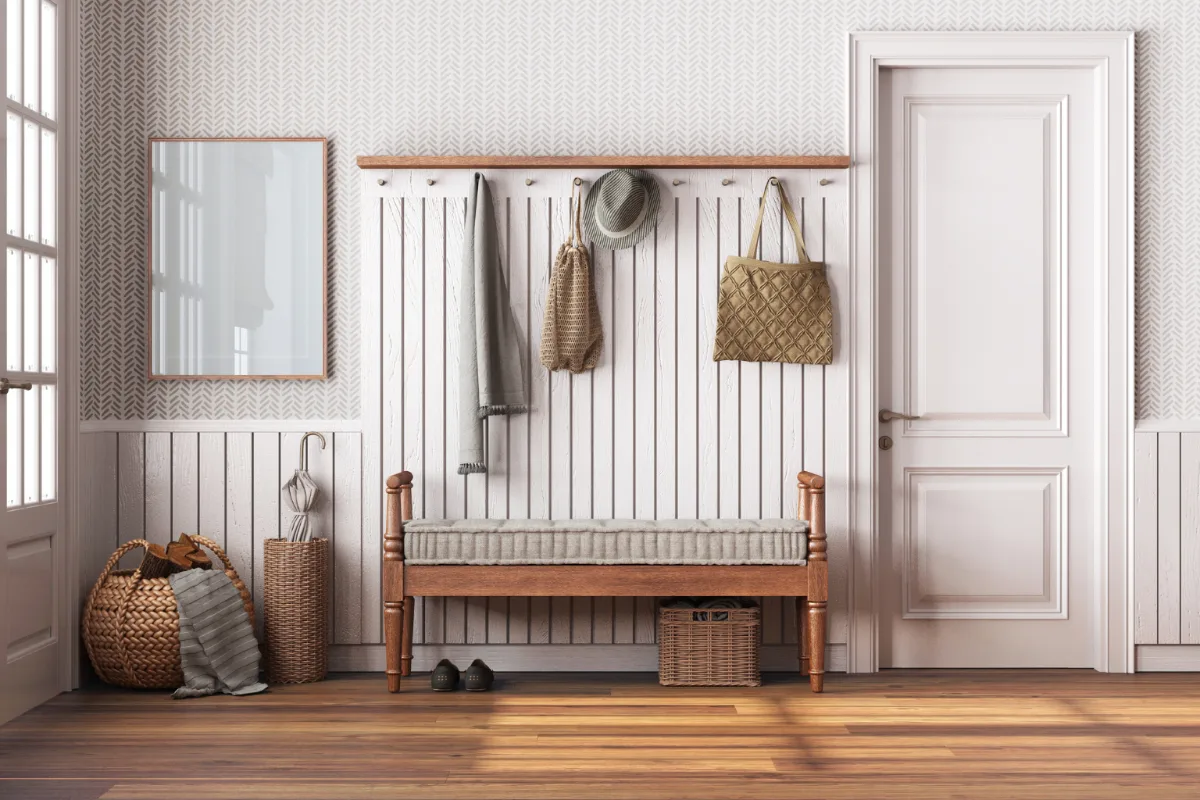
When families plan a remodel, they usually focus on the showcase rooms: the kitchen, the bathroom or the living room. A mudroom rarely makes the inspiration board at first. But once they experience it, even in a modest form, homeowners quickly realize it is the most transformative space in the house.
The appeal of the mudroom is not about luxury. It is about efficiency and ease. It is about building an environment that supports daily life instead of fighting against it. Each coat hook, bench, drawer and cubby is part of a subtle choreography that keeps the rest of the house running smoothly.
Families love mudrooms because they function as a buffer, a protective layer between the outside world and the heart of the home. Rain, mud and debris stay where they belong instead of being tracked through freshly cleaned floors. Wet coats dry, boots drip and pets shake off in a contained zone. Over time, the benefits compound: less cleaning, less clutter and a more relaxed home environment.
The modern mudroom is also a masterpiece of organization. Built-ins and custom cabinetry provide a place for everything, turning the usual jumble of shoes, keys and backpacks into an orderly system. Many Franklin and Brentwood families create individual storage spaces for each person, a small but powerful touch that makes mornings less chaotic and evenings more peaceful.
Why the Mudroom Boom Happened
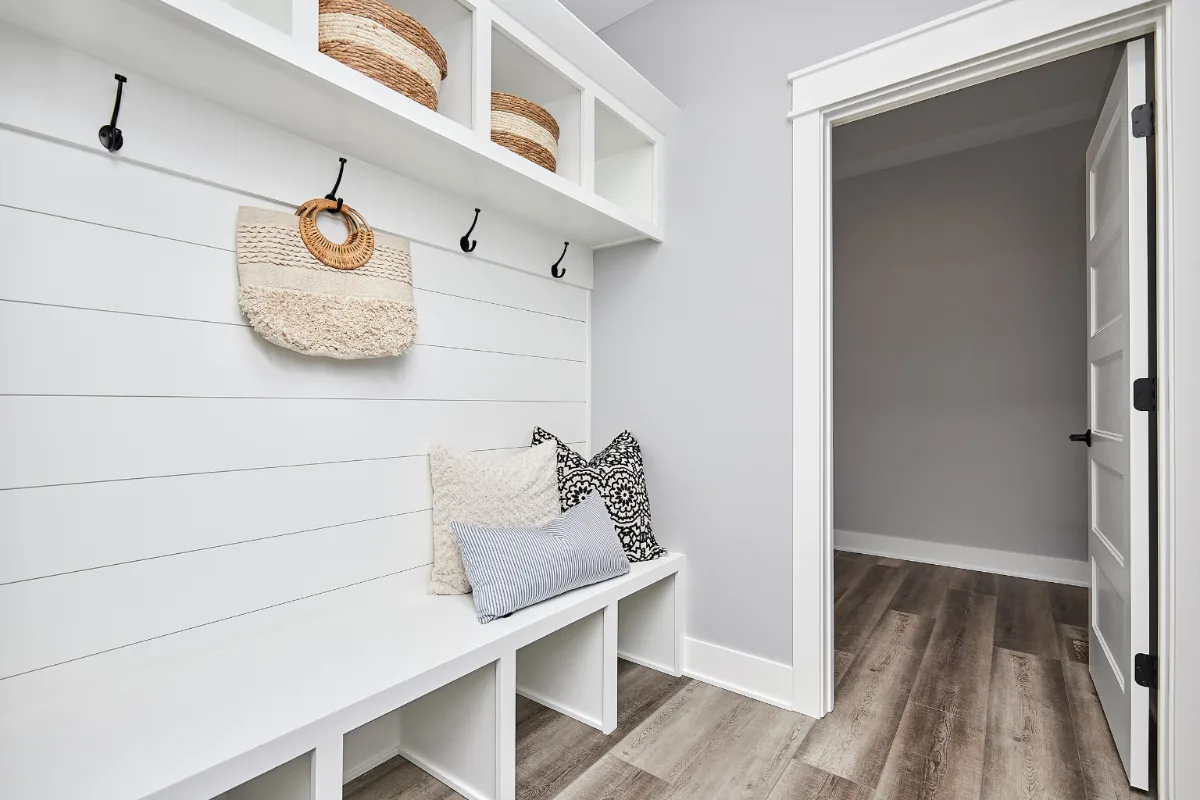
Several forces converged over the past decade to push this once-humble room into the spotlight in Williamson County and across the country.
Open floor plans, celebrated for their airiness, exposed a hidden problem: clutter has nowhere to hide. The absence of walls made homes feel spacious, but also made it impossible to contain the daily mess that naturally accumulates near entrances. The mudroom solved that problem elegantly, providing structure without sacrificing openness.
Modern family life has also become increasingly complex. Between work, school, sports and social activities, homes are revolving doors of movement. Parents, kids and pets come and go multiple times a day, often with gear in tow. The mudroom creates a sense of order within that motion. It is a reset point, a place where you can transition from the outside rush to the calm of home.
The pandemic accelerated this trend significantly. Suddenly, entries became crucial for hygiene and organization. People needed somewhere to remove shoes and drop off packages without contaminating the main living areas. A well-designed mudroom became not just convenient but reassuring, a small but meaningful line between outside and inside.
Pet ownership added another dimension. Many Franklin and Brentwood families share their homes with dogs, and that comes with its own daily logistics: muddy paws, leashes, food storage and occasional bathing. The mudroom offers an ideal solution, a space where pets can be cleaned and organized without taking over the kitchen.
Finally, homeowners are recognizing that this invisible upgrade adds real resale value. When it comes time to sell, a well-designed mudroom signals that a home is truly livable. Buyers see it as a marker of smart, family-friendly design, and in a competitive Franklin and Brentwood market, that practicality matters.
What Makes a Great Mudroom
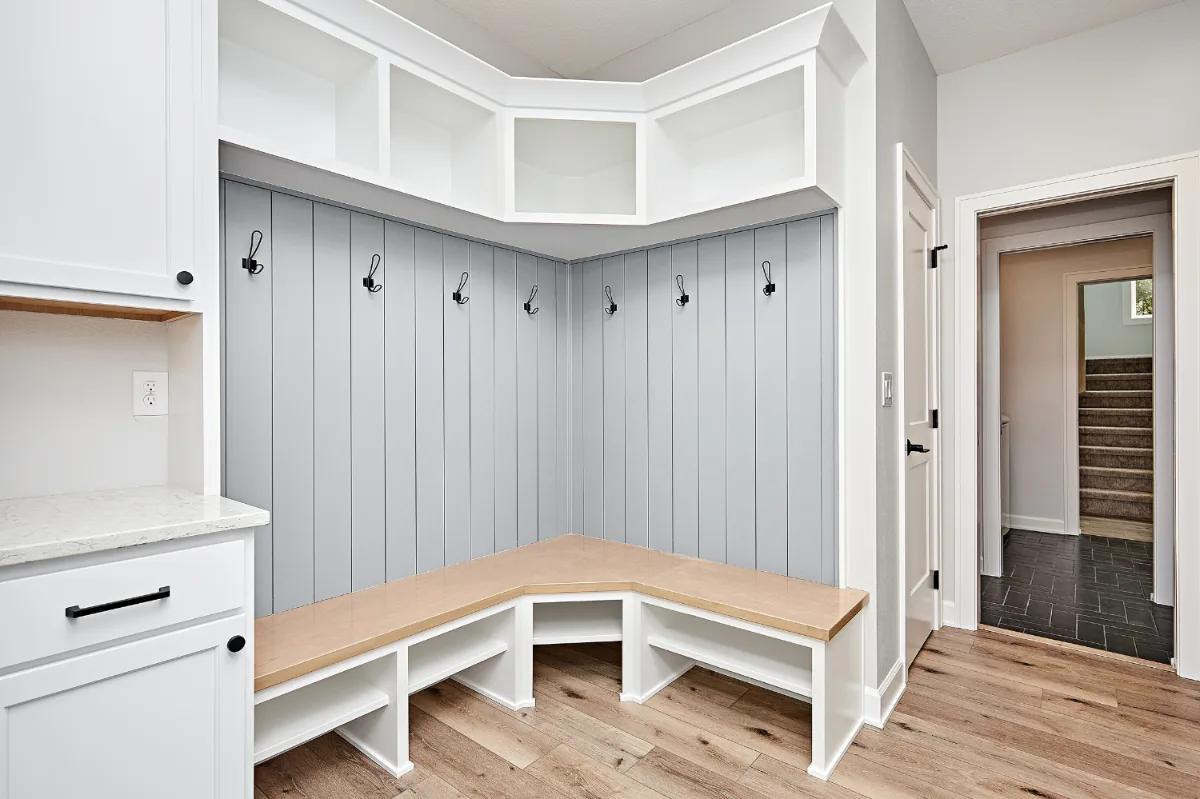
Designing an effective mudroom takes more than a few hooks and baskets. The best mudrooms balance three things: location, durability and usability.
Most Franklin and Brentwood homeowners position their mudroom near the garage or side entry, since that is where daily traffic naturally flows. It should feel like a seamless part of the journey from car to kitchen, not an isolated corner. Ideally it is positioned close to the laundry area so wet clothes and dirty gear can be managed in one location.
Durability is another essential element. This space takes a beating from wet shoes, grit, heavy bags and constant use. Porcelain or slate tile floors resist water and clean up easily. Many homeowners choose darker grout colors or patterned tiles that disguise wear over time. For walls and cabinetry, wipeable paints and robust finishes ensure longevity without sacrificing style. Shiplap paneling or wainscoting protects the lower walls while giving the room a finished, intentional appearance.
Our guide to why storage should be designed, not added covers this principle in more depth. Storage is the secret ingredient. Each item that comes into the house, coats, shoes, sports equipment, mail, umbrellas and backpacks, needs a designated home. Built-in benches with drawers below and cubbies above maximize vertical space. Closed cabinets keep visual clutter to a minimum, while open shelving allows quick access to daily essentials. Some families integrate a household command center, a place for mail sorting, calendars and keys, turning the mudroom into the home's organizational nerve center.
Lighting and ventilation, though often overlooked, shape the daily experience significantly. A bright, well-lit mudroom feels welcoming rather than utilitarian. Natural light from a window or transom makes a meaningful difference, as does warm LED lighting over benches and cabinetry. Adequate airflow prevents damp gear from becoming musty, a small detail with a lasting impact.
Mudroom Cabinets and Storage: Sizes and Solutions
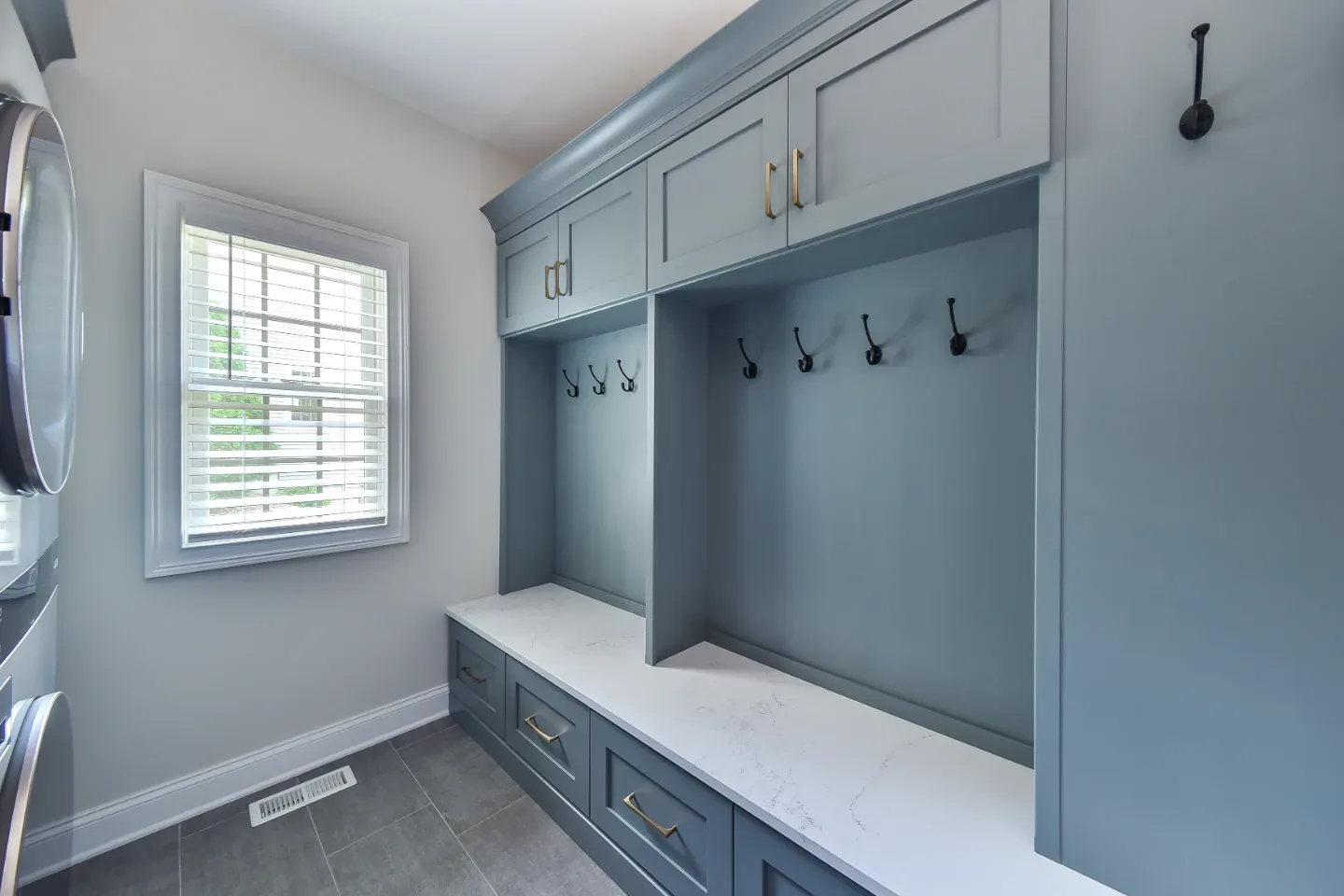
Mudroom cabinets work best as a run of individual lockers or cubbies, one per person, sized to what each person actually carries. Typical locker towers are about 15 to 24 inches wide and 16 to 20 inches deep, deep enough for a hanging coat and a backpack without crowding the walkway, and often run 84 to 96 inches tall with closed cabinets above for seasonal gear. A built-in bench sits about 18 to 19 inches high and 16 to 18 inches deep, with drawers or cubbies below for shoes. Hooks set at about 60 to 66 inches serve adults, and a second row near 40 to 48 inches lets children hang their own things.
The choice between open lockers and closed cabinets is mostly about how much you want to see. Open lockers are fast to use and let damp coats air out, while closed doors keep the room calm and hide the inevitable clutter. Many families combine the two: open hooks and a bench at the bottom, doors above. Slatted or perforated shoe shelves and a removable boot tray let wet shoes dry, and a drop zone with charging outlets, mail slots and a key tray keeps the daily carry off the kitchen counter.
Because mudroom cabinetry takes constant impact and moisture, construction matters. Plywood boxes, solid wood face frames and a catalyzed conversion varnish or two-part topcoat hold up far better than particleboard and standard paint. Pull-out drawers for pet food and leashes, a tall cabinet for brooms and the vacuum and an outlet inside a cabinet for a charging station round out the storage plan. Our mudroom ideas guide covers layouts for laundry, garage and small mudrooms.
Where Utility Meets Design
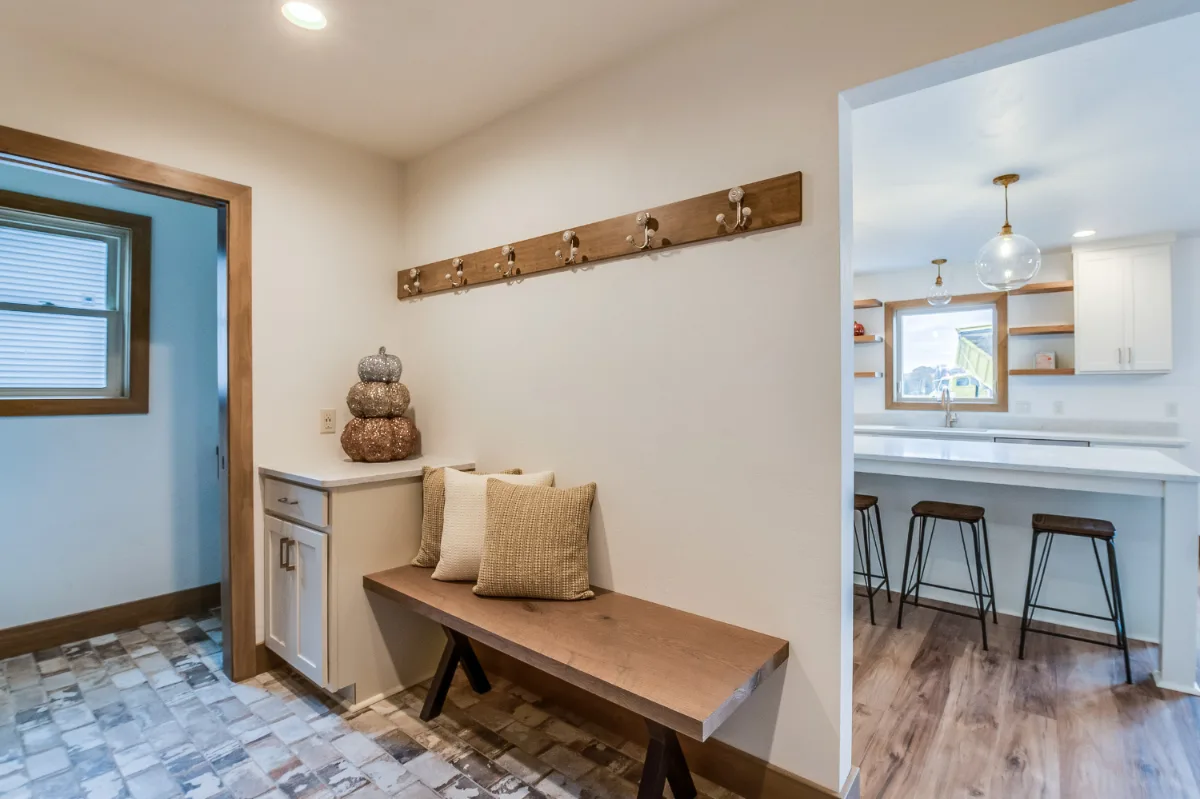
While function drives the mudroom's purpose, design gives it staying power. Franklin and Brentwood homeowners want spaces that look as good as they perform, and today's mudrooms are design statements in their own right.
Many designs use natural, earthy tones that connect visually to the outdoors. Warm beiges, quiet greens and soft blues are common choices that read as calm and grounded. Some homeowners pair crisp white cabinetry with matte black or unlacquered brass hardware and patterned tile to create visual interest. Others take cues from the transitional aesthetic that defines most Franklin and Brentwood interior design trends, combining painted cabinetry with shiplap paneling and natural stone flooring.
Whatever the style, the best mudrooms share one trait: they feel calm. Even when filled with practical elements, the design conveys order and cleanliness. The space is not just a landing pad. It is a reflection of how the home functions and feels.
How Families Are Using Mudrooms Today
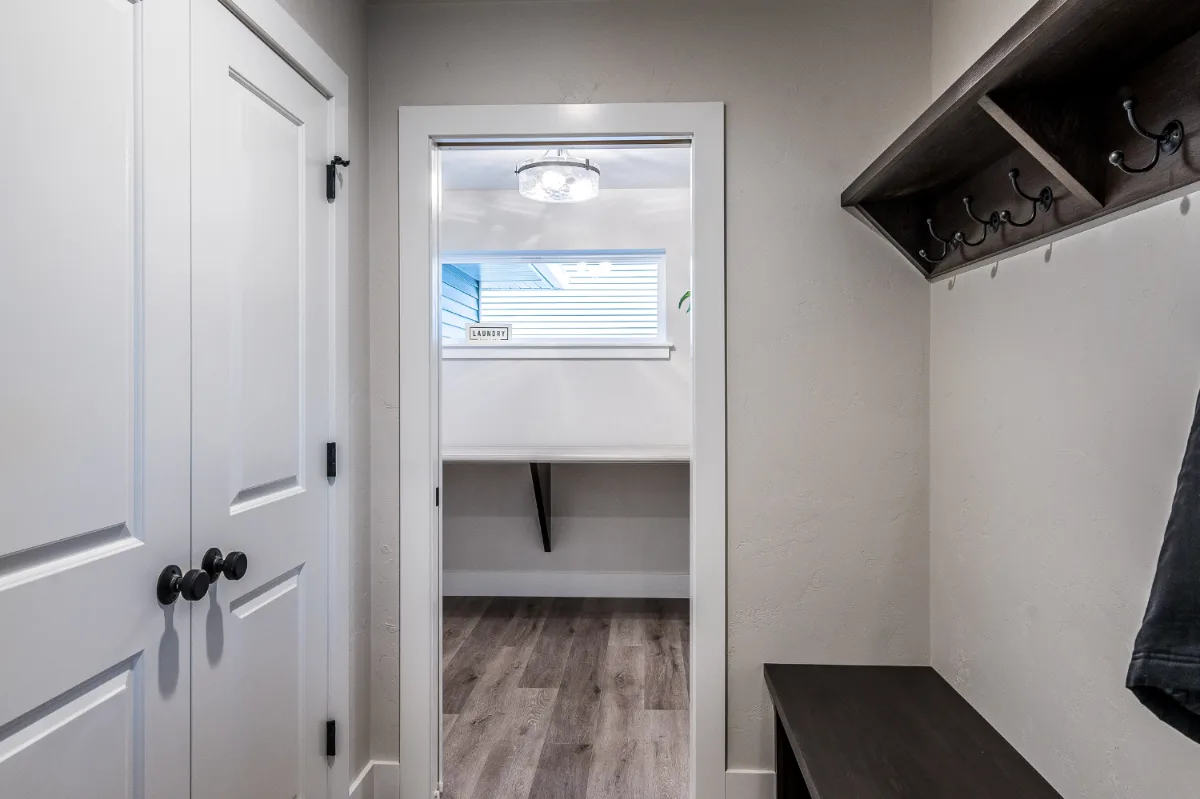
Each Franklin and Brentwood household uses the mudroom differently, and the best designs are built around the specific rhythms of the family rather than a generic template.
For families with multiple children, custom cubbies, one for each person, are among the most consistently valued design choices. Each space includes hooks, a shelf and sometimes a charging drawer for devices. Parents who have made this investment consistently describe it as one of the most meaningful organizational changes in their home.
"What I hear most often from clients who add individual cubbies is that they cut their morning scramble in half," says Bryan Sebring, CGR. "Everyone's stuff has a place. The kids know where their backpacks go. The parents know where their keys are. The mudroom creates the system that the rest of the house depends on, but only works if it's actually designed around how the specific family uses the space."
Pet owners prioritize washable materials and specialized features. One approach is a built-in pet washing station positioned directly adjacent to the garage door, with a handheld sprayer and integrated towel storage. Another is pull-out drawers for pet food and bowls that slide back in after mealtime, keeping the floor clear. These details might seem small, but they transform daily pet management into something genuinely manageable.
Mudrooms that double as efficient laundry spaces are also common in Franklin and Brentwood homes where the laundry is positioned near the garage entry. These hybrid rooms allow dirty clothes to go directly into the washer, wet jackets to dry on a dedicated rod, and laundry to be folded at a built-in counter, all without moving between rooms. The result is a high-utility zone that quietly keeps the household running, the kind of practical design that also helps in adding value to the remodel.
Even in smaller homes, the mudroom approach makes an impact. A narrow hallway can become a micro-mudroom with a built-in bench and overhead storage. A converted closet near the entry can deliver the same organizational benefits in a fraction of the footprint. Good design is not about size. It is about intention.
The Psychology of the Mudroom
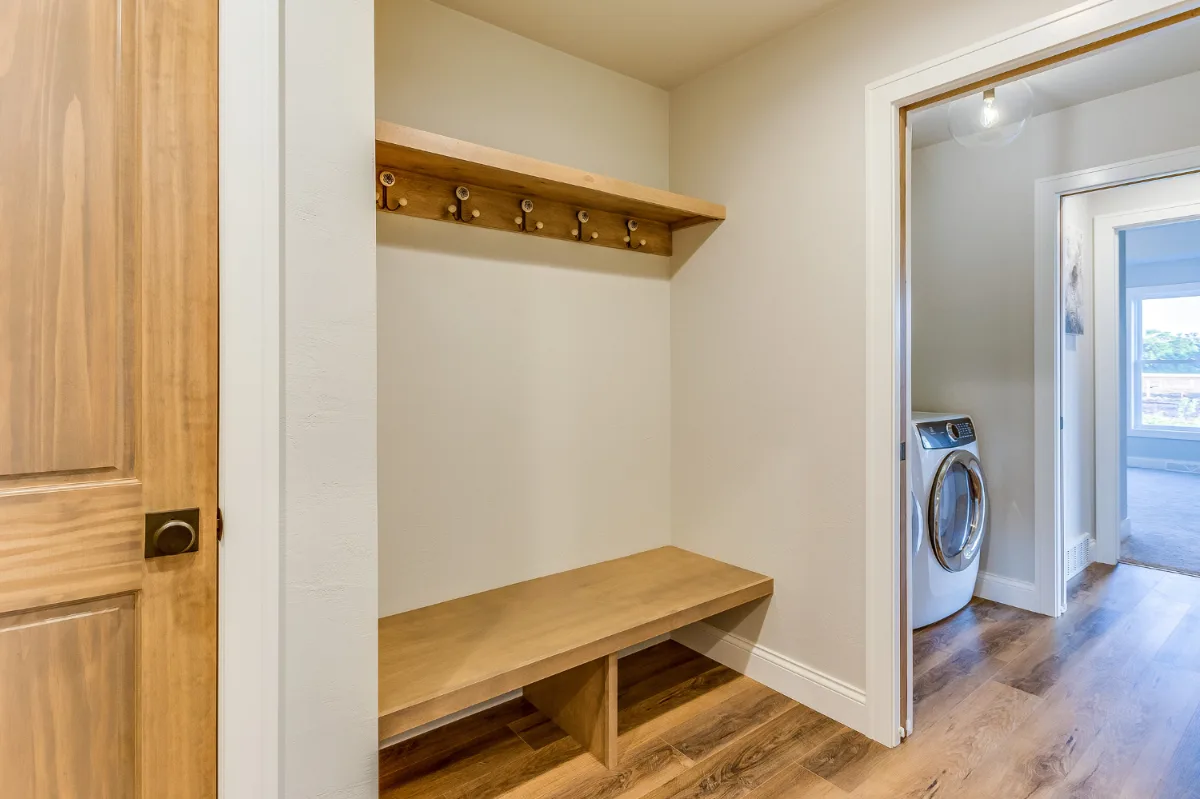
Beyond the practical, there is something deeply satisfying about the mudroom's role in the home. It creates a pause, a moment between the public and the private, between the noise outside and the calm inside.
The small ritual of setting down keys, taking off shoes and hanging up a coat has a quiet emotional power. It signals the transition from work to rest, from motion to stillness. For families, it can shape behavior in genuinely positive ways: children learn where their belongings go, routines become predictable and mornings become noticeably calmer.
This sense of control, of everything having its place, contributes to a larger feeling of harmony in the home. The mudroom does not just keep the house tidy. It keeps life balanced.
Small Homes, Big Ideas
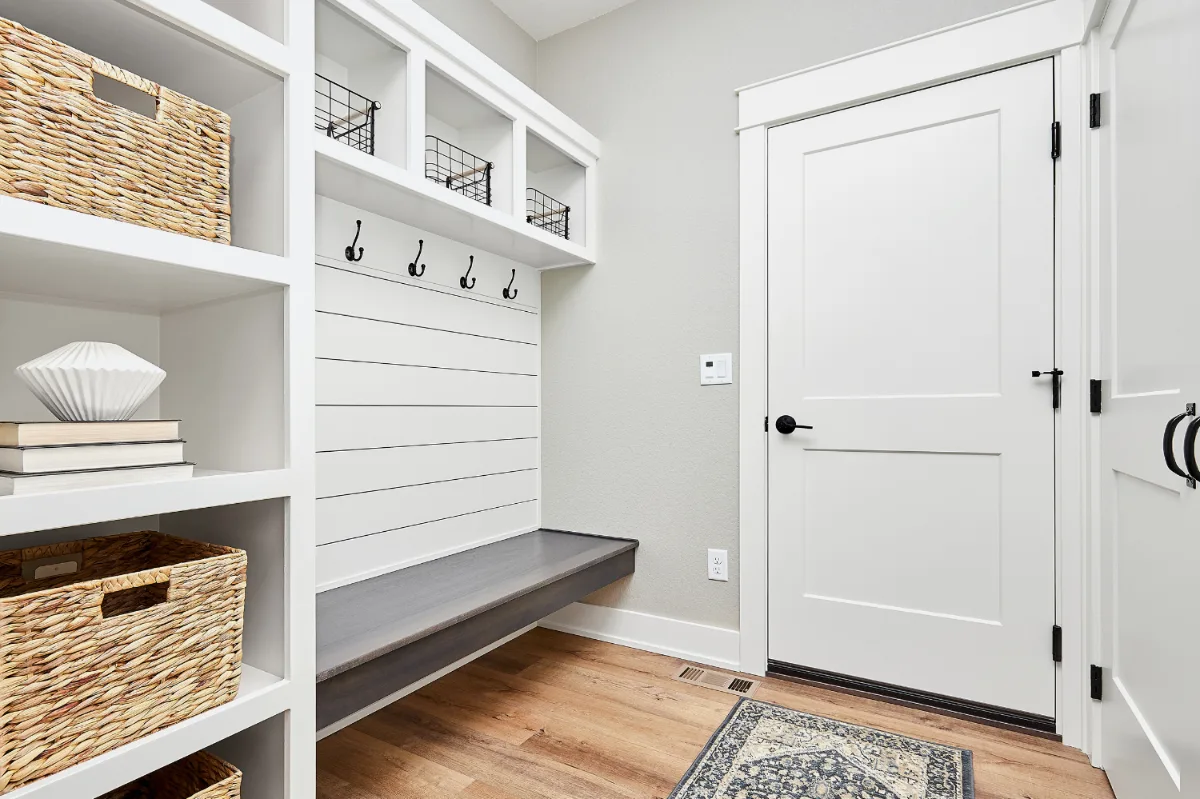
Not every Franklin or Brentwood home has room for a full-sized mudroom, but the philosophy behind it can be applied almost anywhere. A well-placed bench, a wall of hooks or a cabinet built into a side entry can replicate much of the functionality in a smaller footprint.
The key is understanding what the household needs most: a place to store shoes, a landing zone for daily carry or a nook for pet supplies, and designing specifically around that need. A shallow bench with drawers below, hooks above at two heights and a shelf for baskets can transform an unused stretch of hallway wall into a highly functional area. A few square feet used thoughtfully can have the same daily impact as a dedicated full room.
Looking Ahead: The Future of Mudrooms
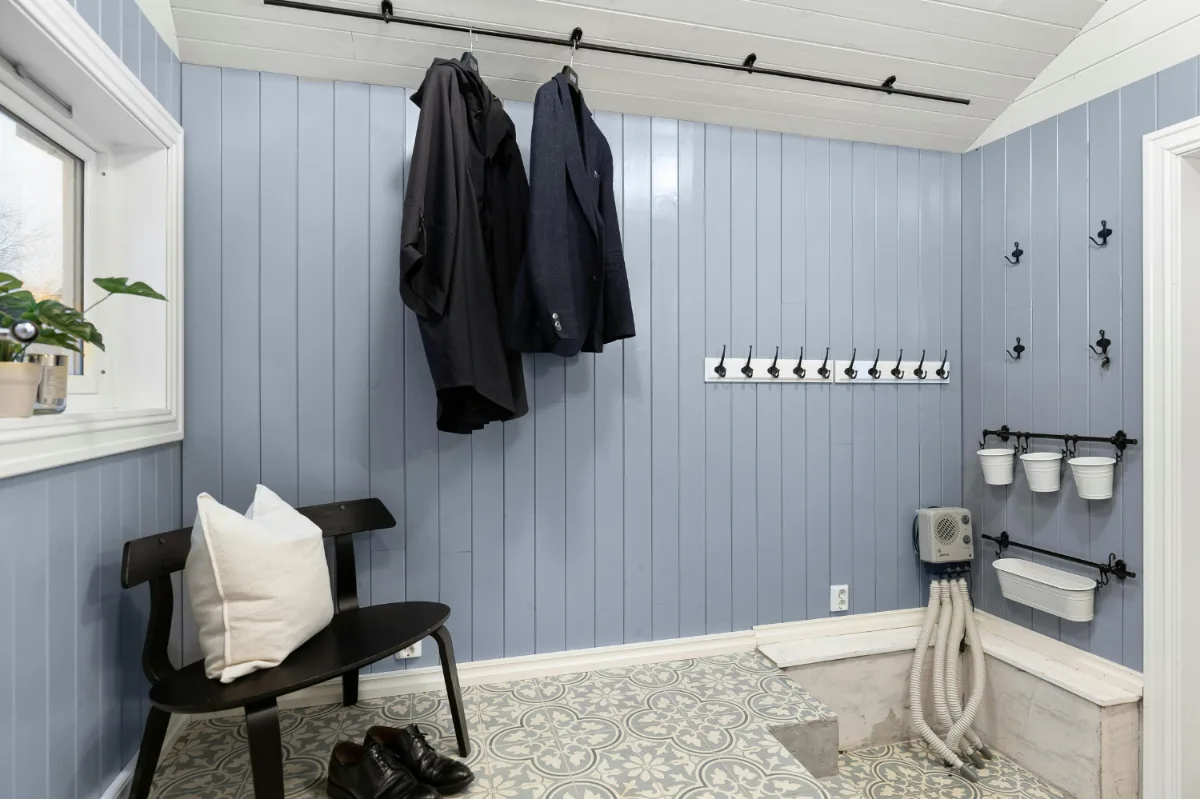
As home design evolves, the mudroom continues to adapt. Technology integration is becoming standard: built-in charging drawers for devices, smart locks that provide keyless entry and motion-activated lighting that activates when someone arrives.
Sustainability is a growing consideration in Williamson County remodels. Homeowners are choosing low-VOC paints, reclaimed wood accents and recycled tile that reduce environmental impact without compromising durability or aesthetics.
Designers are also building in more flexibility: modular storage systems that adjust as children grow, convertible bench configurations and movable partitions that allow the mudroom to expand or contract as the household's needs shift. In larger Franklin and Brentwood homes, dual mudrooms, one off the garage and one off the main entry, are increasingly common, particularly in multi-generational households or homes where a home office creates a separate daily traffic pattern.
The mudroom is no longer a passing trend. It is a permanent part of how modern families think about comfort, organization and the quality of everyday life at home.
Conclusion: The Mudroom That Changes Everything
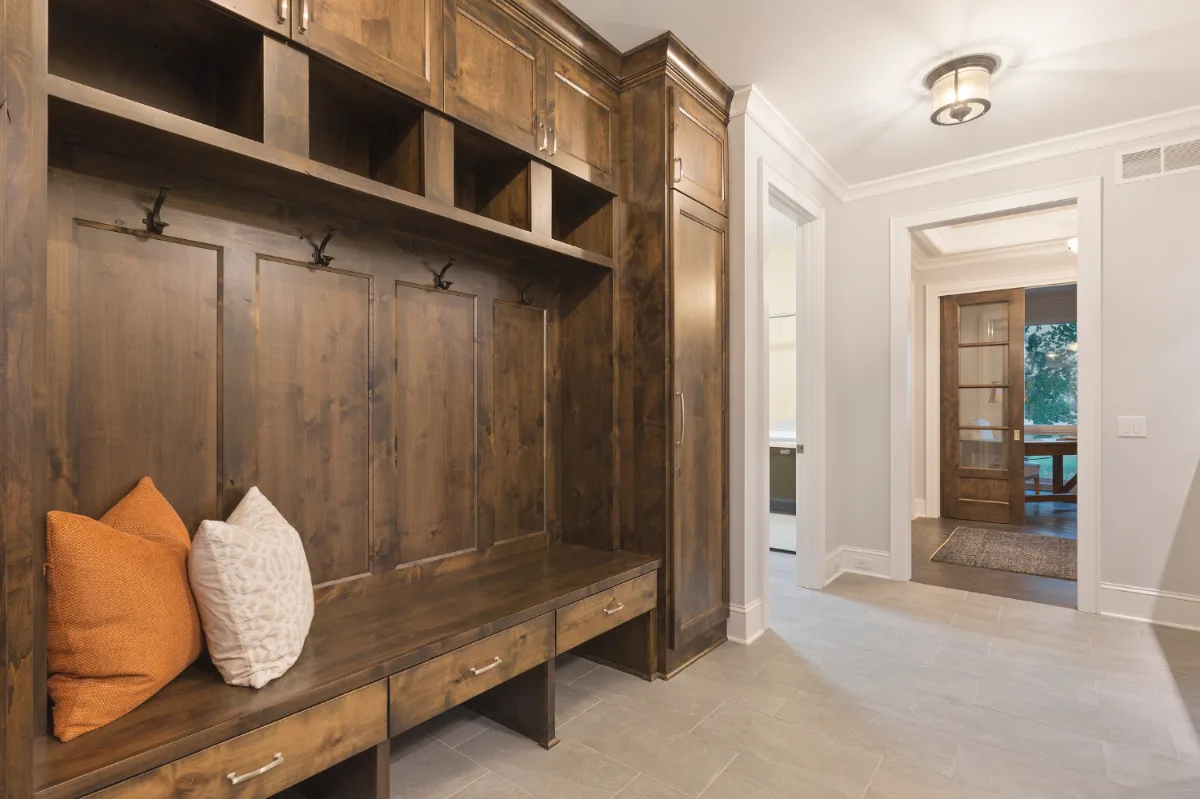
The rise of the mudroom is not a design trend. It is a reflection of how families truly live today. Life is fast, busy and often messy. The mudroom steps in as the quiet hero, keeping that everyday chaos in check. It absorbs the dirt, the gear and the clutter, and gives it all a home so the rest of the house can stay calm, clean and comfortable.
More than a utility zone, the mudroom has become a lifestyle statement. One that says the home is designed for the way the family actually lives. It is the bridge between work and rest, outdoors and indoors, activity and relaxation. Each detail, from durable flooring to custom cabinetry, works together to simplify daily routines and bring a sense of order to the day.
Whether you have a large family with busy schedules, active pets or simply want a more organized entry experience, a thoughtfully designed mudroom transforms not only how your home looks but how it feels to live in. It is one of those subtle upgrades that earns its keep every single day.
Sebring Design Build designs mudrooms and entryway spaces for Franklin, Brentwood and Williamson County families as part of whole-home and kitchen-adjacent remodels. If you are ready to add this hardworking, high-impact space to your home, contact Sebring Design Build to start planning. Learn more about our home remodeling services in Franklin, TN, or explore our portfolio of finished projects.