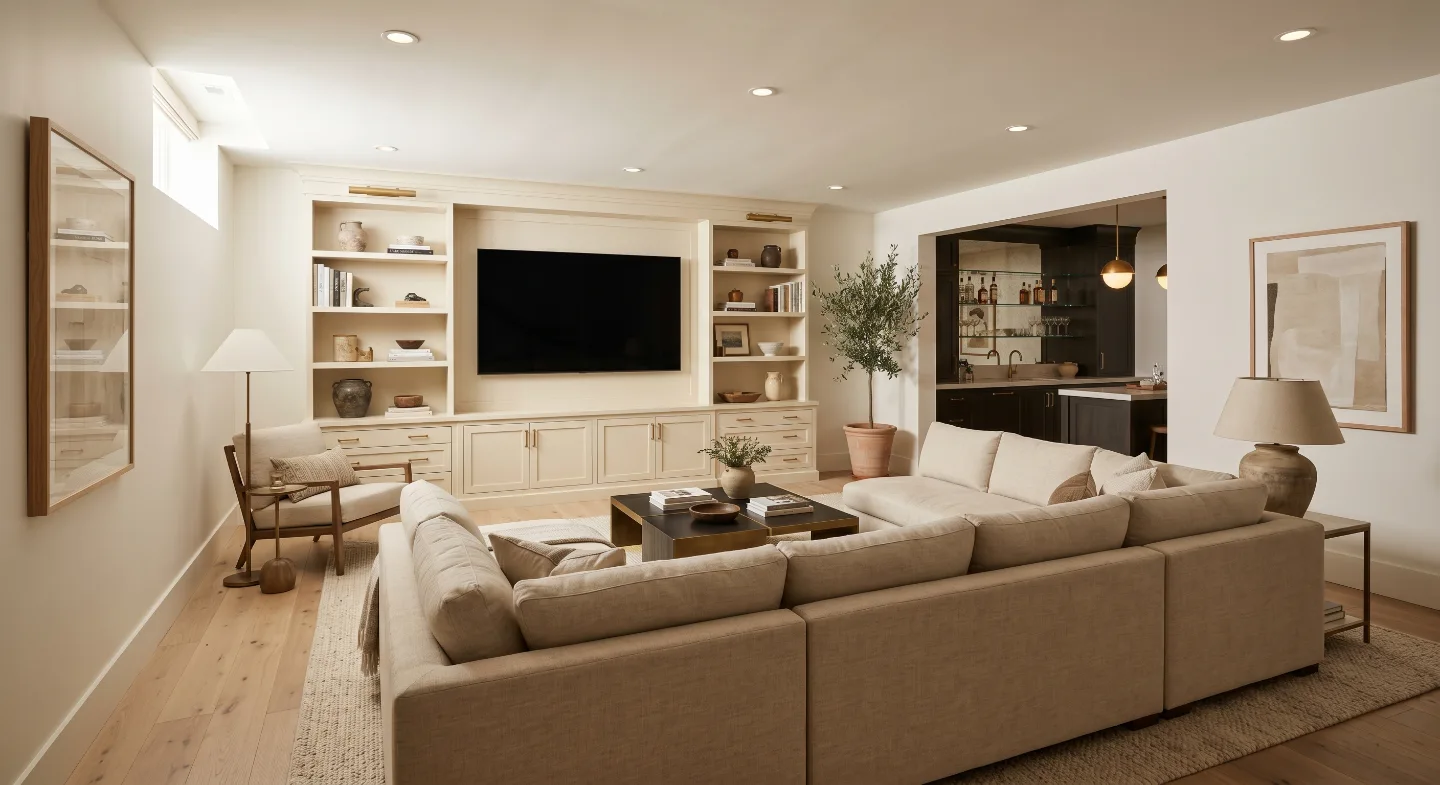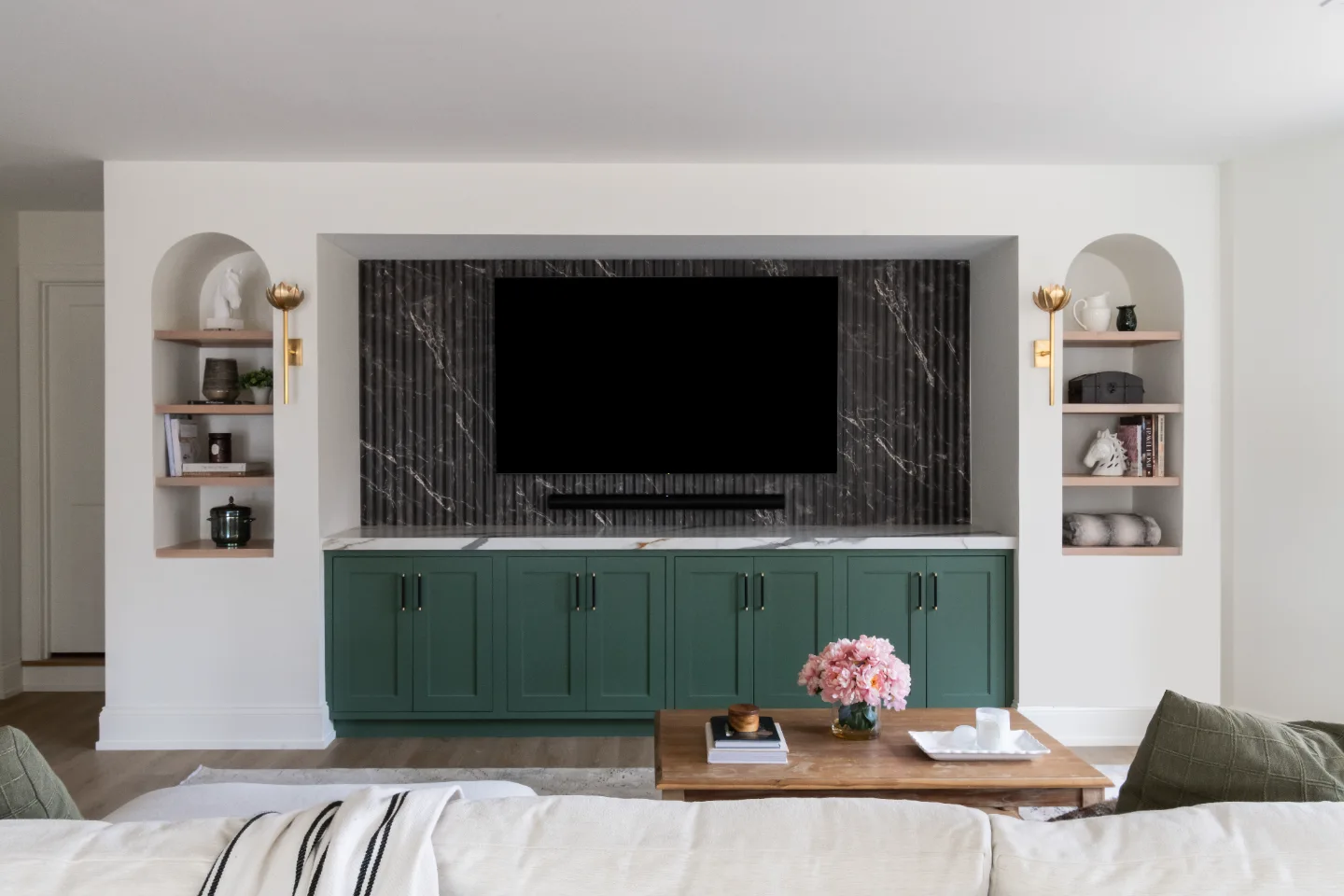
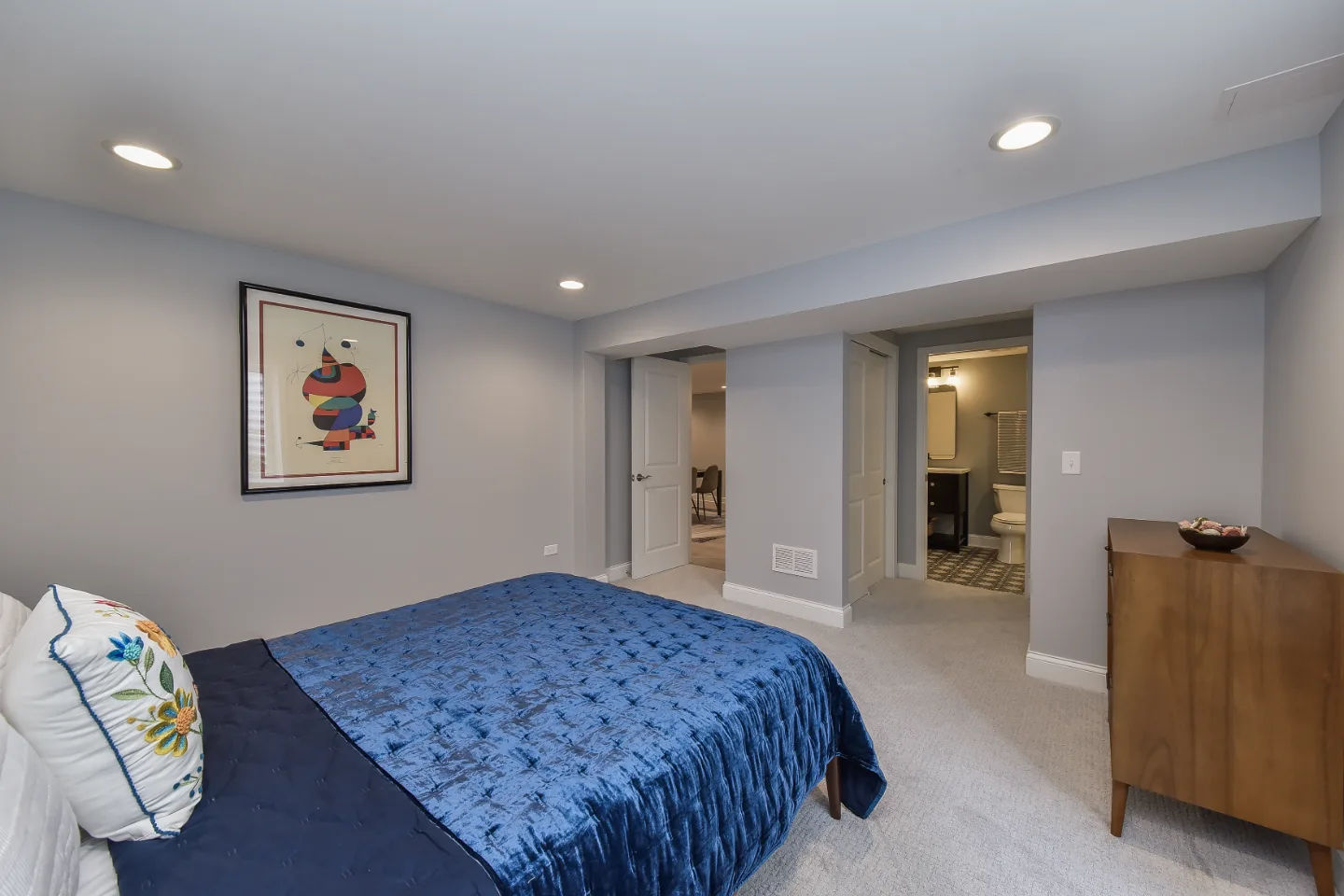
A finished lower level in a Williamson County home holds more potential than most homeowners ever act on. Thoughtfully designed, it becomes a private guest suite, a quiet retreat for a family member or a composed space that makes the whole home feel more complete. The ten basement bedroom ideas here show what is possible when a lower level is designed with the same intention brought to every other room in the house.
The reasons homeowners are investing in lower-level bedrooms have evolved. Multi-generational households, the desire to welcome long-staying guests without disrupting the main living floor, and a growing recognition that each square foot deserves to be beautiful have all contributed to the shift. Across Franklin, Brentwood and Cool Springs, lower levels that once held holiday storage and forgotten furniture are becoming some of the most loved spaces in the home.
Our broader roundup of basement design ideas covers the full range of ways a lower level can be finished. When a basement bedroom is designed well, nothing about it reads as subterranean. The right layout, material palette and lighting strategy produce a room that feels warm, composed and genuinely restful. These ideas show how that transformation happens.
1. Full Guest Suites That Feel Self-Contained
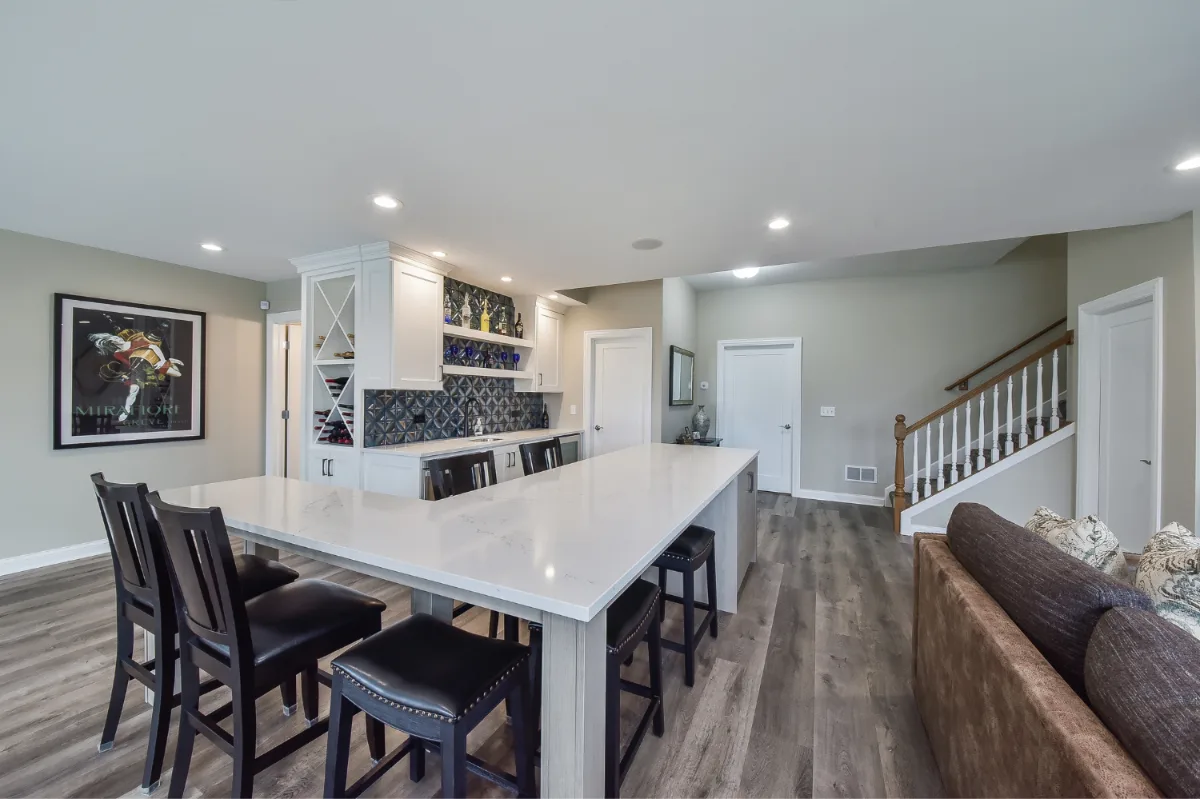
A lower-level design many homeowners ask us about is not a bedroom with a nearby bath but a fully self-contained guest suite. The distinction matters. A bedroom tells a guest there is a place to sleep. A suite tells her there is a place that was designed with her in mind.
A well-composed basement guest suite includes a bedroom, a private bath and a quiet sitting area sized for two chairs and a small table. Some include a coffee station or a compact beverage niche. The goal is to give guests everything they need to feel at ease without requiring a trip upstairs for ordinary moments of the day.
This design approach is particularly meaningful for families who host frequently, who are welcoming aging parents for extended visits, or who have adult children moving between homes. When guests have a space that feels genuinely private and considered, the hospitality it conveys is immediate. Our guide to basement entertainment room ideas covers how a guest suite can coexist with a media or bar zone in the same lower level. Among all basement bedroom ideas, a full guest suite is the one that most reliably transforms the lower level from underused to deeply valued.
2. Light-Filled Bedrooms That Leave the Basement Behind
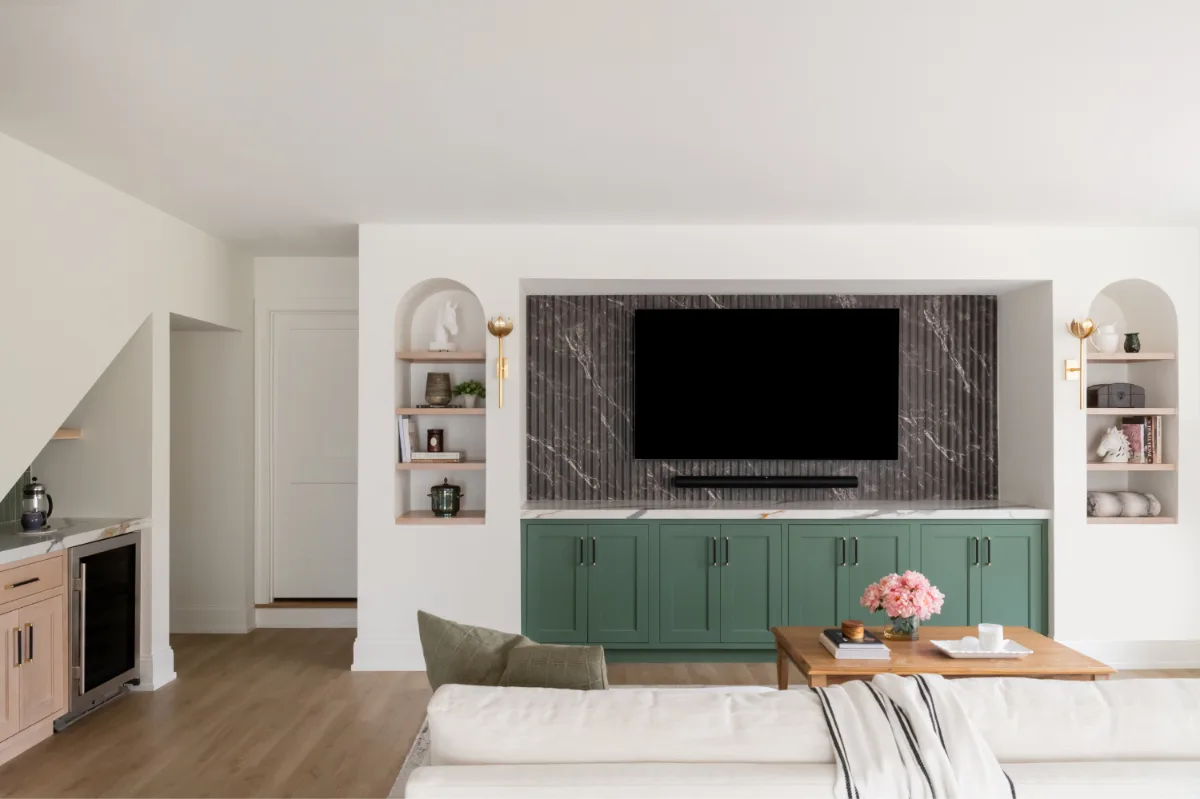
The single quality that most determines whether a lower-level bedroom feels like a retreat or still reads as a basement is light. Not the amount of light that happens to exist, but the amount that a thoughtful design deliberately draws into the space.
Larger egress windows are the most effective starting point. Properly positioned, they bring natural light further into the room, improve ventilation and fulfill building code safety requirements. A window that frames a garden view or captures afternoon light from the west changes the character of the room entirely.
Finish choices build on what the windows begin. Warm whites and soft off-whites on the walls and ceiling reflect available light without feeling sterile. Wide-plank white oak flooring carries warmth and continuity from the main level and reads naturally bright even in the absence of direct sun.
Layered artificial lighting completes the approach. Recessed fixtures, bedside lamps and wall-mounted reading lights work together to create an even, comfortable glow that no single overhead source can produce. When light is handled with care from the design stage forward, a lower-level bedroom surprises even skeptical homeowners with how genuinely bright it can feel.
3. Retreat-Style Bedrooms Designed for Quiet
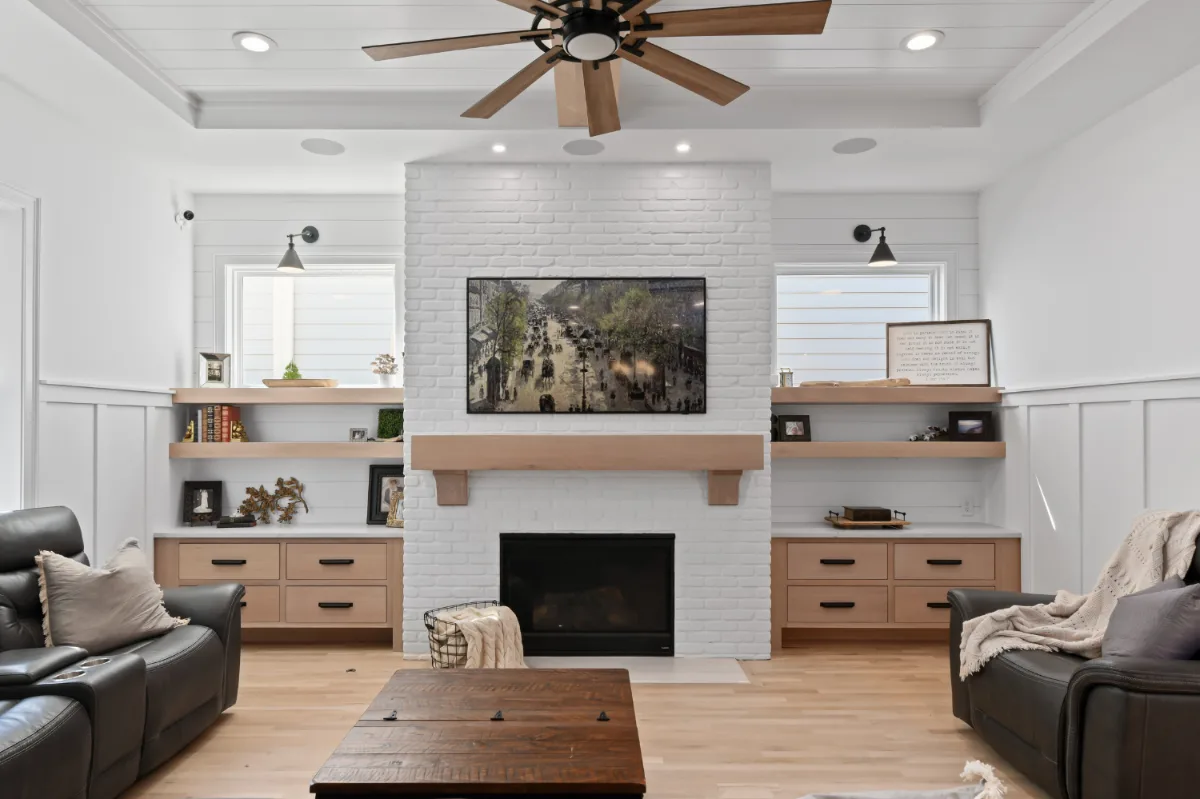
Some of the most beautiful lower-level bedrooms being designed in Franklin and Brentwood today lean directly into what a basement does naturally. Below the main living floor, away from the sound of a busy household, the lower level offers something rare in a full family home: genuine quiet.
A retreat-style basement bedroom is built to honor that quality. Soft textures carry most of the atmosphere. A generous rug in warm wool or natural jute, linen bedding layered over a comfortable mattress, an upholstered reading chair with a floor lamp placed thoughtfully beside it. The selections are made to make the room feel enveloping rather than simply decorated.
Warm-toned lighting at the bedside and at low points around the room creates the kind of ambient glow that overhead fixtures cannot. Color palettes in these bedrooms tend toward muted sage, warm taupe, soft clay and washed linen, shades that add depth without making a lower-level room feel closed in.
The outcome is a bedroom that feels private and intentional, one of the best ways of making the most of a basement. Many homeowners find that the lower-level retreat becomes the most restful room in the house precisely because of where it sits.
4. Lower-Level Primary Suites
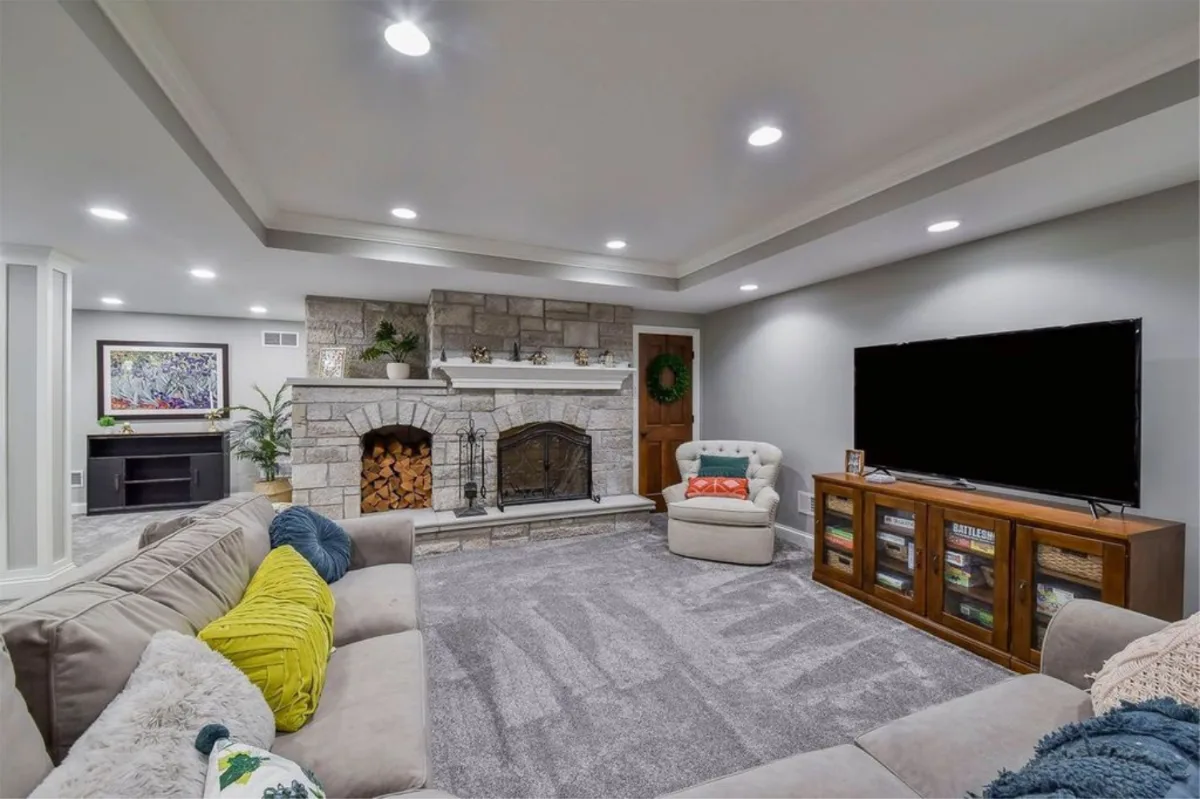
For homes with the square footage to support it, placing a primary suite on the lower level is a design decision that changes how the whole home functions. The natural separation from the main living floor, the quiet and the sense of retreat that a lower level provides are qualities that most above-grade bedrooms cannot match.
A lower-level primary suite calls for the same material investment as the best main-floor suites. A frameless shower in large-format quartzite tile. A floating vanity with unlacquered brass or polished nickel fixtures. A walk-in closet with custom organization in painted or natural walnut. Lighting layered at the mirror, at the bedside and around the perimeter of the room so the space feels warm and considered at each hour of the day.
Acoustic insulation between the lower level and the floor above transforms these suites into the quietest rooms in the house. That quality alone can make a lower-level primary suite more restorative than anything on the main floor.
5. Suites Designed for Multi-Generational Living
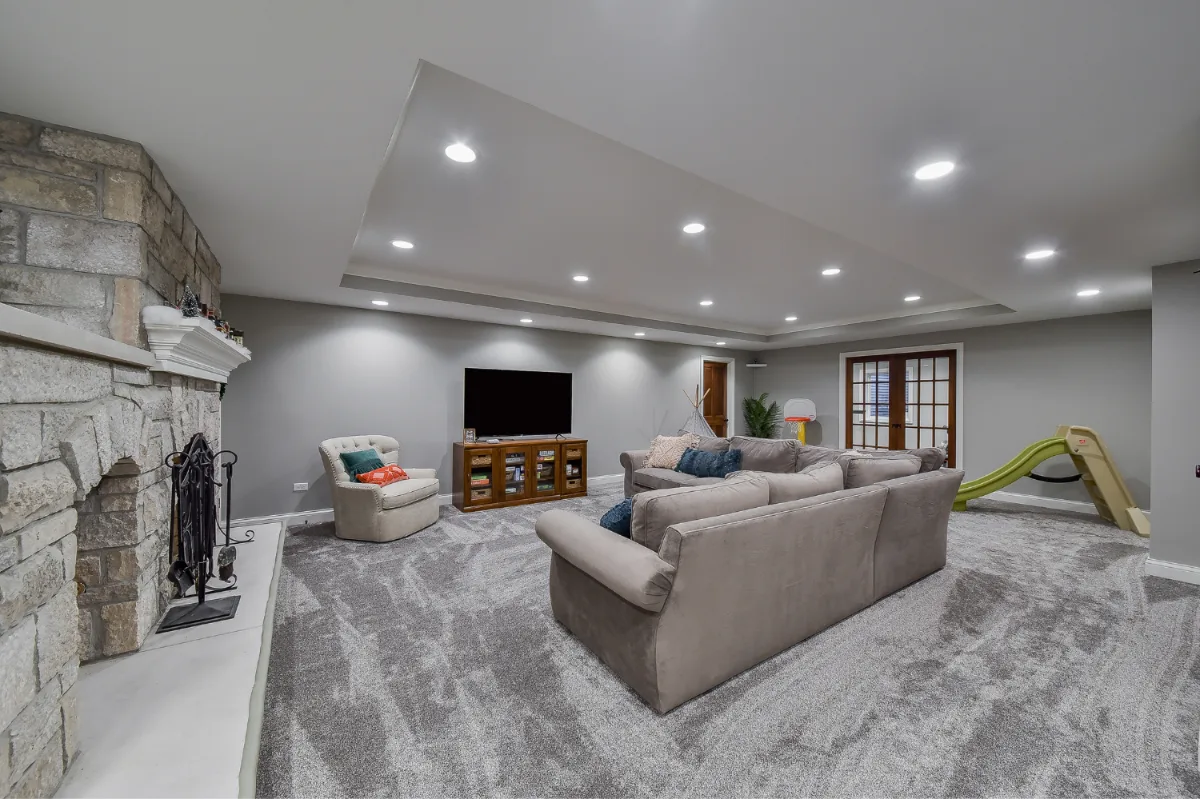
Across Williamson County, families are approaching lower-level bedroom design with a longer view. A suite built today for a visiting parent may serve a college student home for the summer in a few years and become a quiet home office the year after that. Designing for that range of use from the beginning produces a space that remains genuinely welcoming across many seasons of family life.
The design details that enable multi-generational use are not clinical or institutional when handled well. A curbless shower entry is simply elegant. Doorways with a few additional inches of clearance read as generously proportioned. A small sitting area within the suite reduces dependence on the main living floor for ordinary rest. A coffee niche or compact beverage station makes the space feel fully self-contained.
Our guide to remodeling for aging in place covers this same design philosophy at the scale of a whole home. "The families who think about flexibility from the start end up with a lower level that works beautifully for everyone," says Bryan Sebring, CGR. "The ones who design only for today sometimes find themselves wanting to redo it in five years."
6. Earth-Toned Palettes and Natural Materials
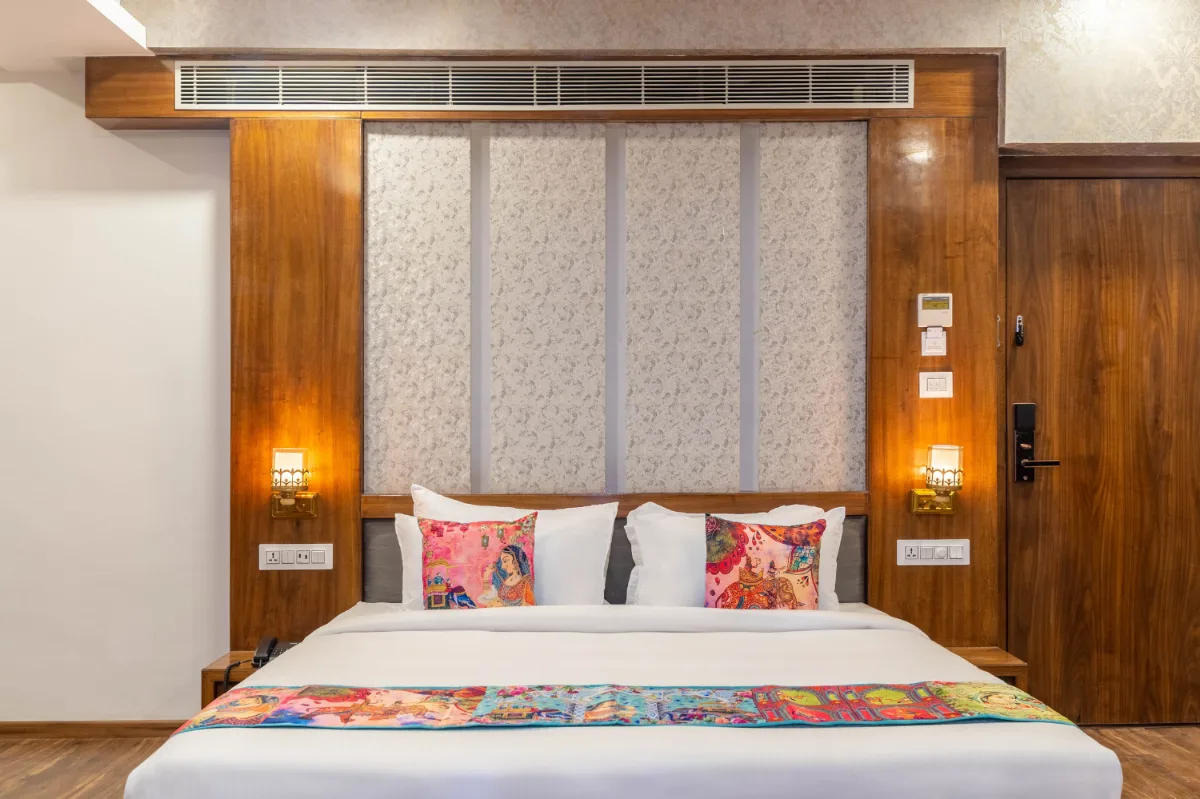
The material direction for lower-level bedrooms has shifted noticeably. Stark contrast palettes and high-gloss finishes have given way to warmer, more grounded choices rooted in natural color and honest texture.
Earth tones perform particularly well in lower-level bedrooms because they add warmth without making a room with limited natural light feel heavy. Warm taupe, aged linen, washed sage, soft clay and muted sand all create a settled, welcoming atmosphere. These palettes pair naturally with the materials defining the best lower-level designs right now: white oak millwork, unlacquered brass hardware, honed limestone or quartzite in the bath, grasscloth or woven linen wall coverings in the bedroom.
When the lower-level material palette is drawn from the same family as the floors above, the suite reads as a composed extension of the home rather than a separately conceived project. That continuity does not happen by accident. It is the result of choosing all the finishes together, in relationship to each other, before anything is built.
7. Custom Millwork and Built-In Storage
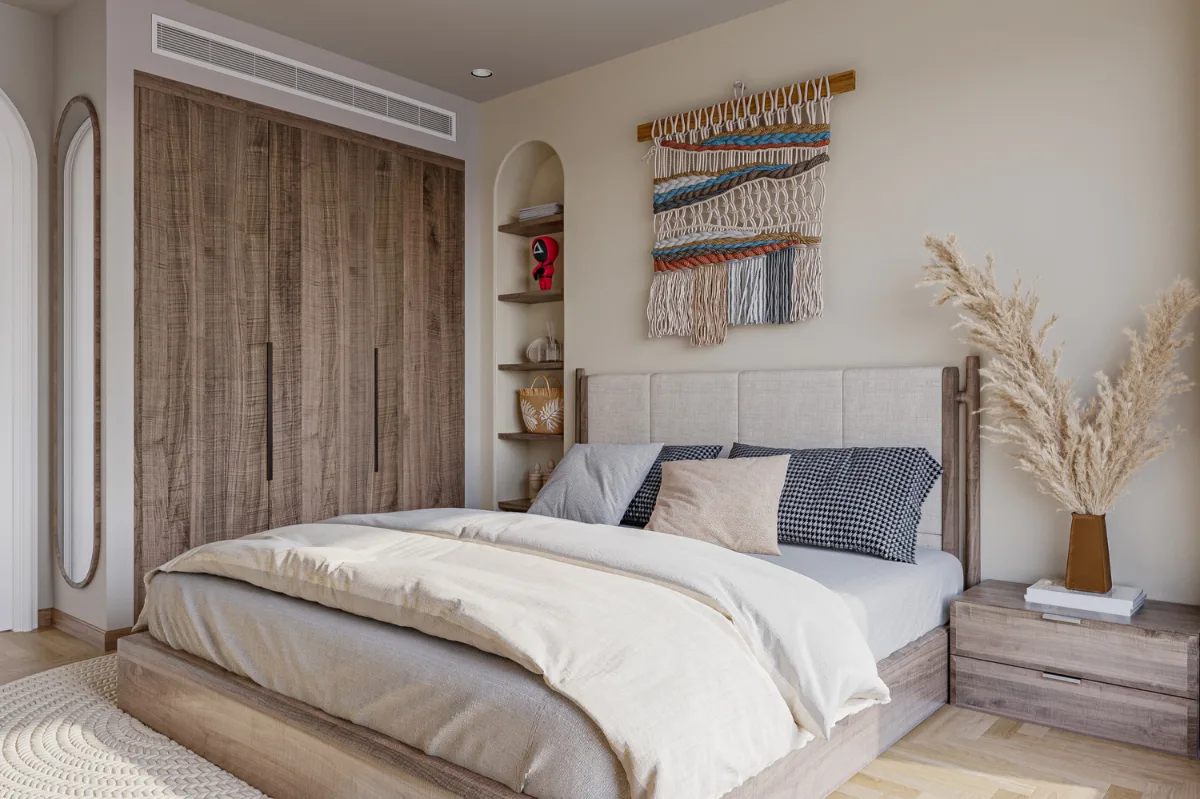
Storage is one of the genuine challenges of lower-level bedroom design. Structural columns, mechanical systems and ceiling heights that leave less room to maneuver all require solutions that a freestanding dresser or off-the-shelf wardrobe cannot provide. The most successful lower-level bedrooms address storage through custom millwork integrated into the design of the room from the beginning.
Built-in wardrobes in painted or stained walnut read as architecture rather than furniture and return each usable inch to the room. Shelving built around a window creates depth and a sense of permanence. A window seat with deep storage beneath it serves double duty without announcing itself.
Structural columns, which can interrupt a lower-level layout in awkward ways, become opportunities in the right hands. Incorporating them into a built-in headboard wall or wrapping them in cabinetry transforms a constraint into a feature. These are the kinds of decisions that separate a thoughtfully designed lower-level bedroom from one that was simply finished.
8. Open Layouts That Feel Flexible and Generous
Not every lower-level bedroom benefits from being divided into smaller rooms. When the footprint allows it, an open layout that places the sleeping area within a larger composed environment feels more generous and adaptable than a series of enclosed spaces ever could.
In these designs, furniture placement, area rugs and lighting define the zones that walls might otherwise handle. A large rug anchors the sleeping area. A pair of upholstered chairs and a floor lamp establish a reading corner. Good ceiling lighting makes each zone feel distinct while keeping the overall space connected and open.
Open lower-level layouts are particularly well suited to homes where the space will need to serve different purposes over time. A guest suite today can adapt to a teenager's private floor, a quiet workspace or a combination of uses without requiring structural changes. That kind of flexibility is most accessible when the original design anticipates it.
9. Garden-Level Bedrooms with a Connection to the Outside
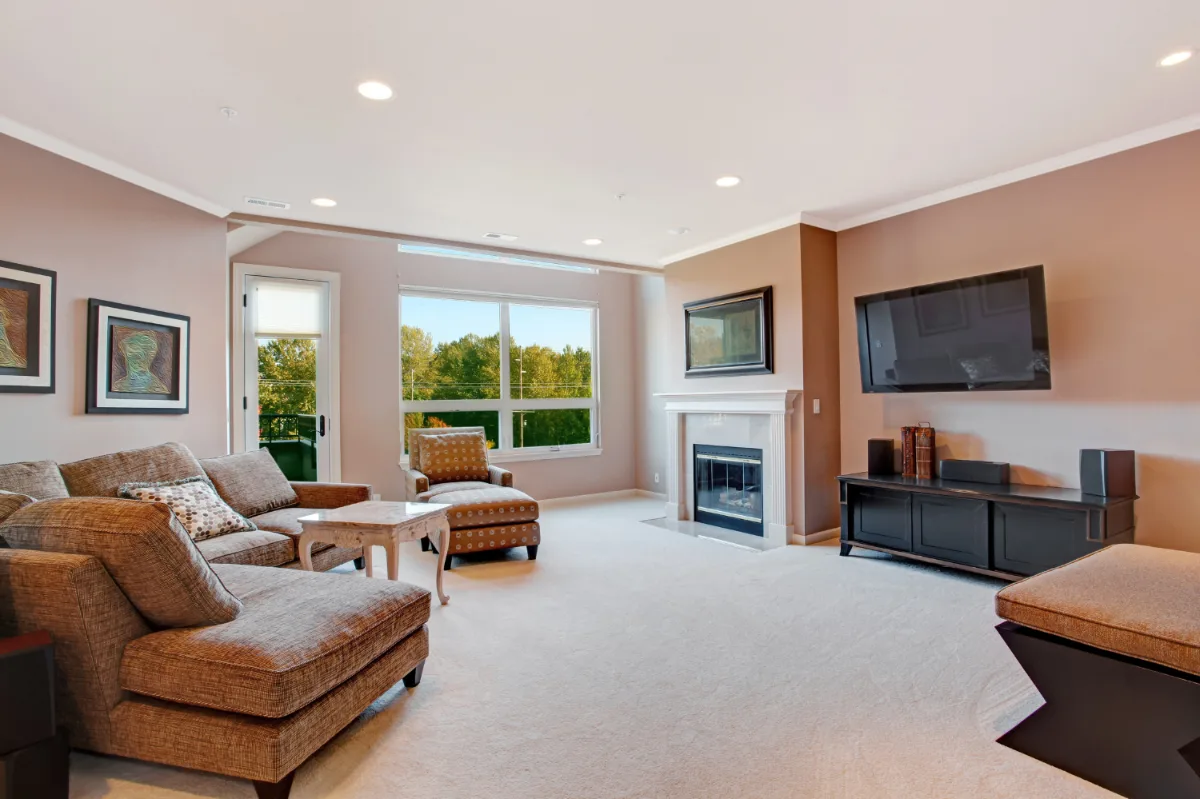
Walk-out lower levels and daylight basements are among the most valuable configurations a Williamson County home can have, and a bedroom that opens to a patio or captures a garden view does not feel like a basement at all.
When that connection exists, the design decision is simply how to make the most of it. Full-height glass doors that open onto a private patio dissolve the boundary between inside and outside in a way that transforms the character of the room. A bed positioned to face a view of the backyard becomes an experience as much as a piece of furniture. Light linen curtains that filter afternoon sun while preserving privacy give the room a graceful, settled quality.
Even in lower levels where the outdoor connection is less direct, window wells landscaped with stone, low plantings or simple gravel bring an element of the natural world into the room. The goal stays the same: a bedroom that feels rooted in the landscape rather than buried beneath the house.
10. Guest Rooms Designed with Genuine Hospitality in Mind
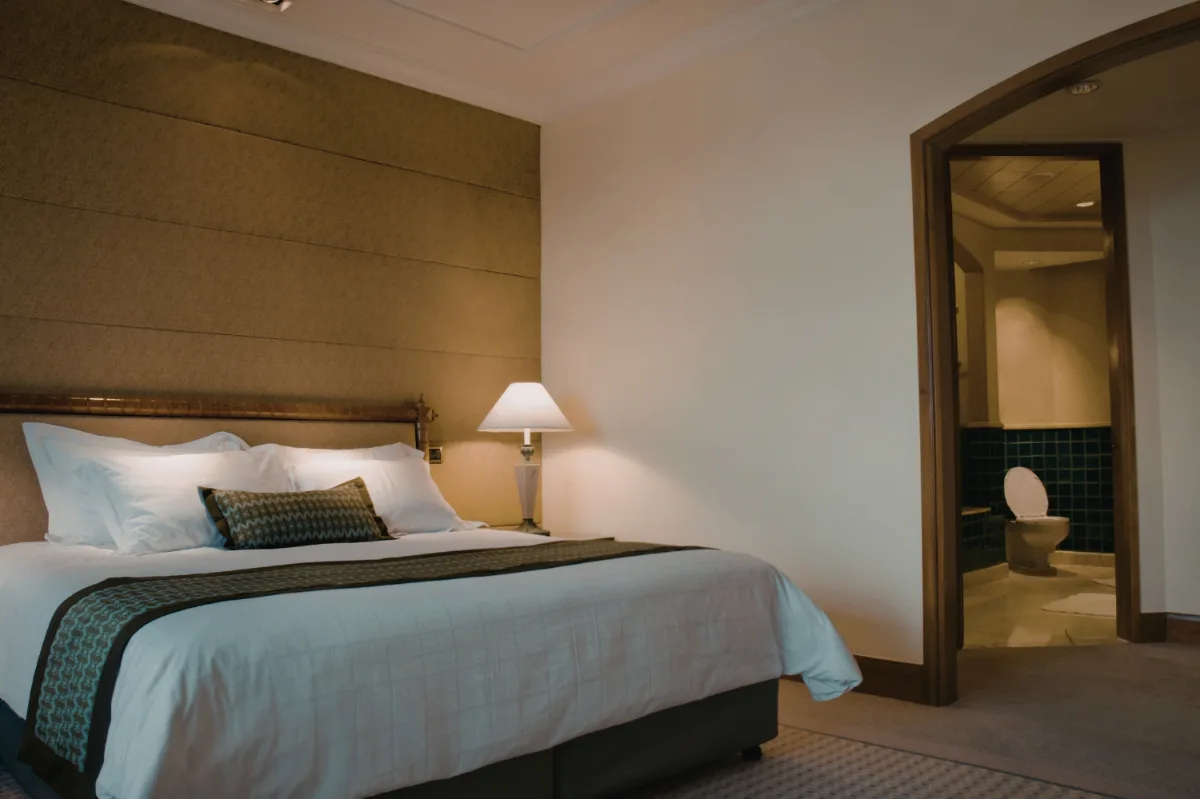
The most refined lower-level guest bedrooms in Franklin and Brentwood today are not designed to the standard of what a spare room typically offers. They are designed to the standard of what a beautifully run boutique hotel provides. Not adequacy. Genuine hospitality.
That standard expresses itself in the accumulation of thoughtful details. High-quality bedding in natural linen. Nightstands scaled properly to the bed and the room. Warm lighting at the mirror, at the bedside and at a low level around the perimeter so the guest can move through the space without glare at the end of a long evening. A luggage bench with storage beneath it. A small beverage station with a quiet drawer refrigerator and a good coffee setup so the morning begins without an unplanned trip upstairs.
None of these details is extravagant on its own. Together they communicate something that matters to guests: that someone thought carefully about what it would feel like to spend three nights here and made each decision in response to that question.
What Makes a Basement Bedroom Legal?
Turning a basement room into a true bedroom comes down to a few safety requirements. Under the International Residential Code, which most Williamson County jurisdictions build to, a sleeping room needs an emergency escape and rescue opening: typically an egress window with at least 5.7 square feet of clear opening (5.0 square feet for openings at or below grade), at least 24 inches high and 20 inches wide, with the sill no more than 44 inches above the floor. A below-grade window also needs a well of at least 9 square feet, with a permanent ladder or steps if it is deeper than 44 inches. A door directly to the outside can serve the same purpose in a walk-out lower level.
Habitable basement rooms generally need a ceiling height of at least 7 feet, with some allowance for beams and ducts. Each bedroom needs a smoke alarm, and carbon monoxide alarms are required where fuel-burning appliances or an attached garage are present. A room that cannot meet these requirements can still become a beautiful office, media room or hobby space, but it should not be used for sleeping. Your local building department confirms the exact requirements, and our building permits guide explains how the process works in Franklin.
Designing a Lower-Level Bedroom That Feels Like the Rest of Your Home
A lower-level bedroom earns its place in a well-designed home when it is treated with the same intention as each room above it. The material palette, the lighting plan, the millwork, the way the bath is composed, all of it drawn into relationship with the floors above so the suite feels as though it belonged to the home from the start rather than like a finished basement that eventually received a bed.
What each idea on this list shares is that quality of intention. The light is planned, not improvised. The materials are chosen together, not assembled from whatever was available. The storage is designed into the room, not placed around it. That is the difference between a lower level that becomes one of the most loved spaces in the home and one that stays underused for another decade.
It is time that you love each level of your home. Learn more about our basement remodeling services in Franklin, TN, or explore our basement portfolio. If your lower level is ready for that kind of attention, Sebring Design Build would love to be part of it.