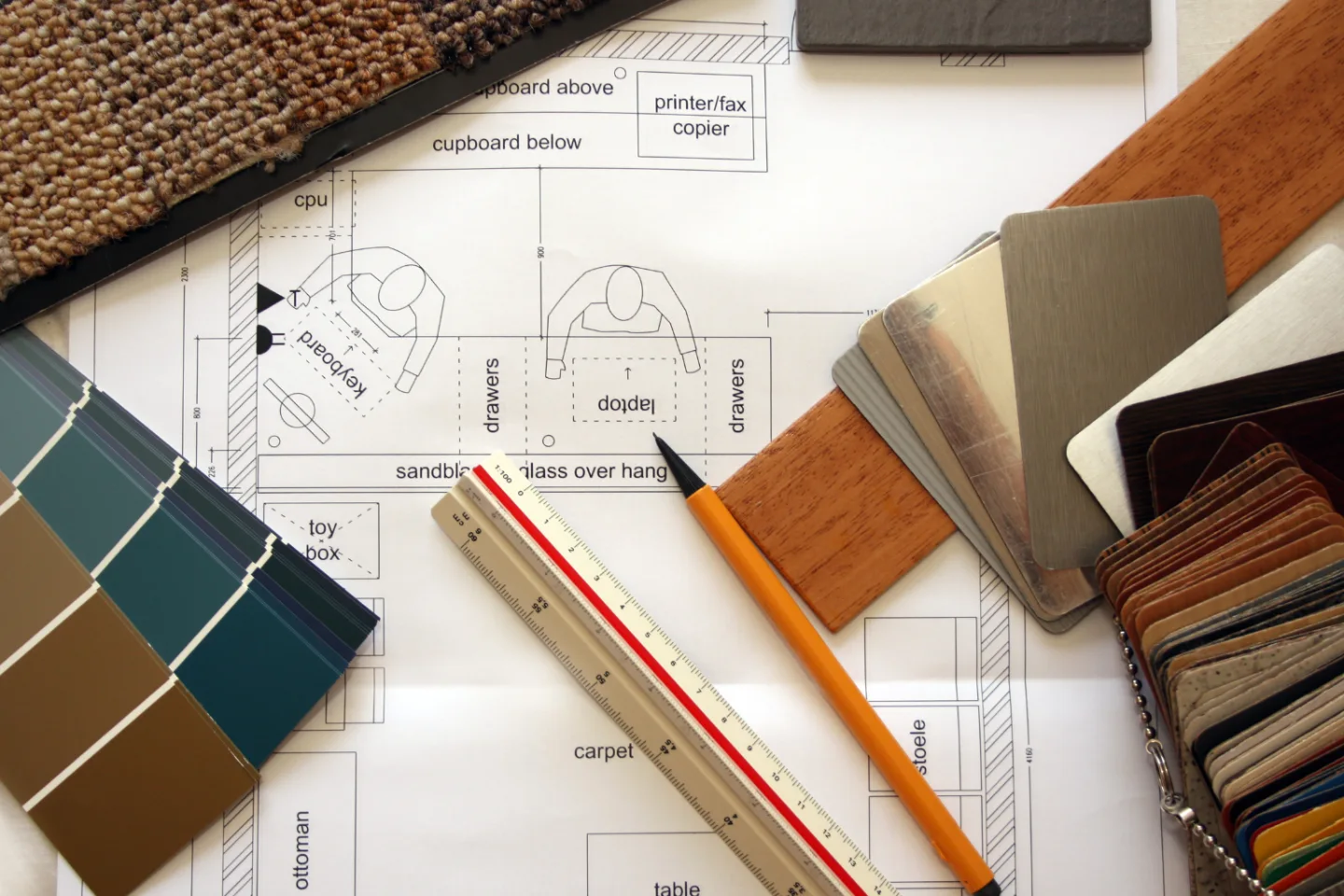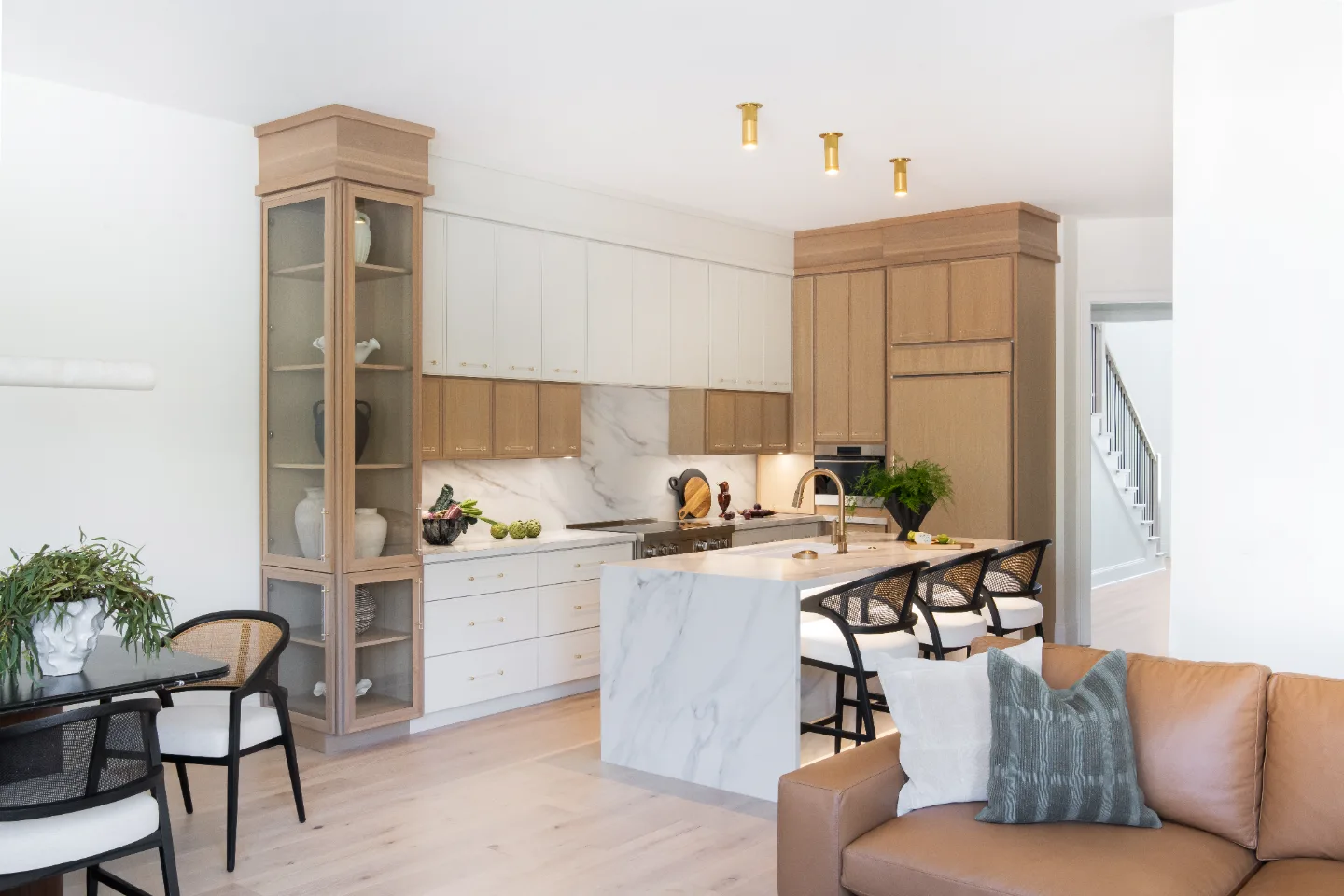

Long before your first design consultation, there's a quieter phase of the process that shapes everything that follows: the research you do on your own. Reading reviews with a discerning eye. Gathering images that capture the feeling you're after, even before you have words for it. Getting a sense of who does work you admire in your own neighborhood.
Done well, this phase sets your entire remodel up for success. Done poorly, chasing the highest star rating without reading closely, or arriving at a design consultation with no visual reference point at all, it can lead you toward the wrong fit or waste valuable time once the design process begins, which is one of the common remodeling mistakes.
Here's how to research well. Our guide to choosing the right remodeling contractor covers how to turn that research into an actual decision.
Reading Reviews the Way a Professional Would

Online reviews have become one of the most valuable tools available to a homeowner researching a remodeler, but reading them well takes more than glancing at a star average. A few practices make a meaningful difference.
Favor volume over a perfect score. A firm with dozens of reviews and a handful of critical ones is often a more trustworthy signal than one with only a few, uniformly glowing reviews. A larger sample is simply harder to curate.
Read how a firm responds to criticism, not just whether it exists. Each company accumulates the occasional critical review over the years. What matters is the response, thoughtful and accountable or defensive and dismissive. That response often tells you more about how a firm will treat you during a real disagreement than the review itself.
Look for a consistent thread across many voices. When several unrelated clients independently mention the same designer, the same responsiveness or the same calm communication style, that's a genuine pattern worth taking seriously.
Weigh comparative reviews heavily. A client who explicitly compares their experience with a firm to a previous, different contractor is giving you a more informed perspective than someone reviewing their first and only renovation.
Treat an absence of reviews as a real gap, not a neutral unknown. An established, reputable firm will have a track record you can find. If you can't find one at all, that absence is meaningful information in itself.
Google Reviews has become one of the most widely used and trusted platforms for this kind of research, largely because of its scale and the difficulty of manipulating results at volume. Many homeowners also cross-reference Houzz, which combines client reviews with a strong visual portfolio, useful for evaluating both reputation and aesthetic fit in one place. You can see how Sebring's own clients describe their experience on our client testimonials page.
A few other platforms are worth knowing, each with its own tradeoff. Angi collects ratings and reviews for local service companies and is free for homeowners to use, though companies can pay for more prominent placement, so it is worth reading past the top listings. Yelp uses a proprietary algorithm that filters out reviews it suspects aren't based on a genuine interaction with the business, which can make the reviews that remain more trustworthy, though the platform was built primarily around restaurants and retail rather than contractors. Houzz also offers peer-to-peer reviews, meaning other remodeling professionals can review a firm as well, which gives you a sense of how a company is regarded within the industry, not just by past clients. The Better Business Bureau is worth a quick check but shouldn't be treated as a primary source: it's most useful for catching serious complaints and the worst offenders, not for meaningfully distinguishing between reputable firms.
Gathering Inspiration Before Your Design Consultation

Design is deeply visual, and trying to describe your dream kitchen or primary bath in words alone, countertop tone, cabinet profile, the specific warmth of a light fixture, is genuinely difficult, even for people with a strong sense of style. This is exactly why gathering visual inspiration before your first design conversation is one of the most valuable things you can do.
Houzz and Pinterest remain excellent starting points. Both let you build a focused collection of images that capture not just individual products, but an overall feeling, the mood, the palette, the level of formality you're drawn to. Search specifically: a warm transitional kitchen with painted inset cabinetry and unlacquered brass reads very differently than a search for kitchen ideas, and the more specific your gathering, the more useful it is to your designer. As you save ideas, sort them into what you would hire out and what you might tackle yourself, using our DIY vs hiring a pro guide to draw the line.
Bring the collection, not just a single favorite photo. A single image tells your designer what you liked. Twenty images, viewed together, tell your designer what you consistently gravitate toward, which is far more valuable. Patterns across a collection reveal taste in a way that any one photo cannot.
Include your own home's context. A photograph of a sunlit kitchen in a beach house may capture a feeling you love, but your designer also needs to understand how that feeling translates into a Franklin farmhouse, a Brentwood transitional build or a Leiper's Fork property with more traditional architectural bones. Bring images, and bring context about your own home alongside them.
Our tips for clear communication with a remodeling team cover why this kind of visual reference matters so much. At Sebring, we welcome an idea book, a Pinterest board or a folder of saved images at your very first design conversation. It gives our designers a genuine head start in understanding your taste, turning the first meeting into a conversation about your specific vision, rather than a blank-page starting point. Pair the images with a pre-design checklist covering budget, timeline and permits and the first meeting gets even more useful.
Why This Research Makes Your Design Process Better, Not Just Faster
The value of good research isn't only that it saves time, though it does. It's that it results in a more accurate design from the very first concept, because your designer starts from real understanding rather than assumption.
This is where a design-build approach compounds the benefit. Because design and construction sit within one accountable company, the vision you've gathered doesn't just inform a set of drawings that get handed off to someone else to interpret, it carries through directly into material selection, into construction, into the finished space. The research you do now has a straight line to the home you'll actually live in.
It's time that you love your home, and the thoughtful research you do today is genuinely part of how you get there.
Learn more about our design-build approach or explore our full portfolio for inspiration.
Schedule your complimentary consultation. Bring your Houzz board, your Pinterest saves or simply your own eye for what you love. We serve Franklin, Brentwood, Leiper's Fork, College Grove, Thompson's Station and all of Williamson County and we'd love to see what's inspiring you.